

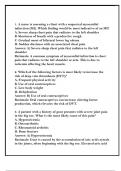
1. A nurse is assessing a client with a suspected myocardial
infarction (MI). Which finding would be most indicative of an MI?
A. Severe sharp chest pain that radiates to the left shoulder
B. Shortness of breath with a productive cough
C. Gradual onset of bilateral lower leg edema
D. Sudden dizziness with no associated chest pain
Answer: A) Severe sharp chest pain that radiates to the left
shoulder
Rationale: A common symptom of myocardial infarction is chest
pain that radiates to the left shoulder or arm. This is due to
ischemia affecting the heart muscle.
2. Which of the following factors is most likely to increase the
risk of deep vein thrombosis (DVT)?
A. Frequent physical activity
B. Use of oral contraceptives
C. Low body weight
D. Dehydration
Answer: B) Use of oral contraceptives
Rationale: Oral contraceptives can increase clotting factor
production, which elevates the risk of DVT.
3. A patient with a history of gout presents with severe joint pain
in the big toe. What is the most likely cause of this pain?
A. Hyperuricemia
B. Osteoarthritis
C. Rheumatoid arthritis
D. Bone fracture
Answer: A) Hyperuricemia
Rationale: Gout is caused by the accumulation of uric acid crystals
in the joints, often beginning with the big toe. Elevated uric acid
,levels (hyperuricemia) lead to these crystals forming and causing
intense pain.
4. What is a key characteristic of Crohn's disease?
A. Continuous inflammation of the colon
B. Painless, non-bloody diarrhea
C. Skip lesions along the gastrointestinal tract
D. Gallstone formation
Answer: C) Skip lesions along the gastrointestinal tract
Rationale: Crohn’s disease is characterized by inflammation that
can occur in patches (skip lesions) throughout the gastrointestinal
tract, leading to symptoms like diarrhea, abdominal pain, and
weight loss.
5. Which of the following lab findings is typically seen in a patient
with acute renal failure (ARF)?
A. Increased serum creatinine
B. Decreased serum potassium
C. Decreased blood urea nitrogen (BUN)
D. Decreased urine output (oliguria)
Answer: A) Increased serum creatinine
Rationale: In acute renal failure, the kidneys' ability to excrete
waste products diminishes, leading to an increase in serum
creatinine levels.
6. Which of the following would you expect in a patient with
Addison’s disease?
A. Increased blood pressure
B. Hyperkalemia
C. Weight gain
D. Increased appetite
Answer: B) Hyperkalemia
Rationale: Addison’s disease, a disorder of the adrenal glands,
, leads to decreased cortisol and aldosterone production. This
results in fluid and sodium loss and potassium retention, causing
hyperkalemia.
7. Which of the following would most likely cause a decrease in
blood pressure?
A. Activation of the sympathetic nervous system
B. Release of aldosterone
C. Release of antidiuretic hormone (ADH)
D. Decreased blood volume
Answer: D) Decreased blood volume
Rationale: Decreased blood volume reduces venous return, leading
to reduced cardiac output and a drop in blood pressure.
8. A patient has been diagnosed with tuberculosis (TB). Which of
the following is the most common symptom?
A. Night sweats
B. Joint pain
C. Hematuria
D. Abdominal pain
Answer: A) Night sweats
Rationale: Night sweats are a classic symptom of tuberculosis,
along with cough and weight loss.
9. What is a common complication of untreated hyperthyroidism?
A. Heart failure
B. Bradycardia
C. Hypoglycemia
D. Myxedema coma
Answer: A) Heart failure
Rationale: Untreated hyperthyroidism can lead to tachycardia and
increased cardiac workload, which can eventually result in heart
failure.
infarction (MI). Which finding would be most indicative of an MI?
A. Severe sharp chest pain that radiates to the left shoulder
B. Shortness of breath with a productive cough
C. Gradual onset of bilateral lower leg edema
D. Sudden dizziness with no associated chest pain
Answer: A) Severe sharp chest pain that radiates to the left
shoulder
Rationale: A common symptom of myocardial infarction is chest
pain that radiates to the left shoulder or arm. This is due to
ischemia affecting the heart muscle.
2. Which of the following factors is most likely to increase the
risk of deep vein thrombosis (DVT)?
A. Frequent physical activity
B. Use of oral contraceptives
C. Low body weight
D. Dehydration
Answer: B) Use of oral contraceptives
Rationale: Oral contraceptives can increase clotting factor
production, which elevates the risk of DVT.
3. A patient with a history of gout presents with severe joint pain
in the big toe. What is the most likely cause of this pain?
A. Hyperuricemia
B. Osteoarthritis
C. Rheumatoid arthritis
D. Bone fracture
Answer: A) Hyperuricemia
Rationale: Gout is caused by the accumulation of uric acid crystals
in the joints, often beginning with the big toe. Elevated uric acid
,levels (hyperuricemia) lead to these crystals forming and causing
intense pain.
4. What is a key characteristic of Crohn's disease?
A. Continuous inflammation of the colon
B. Painless, non-bloody diarrhea
C. Skip lesions along the gastrointestinal tract
D. Gallstone formation
Answer: C) Skip lesions along the gastrointestinal tract
Rationale: Crohn’s disease is characterized by inflammation that
can occur in patches (skip lesions) throughout the gastrointestinal
tract, leading to symptoms like diarrhea, abdominal pain, and
weight loss.
5. Which of the following lab findings is typically seen in a patient
with acute renal failure (ARF)?
A. Increased serum creatinine
B. Decreased serum potassium
C. Decreased blood urea nitrogen (BUN)
D. Decreased urine output (oliguria)
Answer: A) Increased serum creatinine
Rationale: In acute renal failure, the kidneys' ability to excrete
waste products diminishes, leading to an increase in serum
creatinine levels.
6. Which of the following would you expect in a patient with
Addison’s disease?
A. Increased blood pressure
B. Hyperkalemia
C. Weight gain
D. Increased appetite
Answer: B) Hyperkalemia
Rationale: Addison’s disease, a disorder of the adrenal glands,
, leads to decreased cortisol and aldosterone production. This
results in fluid and sodium loss and potassium retention, causing
hyperkalemia.
7. Which of the following would most likely cause a decrease in
blood pressure?
A. Activation of the sympathetic nervous system
B. Release of aldosterone
C. Release of antidiuretic hormone (ADH)
D. Decreased blood volume
Answer: D) Decreased blood volume
Rationale: Decreased blood volume reduces venous return, leading
to reduced cardiac output and a drop in blood pressure.
8. A patient has been diagnosed with tuberculosis (TB). Which of
the following is the most common symptom?
A. Night sweats
B. Joint pain
C. Hematuria
D. Abdominal pain
Answer: A) Night sweats
Rationale: Night sweats are a classic symptom of tuberculosis,
along with cough and weight loss.
9. What is a common complication of untreated hyperthyroidism?
A. Heart failure
B. Bradycardia
C. Hypoglycemia
D. Myxedema coma
Answer: A) Heart failure
Rationale: Untreated hyperthyroidism can lead to tachycardia and
increased cardiac workload, which can eventually result in heart
failure.


