FAR CPA 2024
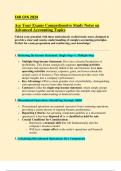
Ace Your Exams Comprehensive Study Notes on
Advanced Accounting Topics
Unlock your potential with these meticulously crafted study notes, designed to
provide a clear and concise understanding of complex accounting principles.
Perfect for exam preparation and reinforcing your knowledge!
1. Mastering the Income Statement: Single-Step vs. Multiple-Step
Multiple-Step Income Statement: Dive into a detailed breakdown of
profitability. This format strategically separates operating activities
(revenues and expenses directly linked to the core business) from non-
operating activities (revenues, expenses, gains, and losses outside the
normal course of business). This enhanced structure provides users with
deeper insights into a company's performance.
Key Advantage: Offers a more granular view of profitability, distinguishing
core operational success from other financial events.
Contrast: Unlike the single-step income statement, which simply groups
all revenues together and all expenses together, the multiple-step approach
provides a richer understanding of financial results.
2. Discontinued Operations: Identifying Strategic Shifts
Discontinued operations are reported separately from continuing operations,
providing a clearer picture of ongoing business performance.
Reporting Criteria: An operating component qualifies as a discontinued
operation if it has been disposed of or is classified as held for sale.
Crucial Conditions for Consideration:
o Represents a strategic shift that will fundamentally alter the
company's business model.
o Will have a major effect on the entity's operations and financial
results.
3. Calculating Discontinued Operations: Key Components
,When reporting discontinued operations, include:
Results of operations of the discontinued component up to the date of
disposal or classification as held for sale.
Gain or loss on disposal of the component.
Impairment loss (if the fair value less costs to sell is lower than the carrying
amount) of the component, or any subsequent increase in value if classified
as held for sale.
4 & 5. Foreign Currency Transactions: Direct vs. Indirect Methods Explained
Understanding how to translate foreign currencies is crucial for international
business.
Direct Method: Focuses on the domestic price of one unit of the foreign
currency.
o Example: One Euro (€) = $1.47 (USD). This tells you how many
domestic currency units are needed to acquire one unit of the foreign
currency.
Indirect Method: Focuses on the foreign price of one unit of the domestic
currency.
o Example: €0.68 = $1 (USD). This tells you how many foreign
currency units one unit of the domestic currency can buy.
6. Comprehensive Income: A Broader View of Equity Changes
Definition: Comprehensive income encompasses all changes in equity
during a period, except those resulting from transactions with owners (e.g.,
issuing stock or paying dividends).
Formula: Net Income + Other Comprehensive Income (OCI) =
Comprehensive Income
Key Components of Other Comprehensive Income (OCI):
o Pension Adjustments: Certain changes in pension plan assets and
liabilities.
o Unrealized Gains and Losses: Changes in the fair value of certain
investments (Available-for-Sale Debt Securities and Hedges).
o Foreign Currency Items: Gains or losses from translating foreign
currency financial statements.
o Instrument-Specific Credit Risk: Changes in the fair value of
certain liabilities due to changes in the instrument's credit risk.
, 7. Accumulated Other Comprehensive Income (AOCI): Tracking Non-Income
Equity Changes
AOCI acts as a running total of certain gains and losses that bypass the
income statement but are included in comprehensive income.
Period-End Closing: At the end of each accounting period:
o Net Income is closed to Retained Earnings (R/E).
o Other Comprehensive Income (OCI) is closed to Accumulated
Other Comprehensive Income (AOCI), a component of
stockholders' equity on the balance sheet.
8. Gross vs. Net Income: Understanding Profitability Stages
Gross Income: Represents revenue before any expenses are deducted. It's a
key indicator of the profitability of a company's core operations (Revenue -
Cost of Goods Sold).
Net Income: Represents the "bottom line" – the profit remaining after all
expenses (including operating expenses, interest, and taxes) have been
deducted from revenue.
9 & 10. SEC Filing Deadlines: Stay Compliant
Understanding SEC filing deadlines is crucial for publicly traded companies.
Form 10-K (Annual Report): Provides a comprehensive overview of the
company's business and financial performance. Filing deadlines vary based
on the company's size:
o Large Accelerated Filers: 60 days after fiscal year-end.
o Accelerated Filers: 75 days after fiscal year-end.
o All Other Registrants: 90 days after fiscal year-end.
Form 10-Q (Quarterly Report): Includes unaudited financial statements,
offering a continuing view of the company's financial position throughout
the year. Filed for the first three fiscal quarters:
o Large Accelerated and Accelerated Filers: 40 days after the end of
the quarter.
o All Other Registrants: 45 days after the end of the quarter.
11. Form 8-K: Disclosing Material Events
Form 8-K is a crucial report used by publicly traded companies to disclose
any material event that is not previously reported and is significant for
Ace Your Exams Comprehensive Study Notes on
Advanced Accounting Topics
Unlock your potential with these meticulously crafted study notes, designed to
provide a clear and concise understanding of complex accounting principles.
Perfect for exam preparation and reinforcing your knowledge!
1. Mastering the Income Statement: Single-Step vs. Multiple-Step
Multiple-Step Income Statement: Dive into a detailed breakdown of
profitability. This format strategically separates operating activities
(revenues and expenses directly linked to the core business) from non-
operating activities (revenues, expenses, gains, and losses outside the
normal course of business). This enhanced structure provides users with
deeper insights into a company's performance.
Key Advantage: Offers a more granular view of profitability, distinguishing
core operational success from other financial events.
Contrast: Unlike the single-step income statement, which simply groups
all revenues together and all expenses together, the multiple-step approach
provides a richer understanding of financial results.
2. Discontinued Operations: Identifying Strategic Shifts
Discontinued operations are reported separately from continuing operations,
providing a clearer picture of ongoing business performance.
Reporting Criteria: An operating component qualifies as a discontinued
operation if it has been disposed of or is classified as held for sale.
Crucial Conditions for Consideration:
o Represents a strategic shift that will fundamentally alter the
company's business model.
o Will have a major effect on the entity's operations and financial
results.
3. Calculating Discontinued Operations: Key Components
,When reporting discontinued operations, include:
Results of operations of the discontinued component up to the date of
disposal or classification as held for sale.
Gain or loss on disposal of the component.
Impairment loss (if the fair value less costs to sell is lower than the carrying
amount) of the component, or any subsequent increase in value if classified
as held for sale.
4 & 5. Foreign Currency Transactions: Direct vs. Indirect Methods Explained
Understanding how to translate foreign currencies is crucial for international
business.
Direct Method: Focuses on the domestic price of one unit of the foreign
currency.
o Example: One Euro (€) = $1.47 (USD). This tells you how many
domestic currency units are needed to acquire one unit of the foreign
currency.
Indirect Method: Focuses on the foreign price of one unit of the domestic
currency.
o Example: €0.68 = $1 (USD). This tells you how many foreign
currency units one unit of the domestic currency can buy.
6. Comprehensive Income: A Broader View of Equity Changes
Definition: Comprehensive income encompasses all changes in equity
during a period, except those resulting from transactions with owners (e.g.,
issuing stock or paying dividends).
Formula: Net Income + Other Comprehensive Income (OCI) =
Comprehensive Income
Key Components of Other Comprehensive Income (OCI):
o Pension Adjustments: Certain changes in pension plan assets and
liabilities.
o Unrealized Gains and Losses: Changes in the fair value of certain
investments (Available-for-Sale Debt Securities and Hedges).
o Foreign Currency Items: Gains or losses from translating foreign
currency financial statements.
o Instrument-Specific Credit Risk: Changes in the fair value of
certain liabilities due to changes in the instrument's credit risk.
, 7. Accumulated Other Comprehensive Income (AOCI): Tracking Non-Income
Equity Changes
AOCI acts as a running total of certain gains and losses that bypass the
income statement but are included in comprehensive income.
Period-End Closing: At the end of each accounting period:
o Net Income is closed to Retained Earnings (R/E).
o Other Comprehensive Income (OCI) is closed to Accumulated
Other Comprehensive Income (AOCI), a component of
stockholders' equity on the balance sheet.
8. Gross vs. Net Income: Understanding Profitability Stages
Gross Income: Represents revenue before any expenses are deducted. It's a
key indicator of the profitability of a company's core operations (Revenue -
Cost of Goods Sold).
Net Income: Represents the "bottom line" – the profit remaining after all
expenses (including operating expenses, interest, and taxes) have been
deducted from revenue.
9 & 10. SEC Filing Deadlines: Stay Compliant
Understanding SEC filing deadlines is crucial for publicly traded companies.
Form 10-K (Annual Report): Provides a comprehensive overview of the
company's business and financial performance. Filing deadlines vary based
on the company's size:
o Large Accelerated Filers: 60 days after fiscal year-end.
o Accelerated Filers: 75 days after fiscal year-end.
o All Other Registrants: 90 days after fiscal year-end.
Form 10-Q (Quarterly Report): Includes unaudited financial statements,
offering a continuing view of the company's financial position throughout
the year. Filed for the first three fiscal quarters:
o Large Accelerated and Accelerated Filers: 40 days after the end of
the quarter.
o All Other Registrants: 45 days after the end of the quarter.
11. Form 8-K: Disclosing Material Events
Form 8-K is a crucial report used by publicly traded companies to disclose
any material event that is not previously reported and is significant for