
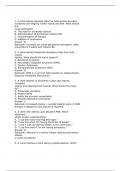
1. A client taking isoniazid (INH) for tuberculosis develops
numbness and tingling in their hands and feet. What should
the
nurse anticipate?
A. The need for increased calcium
B. Administration of pyridoxine (vitamin B6)
C. Discontinuation of therapy
D. Addition of prednisone
Answer: B
Rationale: Isoniazid can cause peripheral neuropathy, often
prevented or treated with vitamin B6.
2. A client taking haloperidol develops a high fever and
muscle
rigidity. What should the nurse suspect?
A. Serotonin syndrome
B. Neuroleptic malignant syndrome (NMS)
C. Tardive dyskinesia
D. Extrapyramidal symptoms (EPS)
Answer: B
Rationale: NMS is a rare but fatal reaction to antipsychotics.
Requires immediate intervention.
3. A client started on fluoxetine 5 days ago reports
increased
energy and planning their funeral. What should the nurse
do?
A. Encourage journaling
B. Monitor sleep
C. Notify the provider immediately
D. Provide distraction techniques
Answer: C
Rationale: Increased energy + suicidal ideation early in SSRI
therapy is dangerous and should be reported.
4. A client with asthma uses albuterol PRN. Which
statement
shows proper understanding?
A. “I use this every morning and night.”
B. “I use this when I’m having shortness of breath.”
C. “I use it with my steroid inhaler at the same time.”
D. “I use this even if I’m not having symptoms.”
Answer: B
Rationale: Albuterol is a rescue inhaler used during asthma
attacks
or acute symptoms.
5. A nurse teaches a client taking cyclobenzaprine. Which
, statement indicates understanding?
A. “I will take this long-term.”
B. “I can drink alcohol in moderation.”
C. “I should avoid driving until I know how it affects me.”
D. “It will help my heart condition.”
Answer: C
Rationale: Cyclobenzaprine causes drowsiness. Clients
should
avoid driving or alcohol initially.
6. A nurse is reviewing a client’s chart who is prescribed
gentamicin. Which finding should concern the nurse most?
A. Tinnitus
B. WBC 10,000
C. Urine output 50 mL/hr
D. Temperature 100.2°F
Answer: A
Rationale: Tinnitus is a sign of ototoxicity, a serious adverse
effect
of gentamicin.
7. A nurse gives regular insulin subcutaneously at 0700. At
what
time should the nurse monitor for signs of hypoglycemia?
A. 0715
B. 0800
C. 0930
D. 1200
Answer: C
Rationale: Regular insulin peaks in 2–4 hours. Hypoglycemia
is
most likely around 0930–1100.
8. A client with hypothyroidism takes levothyroxine. Which
statement indicates effective therapy?
A. “I feel cold all the time.”
B. “My heart rate is slower than usual.”
C. “I have more energy now.”
D. “I’m gaining weight quickly.”
Answer: C
Rationale: Increased energy suggests improved thyroid
function.
9. A client on clozapine reports fever and sore throat. What
is the
priority action?
A. Reassure and monitor
B. Administer antipyretics
C. Check WBC count
D. Suggest lozenges
numbness and tingling in their hands and feet. What should
the
nurse anticipate?
A. The need for increased calcium
B. Administration of pyridoxine (vitamin B6)
C. Discontinuation of therapy
D. Addition of prednisone
Answer: B
Rationale: Isoniazid can cause peripheral neuropathy, often
prevented or treated with vitamin B6.
2. A client taking haloperidol develops a high fever and
muscle
rigidity. What should the nurse suspect?
A. Serotonin syndrome
B. Neuroleptic malignant syndrome (NMS)
C. Tardive dyskinesia
D. Extrapyramidal symptoms (EPS)
Answer: B
Rationale: NMS is a rare but fatal reaction to antipsychotics.
Requires immediate intervention.
3. A client started on fluoxetine 5 days ago reports
increased
energy and planning their funeral. What should the nurse
do?
A. Encourage journaling
B. Monitor sleep
C. Notify the provider immediately
D. Provide distraction techniques
Answer: C
Rationale: Increased energy + suicidal ideation early in SSRI
therapy is dangerous and should be reported.
4. A client with asthma uses albuterol PRN. Which
statement
shows proper understanding?
A. “I use this every morning and night.”
B. “I use this when I’m having shortness of breath.”
C. “I use it with my steroid inhaler at the same time.”
D. “I use this even if I’m not having symptoms.”
Answer: B
Rationale: Albuterol is a rescue inhaler used during asthma
attacks
or acute symptoms.
5. A nurse teaches a client taking cyclobenzaprine. Which
, statement indicates understanding?
A. “I will take this long-term.”
B. “I can drink alcohol in moderation.”
C. “I should avoid driving until I know how it affects me.”
D. “It will help my heart condition.”
Answer: C
Rationale: Cyclobenzaprine causes drowsiness. Clients
should
avoid driving or alcohol initially.
6. A nurse is reviewing a client’s chart who is prescribed
gentamicin. Which finding should concern the nurse most?
A. Tinnitus
B. WBC 10,000
C. Urine output 50 mL/hr
D. Temperature 100.2°F
Answer: A
Rationale: Tinnitus is a sign of ototoxicity, a serious adverse
effect
of gentamicin.
7. A nurse gives regular insulin subcutaneously at 0700. At
what
time should the nurse monitor for signs of hypoglycemia?
A. 0715
B. 0800
C. 0930
D. 1200
Answer: C
Rationale: Regular insulin peaks in 2–4 hours. Hypoglycemia
is
most likely around 0930–1100.
8. A client with hypothyroidism takes levothyroxine. Which
statement indicates effective therapy?
A. “I feel cold all the time.”
B. “My heart rate is slower than usual.”
C. “I have more energy now.”
D. “I’m gaining weight quickly.”
Answer: C
Rationale: Increased energy suggests improved thyroid
function.
9. A client on clozapine reports fever and sore throat. What
is the
priority action?
A. Reassure and monitor
B. Administer antipyretics
C. Check WBC count
D. Suggest lozenges


