
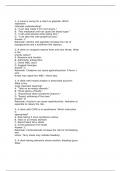
1. A nurse is caring for a client on glipizide. Which
statement
indicates understanding?
A. “I can skip meals if I’m not hungry.”
B. “This medication will not cause low blood sugar.”
C. “I will avoid alcohol while taking this.”
D. “I can take this with grapefruit juice.”
Answer: C
Rationale: Alcohol with glipizide increases the risk of
hypoglycemia and a disulfiram-like reaction.
2. A client on clozapine reports fever and sore throat. What
is the
priority action?
A. Reassure and monitor
B. Administer antipyretics
C. Check WBC count
D. Suggest lozenges
Answer: C
Rationale: Clozapine can cause agranulocytosis. A fever +
sore
throat may signal low WBC—check labs.
3. A client with herpes simplex is prescribed acyclovir.
What is the
most important teaching?
A. "Take on an empty stomach."
B. "Drink plenty of fluids."
C. "Discontinue when symptoms improve."
D. "Expect yellowing of the eyes."
Answer: B
Rationale: Acyclovir can cause nephrotoxicity. Hydration is
essential to reduce the risk.
4. A client with COPD is on prednisone. Which instruction
is
appropriate?
A. Stop taking it once symptoms resolve
B. Take on an empty stomach
C. Report black tarry stools
D. Avoid potassium-rich foods
Answer: C
Rationale: Corticosteroids increase the risk for GI bleeding
and
ulcers. Tarry stools may indicate bleeding.
5. A client taking phenytoin shows swollen, bleeding gums.
What
, should the nurse recommend?
A. Discontinue the drug
B. Increase fluid intake
C. Practice good oral hygiene
D. Reduce dietary sugar
Answer: C
Rationale: Gingival hyperplasia is a known side effect.
Encourage
oral care, not discontinuation.
6. A nurse is reviewing a client’s chart who is prescribed
gentamicin. Which finding should concern the nurse most?
A. Tinnitus
B. WBC 10,000
C. Urine output 50 mL/hr
D. Temperature 100.2°F
Answer: A
Rationale: Tinnitus is a sign of ototoxicity, a serious adverse
effect
of gentamicin.
7. A client with chronic constipation uses magnesium
citrate
daily. What risk should the nurse discuss?
A. Hypertension
B. Hypernatremia
C. Electrolyte imbalance
D. Dehydration
Answer: C
Rationale: Chronic laxative use, especially osmotic types
like
magnesium citrate, causes fluid and electrolyte imbalances.
8. A nurse is preparing to administer metoprolol. Which
assessment is priority?
A. Respiratory rate
B. Heart rate
C. Oxygen saturation
D. Blood glucose
Answer: B
Rationale: Metoprolol can cause bradycardia. Always check
HR
before administering.
9. A nurse is caring for a client prescribed lisinopril. Which
lab
result should the nurse report to the provider?
A. Sodium 138 mEq/L
B. Potassium 5.8 mEq/L
C. Hemoglobin 14 g/dL
statement
indicates understanding?
A. “I can skip meals if I’m not hungry.”
B. “This medication will not cause low blood sugar.”
C. “I will avoid alcohol while taking this.”
D. “I can take this with grapefruit juice.”
Answer: C
Rationale: Alcohol with glipizide increases the risk of
hypoglycemia and a disulfiram-like reaction.
2. A client on clozapine reports fever and sore throat. What
is the
priority action?
A. Reassure and monitor
B. Administer antipyretics
C. Check WBC count
D. Suggest lozenges
Answer: C
Rationale: Clozapine can cause agranulocytosis. A fever +
sore
throat may signal low WBC—check labs.
3. A client with herpes simplex is prescribed acyclovir.
What is the
most important teaching?
A. "Take on an empty stomach."
B. "Drink plenty of fluids."
C. "Discontinue when symptoms improve."
D. "Expect yellowing of the eyes."
Answer: B
Rationale: Acyclovir can cause nephrotoxicity. Hydration is
essential to reduce the risk.
4. A client with COPD is on prednisone. Which instruction
is
appropriate?
A. Stop taking it once symptoms resolve
B. Take on an empty stomach
C. Report black tarry stools
D. Avoid potassium-rich foods
Answer: C
Rationale: Corticosteroids increase the risk for GI bleeding
and
ulcers. Tarry stools may indicate bleeding.
5. A client taking phenytoin shows swollen, bleeding gums.
What
, should the nurse recommend?
A. Discontinue the drug
B. Increase fluid intake
C. Practice good oral hygiene
D. Reduce dietary sugar
Answer: C
Rationale: Gingival hyperplasia is a known side effect.
Encourage
oral care, not discontinuation.
6. A nurse is reviewing a client’s chart who is prescribed
gentamicin. Which finding should concern the nurse most?
A. Tinnitus
B. WBC 10,000
C. Urine output 50 mL/hr
D. Temperature 100.2°F
Answer: A
Rationale: Tinnitus is a sign of ototoxicity, a serious adverse
effect
of gentamicin.
7. A client with chronic constipation uses magnesium
citrate
daily. What risk should the nurse discuss?
A. Hypertension
B. Hypernatremia
C. Electrolyte imbalance
D. Dehydration
Answer: C
Rationale: Chronic laxative use, especially osmotic types
like
magnesium citrate, causes fluid and electrolyte imbalances.
8. A nurse is preparing to administer metoprolol. Which
assessment is priority?
A. Respiratory rate
B. Heart rate
C. Oxygen saturation
D. Blood glucose
Answer: B
Rationale: Metoprolol can cause bradycardia. Always check
HR
before administering.
9. A nurse is caring for a client prescribed lisinopril. Which
lab
result should the nurse report to the provider?
A. Sodium 138 mEq/L
B. Potassium 5.8 mEq/L
C. Hemoglobin 14 g/dL


