
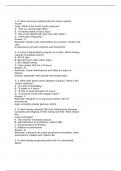
1. A client receiving methotrexate for cancer reports
mouth
sores. What is the nurse's best response?
A. “This is a normal side effect.”
B. “Increase intake of spicy food.”
C. “Use a soft toothbrush and rinse with saline.”
D. “Chew gum frequently.”
Answer: C
Rationale: Mouth sores (stomatitis) are common. Gentle oral
care
is essential to prevent infection and discomfort.
2. A nurse is administering digoxin to a client. Which finding
requires immediate action?
A. HR 62 bpm
B. Blurred vision with yellow halos
C. BP 140/88 mmHg
D. Urine output 400 mL in 8 hours
Answer: B
Rationale: Visual disturbances and halos are signs of
digoxin
toxicity, especially when paired with bradycardia.
3. A client asks about insulin glargine (Lantus). What is the
correct response?
A. “It works immediately.”
B. “It peaks in 4 hours.”
C. “It has no peak and lasts 24 hours.”
D. “It must be mixed with regular insulin.”
Answer: C
Rationale: Glargine is a long-acting insulin with no
pronounced
peak, providing steady glucose control.
4. A client taking isoniazid (INH) for tuberculosis develops
numbness and tingling in their hands and feet. What should
the
nurse anticipate?
A. The need for increased calcium
B. Administration of pyridoxine (vitamin B6)
C. Discontinuation of therapy
D. Addition of prednisone
Answer: B
Rationale: Isoniazid can cause peripheral neuropathy, often
prevented or treated with vitamin B6.
5. A client taking omeprazole asks why it is prescribed.
Which
, response is correct?
A. "It coats the lining of the stomach."
B. "It neutralizes gastric acid."
C. "It blocks acid production."
D. "It stimulates protective mucus production."
Answer: C
Rationale: Omeprazole is a proton pump inhibitor (PPI) that
blocks gastric acid secretion.
6. A client is prescribed loperamide. Which condition is a
contraindication?
A. IBS
B. Infectious diarrhea
C. Traveler’s diarrhea
D. Post-antibiotic diarrhea
Answer: B
Rationale: Do not use antidiarrheals in infectious diarrhea,
as it
may retain toxins in the bowel.
7. What should the nurse include when teaching a client
taking
ferrous sulfate?
A. Take with milk
B. Take with food if GI upset occurs
C. Expect pale stools
D. Avoid vitamin C
Answer: B
Rationale: Iron can upset the stomach. If so, take with food
(but
not dairy). Vitamin C increases absorption.
8. A client started on fluoxetine 5 days ago reports
increased
energy and planning their funeral. What should the nurse
do?
A. Encourage journaling
B. Monitor sleep
C. Notify the provider immediately
D. Provide distraction techniques
Answer: C
Rationale: Increased energy + suicidal ideation early in SSRI
therapy is dangerous and should be reported.
9. A client is taking diphenhydramine. Which side effect is
most
likely?
A. Hypertension
B. Drowsiness
C. Diarrhea
mouth
sores. What is the nurse's best response?
A. “This is a normal side effect.”
B. “Increase intake of spicy food.”
C. “Use a soft toothbrush and rinse with saline.”
D. “Chew gum frequently.”
Answer: C
Rationale: Mouth sores (stomatitis) are common. Gentle oral
care
is essential to prevent infection and discomfort.
2. A nurse is administering digoxin to a client. Which finding
requires immediate action?
A. HR 62 bpm
B. Blurred vision with yellow halos
C. BP 140/88 mmHg
D. Urine output 400 mL in 8 hours
Answer: B
Rationale: Visual disturbances and halos are signs of
digoxin
toxicity, especially when paired with bradycardia.
3. A client asks about insulin glargine (Lantus). What is the
correct response?
A. “It works immediately.”
B. “It peaks in 4 hours.”
C. “It has no peak and lasts 24 hours.”
D. “It must be mixed with regular insulin.”
Answer: C
Rationale: Glargine is a long-acting insulin with no
pronounced
peak, providing steady glucose control.
4. A client taking isoniazid (INH) for tuberculosis develops
numbness and tingling in their hands and feet. What should
the
nurse anticipate?
A. The need for increased calcium
B. Administration of pyridoxine (vitamin B6)
C. Discontinuation of therapy
D. Addition of prednisone
Answer: B
Rationale: Isoniazid can cause peripheral neuropathy, often
prevented or treated with vitamin B6.
5. A client taking omeprazole asks why it is prescribed.
Which
, response is correct?
A. "It coats the lining of the stomach."
B. "It neutralizes gastric acid."
C. "It blocks acid production."
D. "It stimulates protective mucus production."
Answer: C
Rationale: Omeprazole is a proton pump inhibitor (PPI) that
blocks gastric acid secretion.
6. A client is prescribed loperamide. Which condition is a
contraindication?
A. IBS
B. Infectious diarrhea
C. Traveler’s diarrhea
D. Post-antibiotic diarrhea
Answer: B
Rationale: Do not use antidiarrheals in infectious diarrhea,
as it
may retain toxins in the bowel.
7. What should the nurse include when teaching a client
taking
ferrous sulfate?
A. Take with milk
B. Take with food if GI upset occurs
C. Expect pale stools
D. Avoid vitamin C
Answer: B
Rationale: Iron can upset the stomach. If so, take with food
(but
not dairy). Vitamin C increases absorption.
8. A client started on fluoxetine 5 days ago reports
increased
energy and planning their funeral. What should the nurse
do?
A. Encourage journaling
B. Monitor sleep
C. Notify the provider immediately
D. Provide distraction techniques
Answer: C
Rationale: Increased energy + suicidal ideation early in SSRI
therapy is dangerous and should be reported.
9. A client is taking diphenhydramine. Which side effect is
most
likely?
A. Hypertension
B. Drowsiness
C. Diarrhea


