
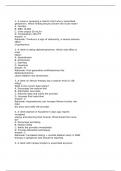
1. A nurse is reviewing a client’s chart who is prescribed
gentamicin. Which finding should concern the nurse most?
A. Tinnitus
B. WBC 10,000
C. Urine output 50 mL/hr
D. Temperature 100.2°F
Answer: A
Rationale: Tinnitus is a sign of ototoxicity, a serious adverse
effect
of gentamicin.
2. A client is taking diphenhydramine. Which side effect is
most
likely?
A. Hypertension
B. Drowsiness
C. Diarrhea
D. Insomnia
Answer: B
Rationale: First-generation antihistamines like
diphenhydramine
cause sedation and drowsiness.
3. A client on lithium therapy has a sodium level of 128
mEq/L.
What is the nurse's best action?
A. Encourage low-sodium diet
B. Administer next dose
C. Hold the dose and notify the provider
D. Increase fluid restriction
Answer: C
Rationale: Hyponatremia can increase lithium toxicity risk.
Hold
the dose and notify the provider.
4. A client started on fluoxetine 5 days ago reports
increased
energy and planning their funeral. What should the nurse
do?
A. Encourage journaling
B. Monitor sleep
C. Notify the provider immediately
D. Provide distraction techniques
Answer: C
Rationale: Increased energy + suicidal ideation early in SSRI
therapy is dangerous and should be reported.
5. A client with herpes simplex is prescribed acyclovir.
, What is the
most important teaching?
A. "Take on an empty stomach."
B. "Drink plenty of fluids."
C. "Discontinue when symptoms improve."
D. "Expect yellowing of the eyes."
Answer: B
Rationale: Acyclovir can cause nephrotoxicity. Hydration is
essential to reduce the risk.
6. A client receiving amphotericin B develops chills and
fever.
What should the nurse do?
A. Stop the infusion
B. Document findings
C. Pre-medicate with acetaminophen
D. Increase infusion rate
Answer: C
Rationale: Infusion reactions are common. Premedication
with
acetaminophen or diphenhydramine is standard.
7. A client on sertraline reports increased restlessness
and
confusion. What should the nurse suspect?
A. Extrapyramidal symptoms
B. Lithium toxicity
C. Serotonin syndrome
D. Neuroleptic malignant syndrome
Answer: C
Rationale: Serotonin syndrome includes agitation,
confusion,
tachycardia, and hyperreflexia.
8. A nurse is teaching a client how to apply clotrimazole
vaginal
cream. What instruction is correct?
A. Use during menstruation
B. Stop once symptoms go away
C. Use applicator at bedtime
D. Use with a tampon
Answer: C
Rationale: For maximum effect, apply at bedtime using the
applicator. Avoid tampons during treatment.
9. A client with hypothyroidism takes levothyroxine. Which
statement indicates effective therapy?
A. “I feel cold all the time.”
B. “My heart rate is slower than usual.”
C. “I have more energy now.”
gentamicin. Which finding should concern the nurse most?
A. Tinnitus
B. WBC 10,000
C. Urine output 50 mL/hr
D. Temperature 100.2°F
Answer: A
Rationale: Tinnitus is a sign of ototoxicity, a serious adverse
effect
of gentamicin.
2. A client is taking diphenhydramine. Which side effect is
most
likely?
A. Hypertension
B. Drowsiness
C. Diarrhea
D. Insomnia
Answer: B
Rationale: First-generation antihistamines like
diphenhydramine
cause sedation and drowsiness.
3. A client on lithium therapy has a sodium level of 128
mEq/L.
What is the nurse's best action?
A. Encourage low-sodium diet
B. Administer next dose
C. Hold the dose and notify the provider
D. Increase fluid restriction
Answer: C
Rationale: Hyponatremia can increase lithium toxicity risk.
Hold
the dose and notify the provider.
4. A client started on fluoxetine 5 days ago reports
increased
energy and planning their funeral. What should the nurse
do?
A. Encourage journaling
B. Monitor sleep
C. Notify the provider immediately
D. Provide distraction techniques
Answer: C
Rationale: Increased energy + suicidal ideation early in SSRI
therapy is dangerous and should be reported.
5. A client with herpes simplex is prescribed acyclovir.
, What is the
most important teaching?
A. "Take on an empty stomach."
B. "Drink plenty of fluids."
C. "Discontinue when symptoms improve."
D. "Expect yellowing of the eyes."
Answer: B
Rationale: Acyclovir can cause nephrotoxicity. Hydration is
essential to reduce the risk.
6. A client receiving amphotericin B develops chills and
fever.
What should the nurse do?
A. Stop the infusion
B. Document findings
C. Pre-medicate with acetaminophen
D. Increase infusion rate
Answer: C
Rationale: Infusion reactions are common. Premedication
with
acetaminophen or diphenhydramine is standard.
7. A client on sertraline reports increased restlessness
and
confusion. What should the nurse suspect?
A. Extrapyramidal symptoms
B. Lithium toxicity
C. Serotonin syndrome
D. Neuroleptic malignant syndrome
Answer: C
Rationale: Serotonin syndrome includes agitation,
confusion,
tachycardia, and hyperreflexia.
8. A nurse is teaching a client how to apply clotrimazole
vaginal
cream. What instruction is correct?
A. Use during menstruation
B. Stop once symptoms go away
C. Use applicator at bedtime
D. Use with a tampon
Answer: C
Rationale: For maximum effect, apply at bedtime using the
applicator. Avoid tampons during treatment.
9. A client with hypothyroidism takes levothyroxine. Which
statement indicates effective therapy?
A. “I feel cold all the time.”
B. “My heart rate is slower than usual.”
C. “I have more energy now.”


