
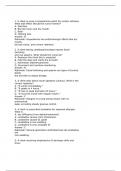
1. A client is using a scopolamine patch for motion sickness.
What side effect should the nurse monitor?
A. Diarrhea
B. Blurred vision and dry mouth
C. Rash
D. Hearing loss
Answer: B
Rationale: Scopolamine has anticholinergic effects like dry
mouth,
blurred vision, and urinary retention.
2. A client taking carbidopa/levodopa reports facial
twitching
and eye spasms. What should the nurse do?
A. Reassure the client this is expected
B. Hold the dose and notify the provider
C. Administer diphenhydramine
D. Document and continue monitoring
Answer: B
Rationale: Facial twitching and spasms are signs of toxicity.
Notify
the provider to adjust dosage.
3. A client asks about insulin glargine (Lantus). What is the
correct response?
A. “It works immediately.”
B. “It peaks in 4 hours.”
C. “It has no peak and lasts 24 hours.”
D. “It must be mixed with regular insulin.”
Answer: C
Rationale: Glargine is a long-acting insulin with no
pronounced
peak, providing steady glucose control.
4. A client is prescribed loratadine for seasonal allergies.
What is
A. key difference from diphenhydramine?
A. Loratadine causes more drowsiness
B. Loratadine causes GI upset
C. Loratadine is non-sedating
D. Loratadine is only available IV
Answer: C
Rationale: Second-generation antihistamines like loratadine
are
non-sedating.
5. A client receiving amphotericin B develops chills and
fever.
, What should the nurse do?
A. Stop the infusion
B. Document findings
C. Pre-medicate with acetaminophen
D. Increase infusion rate
Answer: C
Rationale: Infusion reactions are common. Premedication
with
acetaminophen or diphenhydramine is standard.
6. A client with chronic constipation uses magnesium
citrate
daily. What risk should the nurse discuss?
A. Hypertension
B. Hypernatremia
C. Electrolyte imbalance
D. Dehydration
Answer: C
Rationale: Chronic laxative use, especially osmotic types
like
magnesium citrate, causes fluid and electrolyte imbalances.
7. A nurse monitors a client taking lamotrigine. What
adverse
effect should prompt discontinuation?
A. Rash
B. Constipation
C. Nausea
D. Drowsiness
Answer: A
Rationale: Lamotrigine can cause a life-threatening rash
(e.g.,
Stevens-Johnson syndrome). Report immediately.
8. A child prescribed methylphenidate for ADHD should be
monitored for which effect?
A. Drowsiness
B. Increased appetite
C. Weight loss and insomnia
D. Bradycardia
Answer: C
Rationale: Stimulants like methylphenidate commonly cause
decreased appetite, insomnia, and weight loss.
9. A post-op client is given ondansetron. Which is an
expected
outcome?
A. Decreased heart rate
B. Absence of nausea
C. Increased bowel sounds
What side effect should the nurse monitor?
A. Diarrhea
B. Blurred vision and dry mouth
C. Rash
D. Hearing loss
Answer: B
Rationale: Scopolamine has anticholinergic effects like dry
mouth,
blurred vision, and urinary retention.
2. A client taking carbidopa/levodopa reports facial
twitching
and eye spasms. What should the nurse do?
A. Reassure the client this is expected
B. Hold the dose and notify the provider
C. Administer diphenhydramine
D. Document and continue monitoring
Answer: B
Rationale: Facial twitching and spasms are signs of toxicity.
Notify
the provider to adjust dosage.
3. A client asks about insulin glargine (Lantus). What is the
correct response?
A. “It works immediately.”
B. “It peaks in 4 hours.”
C. “It has no peak and lasts 24 hours.”
D. “It must be mixed with regular insulin.”
Answer: C
Rationale: Glargine is a long-acting insulin with no
pronounced
peak, providing steady glucose control.
4. A client is prescribed loratadine for seasonal allergies.
What is
A. key difference from diphenhydramine?
A. Loratadine causes more drowsiness
B. Loratadine causes GI upset
C. Loratadine is non-sedating
D. Loratadine is only available IV
Answer: C
Rationale: Second-generation antihistamines like loratadine
are
non-sedating.
5. A client receiving amphotericin B develops chills and
fever.
, What should the nurse do?
A. Stop the infusion
B. Document findings
C. Pre-medicate with acetaminophen
D. Increase infusion rate
Answer: C
Rationale: Infusion reactions are common. Premedication
with
acetaminophen or diphenhydramine is standard.
6. A client with chronic constipation uses magnesium
citrate
daily. What risk should the nurse discuss?
A. Hypertension
B. Hypernatremia
C. Electrolyte imbalance
D. Dehydration
Answer: C
Rationale: Chronic laxative use, especially osmotic types
like
magnesium citrate, causes fluid and electrolyte imbalances.
7. A nurse monitors a client taking lamotrigine. What
adverse
effect should prompt discontinuation?
A. Rash
B. Constipation
C. Nausea
D. Drowsiness
Answer: A
Rationale: Lamotrigine can cause a life-threatening rash
(e.g.,
Stevens-Johnson syndrome). Report immediately.
8. A child prescribed methylphenidate for ADHD should be
monitored for which effect?
A. Drowsiness
B. Increased appetite
C. Weight loss and insomnia
D. Bradycardia
Answer: C
Rationale: Stimulants like methylphenidate commonly cause
decreased appetite, insomnia, and weight loss.
9. A post-op client is given ondansetron. Which is an
expected
outcome?
A. Decreased heart rate
B. Absence of nausea
C. Increased bowel sounds


