
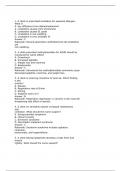
1. A client is prescribed loratadine for seasonal allergies.
What is
A. key difference from diphenhydramine?
A. Loratadine causes more drowsiness
B. Loratadine causes GI upset
C. Loratadine is non-sedating
D. Loratadine is only available IV
Answer: C
Rationale: Second-generation antihistamines like loratadine
are
non-sedating.
2. A child prescribed methylphenidate for ADHD should be
monitored for which effect?
A. Drowsiness
B. Increased appetite
C. Weight loss and insomnia
D. Bradycardia
Answer: C
Rationale: Stimulants like methylphenidate commonly cause
decreased appetite, insomnia, and weight loss.
3. A client is receiving morphine IV post-op. Which finding
is the
priority?
A. Nausea
B. Respiratory rate of 8/min
C. Itching
D. Sedation score of 2
Answer: B
Rationale: Respiratory depression (<12/min) is the most life
threatening side effect of opioids.
4. A client on sertraline reports increased restlessness
and
confusion. What should the nurse suspect?
A. Extrapyramidal symptoms
B. Lithium toxicity
C. Serotonin syndrome
D. Neuroleptic malignant syndrome
Answer: C
Rationale: Serotonin syndrome includes agitation,
confusion,
tachycardia, and hyperreflexia.
5. A client taking haloperidol develops a high fever and
muscle
rigidity. What should the nurse suspect?
, A. Serotonin syndrome
B. Neuroleptic malignant syndrome (NMS)
C. Tardive dyskinesia
D. Extrapyramidal symptoms (EPS)
Answer: B
Rationale: NMS is a rare but fatal reaction to antipsychotics.
Requires immediate intervention.
6. A nurse is caring for a client on glipizide. Which
statement
indicates understanding?
A. “I can skip meals if I’m not hungry.”
B. “This medication will not cause low blood sugar.”
C. “I will avoid alcohol while taking this.”
D. “I can take this with grapefruit juice.”
Answer: C
Rationale: Alcohol with glipizide increases the risk of
hypoglycemia and a disulfiram-like reaction.
7. A client takes aluminum hydroxide for GERD. What
adverse
effect should the nurse monitor?
A. Diarrhea
B. Constipation
C. Hypokalemia
D. Rash
Answer: B
Rationale: Aluminum-based antacids commonly cause
constipation.
8. A client taking furosemide reports muscle cramps.
Which lab
value correlates with this symptom?
A. Sodium 142
B. Potassium 2.9
C. Chloride 101
D. Magnesium 2.0
Answer: B
Rationale: Furosemide can cause hypokalemia, which leads
to
muscle cramps. Normal potassium: 3.5–5.0.
9. A client taking warfarin has an INR of 4.2. Which action
should
the nurse take?
A. Administer the next dose of warfarin
B. Hold the dose and notify the provider
C. Give vitamin K IV immediately
D. Prepare for platelet transfusion
Answer: B
What is
A. key difference from diphenhydramine?
A. Loratadine causes more drowsiness
B. Loratadine causes GI upset
C. Loratadine is non-sedating
D. Loratadine is only available IV
Answer: C
Rationale: Second-generation antihistamines like loratadine
are
non-sedating.
2. A child prescribed methylphenidate for ADHD should be
monitored for which effect?
A. Drowsiness
B. Increased appetite
C. Weight loss and insomnia
D. Bradycardia
Answer: C
Rationale: Stimulants like methylphenidate commonly cause
decreased appetite, insomnia, and weight loss.
3. A client is receiving morphine IV post-op. Which finding
is the
priority?
A. Nausea
B. Respiratory rate of 8/min
C. Itching
D. Sedation score of 2
Answer: B
Rationale: Respiratory depression (<12/min) is the most life
threatening side effect of opioids.
4. A client on sertraline reports increased restlessness
and
confusion. What should the nurse suspect?
A. Extrapyramidal symptoms
B. Lithium toxicity
C. Serotonin syndrome
D. Neuroleptic malignant syndrome
Answer: C
Rationale: Serotonin syndrome includes agitation,
confusion,
tachycardia, and hyperreflexia.
5. A client taking haloperidol develops a high fever and
muscle
rigidity. What should the nurse suspect?
, A. Serotonin syndrome
B. Neuroleptic malignant syndrome (NMS)
C. Tardive dyskinesia
D. Extrapyramidal symptoms (EPS)
Answer: B
Rationale: NMS is a rare but fatal reaction to antipsychotics.
Requires immediate intervention.
6. A nurse is caring for a client on glipizide. Which
statement
indicates understanding?
A. “I can skip meals if I’m not hungry.”
B. “This medication will not cause low blood sugar.”
C. “I will avoid alcohol while taking this.”
D. “I can take this with grapefruit juice.”
Answer: C
Rationale: Alcohol with glipizide increases the risk of
hypoglycemia and a disulfiram-like reaction.
7. A client takes aluminum hydroxide for GERD. What
adverse
effect should the nurse monitor?
A. Diarrhea
B. Constipation
C. Hypokalemia
D. Rash
Answer: B
Rationale: Aluminum-based antacids commonly cause
constipation.
8. A client taking furosemide reports muscle cramps.
Which lab
value correlates with this symptom?
A. Sodium 142
B. Potassium 2.9
C. Chloride 101
D. Magnesium 2.0
Answer: B
Rationale: Furosemide can cause hypokalemia, which leads
to
muscle cramps. Normal potassium: 3.5–5.0.
9. A client taking warfarin has an INR of 4.2. Which action
should
the nurse take?
A. Administer the next dose of warfarin
B. Hold the dose and notify the provider
C. Give vitamin K IV immediately
D. Prepare for platelet transfusion
Answer: B


