
Final Exam Review (NURS 3661) correctly answered
to pass
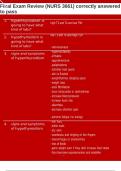
1. hyperthyroidism is
high T3 and T4 and low TSH
going to have what
kind of labs?
low T3 and T4 and High TSH
2. hypothyroidism is
going to have what
kind of labs? -nervousness
-hyperexcitability
3. signs and symptoms
-irritable
of hyperthyroidism
-apprehensive
-palpitations
-tolerates heat poorly
-skin is flushed
-exophthalmos (bulging eyes)
-weight loss
-atrial fibrillation
-sinus tachycardia or dysrhythmias
-increase blood pressure
-increase heart rate
-diarrhea
-decrease attention span
-extreme fatigue (no energy)
-hair loss
4. signs and symptoms
-brittle nails
of hypothyroidism
-dry skin
-numbness and tingling of the fingers
-menorrhagia or amenorrhea
-loss of libido
-gains weight even if they dont increase food intake
-face becomes expressionless and masklike
,Final Exam Review (NURS 3661) correctly answered
to pass
-complains of being cold even in a warm
environment
,Final Exam Review (NURS 3661) correctly answered
to pass
thyroidectomy
5. Care of the patient
post thyroidectomy
6. If the patient just
had
a thyroidectomy and
the nurse wants to
monitor for signs and
symptoms of
parathyroid removal
what will the nurse
moni- tor for?
7. post op
complications of
,Final Exam Review (NURS 3661) correctly answered
to pass
-decreased heart rate -patient should get out of bed as soon as possible and eat
-decreased blood pressure foods that are easy to swallow
-assess for signs of hemorrhage, tracheal compression,
-monitor vitals irregular breathing, neck swelling, swallowing, chocking
-control pain
-monitor for parathyroid removal signs and symptoms of hypocalcemia
-monitor for diflculty of breathing -tetany (muscles spasms all over)
-the nurse should check the -chvosteks's
patients incision when they are in
recumbent position
-tracheostomy kit should be kept in the
bedside
-when moving and turning the
patient the nurse should support the -vocal cord paralysis
patients head and avoid tension of -airway obstruction
the sutures -hemorrhage
-they should be in semi fowlers position -tracheal compression
-patient should talk as little as possible -hypocalcemia
to pass
1. hyperthyroidism is
high T3 and T4 and low TSH
going to have what
kind of labs?
low T3 and T4 and High TSH
2. hypothyroidism is
going to have what
kind of labs? -nervousness
-hyperexcitability
3. signs and symptoms
-irritable
of hyperthyroidism
-apprehensive
-palpitations
-tolerates heat poorly
-skin is flushed
-exophthalmos (bulging eyes)
-weight loss
-atrial fibrillation
-sinus tachycardia or dysrhythmias
-increase blood pressure
-increase heart rate
-diarrhea
-decrease attention span
-extreme fatigue (no energy)
-hair loss
4. signs and symptoms
-brittle nails
of hypothyroidism
-dry skin
-numbness and tingling of the fingers
-menorrhagia or amenorrhea
-loss of libido
-gains weight even if they dont increase food intake
-face becomes expressionless and masklike
,Final Exam Review (NURS 3661) correctly answered
to pass
-complains of being cold even in a warm
environment
,Final Exam Review (NURS 3661) correctly answered
to pass
thyroidectomy
5. Care of the patient
post thyroidectomy
6. If the patient just
had
a thyroidectomy and
the nurse wants to
monitor for signs and
symptoms of
parathyroid removal
what will the nurse
moni- tor for?
7. post op
complications of
,Final Exam Review (NURS 3661) correctly answered
to pass
-decreased heart rate -patient should get out of bed as soon as possible and eat
-decreased blood pressure foods that are easy to swallow
-assess for signs of hemorrhage, tracheal compression,
-monitor vitals irregular breathing, neck swelling, swallowing, chocking
-control pain
-monitor for parathyroid removal signs and symptoms of hypocalcemia
-monitor for diflculty of breathing -tetany (muscles spasms all over)
-the nurse should check the -chvosteks's
patients incision when they are in
recumbent position
-tracheostomy kit should be kept in the
bedside
-when moving and turning the
patient the nurse should support the -vocal cord paralysis
patients head and avoid tension of -airway obstruction
the sutures -hemorrhage
-they should be in semi fowlers position -tracheal compression
-patient should talk as little as possible -hypocalcemia


