
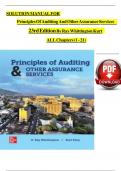
SOLUTION MANUAL FOR
v v
Principles Of Auditing And Other Assurance Services
v v v v v v v v
23rdEdition
ALL Chapters (1 - 21)
v v v v
, Tableof Contents d
w d
w
Chapter 1: The Role of the Public Accountant in the
dw dw dw dw dw dw dw dw dw
AmericanEconomy Chapter 2: Professional Standards
dw dw dw dw dw
Chapter 3: Professional Ethics
dw dw dw
Chapter 4: Legal Liability of CPAs
dw dw dw dw dw dw
Chapter 5: Audit Evidence and Documentation
dw dw dw dw dw
Chapter 6: Audit Planning, Understanding the Client, AssessingRisks, and Responding
dw dw dw dw dw dw dw dw dw
Chapter 7: Internal Control
dw dw dw dw
Chapter 8: Consideration of Internal Control in an InformationTechnology Environment
dw dw dw dw dw dw dw dw dw
Chapter 9: Audit Sampling
dw dw dw dw
Chapter 10: Cash and Financial Investments
dw dw dw dw dw
Chapter 11: Accounts Receivable, Notes Receivable, andRevenue
dw dw dw dw dw dw
Chapter 12: Inventories and Cost of Goods Sold
dw dw dw dw dw dw dw dw
Chapter 13: Property, Plant, and Equipment: Depreciation andDepletion
dw dw dw dw dw dw dw
Chapter 14: Accounts Payable and Other Liabilities
dw dw dw dw dw dw dw
Chapter 15: Debt and Equity Capital
dw dw dw dw dw
Chapter 16: Auditing Operations and Completing the Audit
dw dw dw dw dw dw dw
Chapter 17: Auditors’ Reports
dw dw dw dw
Chapter 18: Integrated Audits of Public Companies
dw dw dw dw dw dw
Chapter 19: Additional Assurance Services: Historical FinancialInformation
dw dw dw dw dw dw
Chapter 20: Additional Assurance Services: Other Information
dw dw dw dw dw dw dw
Chapter 21: Internal, Operational, and Compliance Auditing
dw dw dw dw dw dw
,CHAPTER 1 dw
The Role of the dw dw dw
dw Public Accountant in the dw dw dw
American Economy dw
Review Questions
dw
1-1 The ―crisis of credibility‖ largely arose from the number of companies that restated their
dw dw dw dw dw dw dw dw dw dw dw dw dw
previously issued financial statements as a result of accounting irregularities and fraud.
dw dw dw dw dw dw dw dw d w dw dw dw
Especially responsible were the very visible Enron and WorldCom fraud cases. Both
d w dw dw v dw dw dw dw dw dw dw dw
companies filed for bankruptcy and constituted the largest companies in American history to
dw dw dw dw dw dw dw dw dw dw dw dw dw
do so. The extent of the accounting irregularities and fraud being investigated and disclosed
dw dw d w dw dw dw dw dw dw dw dw dw dw dw
brought into question the effectiveness of financial statement audits. In addition, the criminal
dw dw dw dw dw dw dw dw dw d w dw dw dw
conviction of Arthur Andersen, LLP, one of the then Big 5 accounting firms, on charges of
dw dw dw dw dw dw dw dw dw dw dw dw dw dw dw dw
destroying documents related to the Enron case brought into question the ethics standards of
dw dw dw dw dw dw dw dw dw dw dw dw dw dw
the profession.
dw dw
1-2 Assurance services are professional services that enhance the quality of information, or its
dw dw dw dw dw dw dw dw dw dw dw dw
context, for decision-making. The two types are: (a) those that increase the reliability of
dw dw dw dw dw dw dw dw dw dw dw dw dw dw
information and (b) those that involve putting information in a form or context that
dw dw dw dw dw d w dw dw dw dw d w dw dw d w
facilitates decision-making.
d w d w
1-3 A financial statement audit is, by far, the most common type of attest engagement. The
dw dw dw dw dw dw dw dw dw dw dw dw dw dw
overall assertion,made by management, most frequently is that the financial statements
dw dw dw dw dw dw dw dw dw dw dw
follow generally accepted accounting principles.
dw dw dw dw dw
1-4 A large corporation with securities listed on a stock exchange is required by the rules of the
dw dw dw dw d w dw dw dw dw dw d w dw dw dw d w dw
stock exchange and by the rules of the Securities and Exchange Commission to provide an audit
dw dw dw dw dw dw dw dw dw d w dw dw dw dw dw dw
report with theannual financial statements furnished to its stockholders. It also is required to
dw d w dw dw dw dw dw dw dw d w dw dw dw dw
engage the auditors to provide an opinion on its internal control. Apart from legal requirements,
dw dw dw dw dw dw dw dw dw dw dw dw dw dw dw
however, a large listed
dw corporation recognizes that it must maintain investor confidence in the
dw dw dw d w dw dw dw dw dw dw dw dw dw
reliability of its financial statements and internal control over financial reporting if it is to
dw dw dw dw dw d w d w d w d w d w dw d w d w d w d w
continue to be able to secure capital from the public. The report by a firm of certified public
d w dw d w dw dw d w dw dw dw dw dw dw dw dw dw dw dw dw
accountants adds credibility to the financial statements prepared by the corporation.
dw dw dw When a dw dw dw dw dw dw dw dw d w dw
small family-owned enterprise elects to have an audit, the purpose usually is to use the auditors'
dw dw dw dw d w dw dw dw dw dw dw dw d w dw dw dw
report to support an application for a bank loan.
dw d w dw d w dw d w d w dw dw
, 1-5 A report by an independent public accountant concerning the fairness of a company's
dw dw dw dw dw dw dw dw dw dw dw dw
financial statements is commonly required in the following situations:
dw dw v dw dw dw dw dw dw
(1) Application for a bank loan. dw dw dw dw
(2) Establishing credit for purchase of merchandise, equipment, or other assets.
dw dw dw dw dw dw dw dw dw
(3) Reporting operating results, financial position, and cash flows to absentee
dw dw dw dw dw dw dw dw dw
owners (stockholdersor partners).
dw dw dw
(4) Issuance of securities by a corporation.
dw dw dw dw dw
(5) Annual financial statements by a corporation with securities listed on a stock exchange
dw dw dw dw dw dw dw dw dw dw dw dw
or traded over the counter.
dw dw v dw dw
(6) Sale of an ongoing business.
dw dw dw dw
(7) Termination of a partnership. dw dw dw
1-6 To add credibility to financial statements is to increase the likelihood that they have been
dw dw dw dw dw dw dw dw dw dw dw dw dw dw
prepared following the appropriate criteria, usually generally accepted accounting principles.
dw dw dw dw dw dw dw dw dw dw
As such, an increasein credibility results in financial statements that can be believed and
d w dw dw dw dw dw dw dw dw dw dw dw dw dw
relied upon by third parties.
dw dw dw dw dw
1-7 Business risk is the risk that the investment will be impaired because a company invested in is
dw dw dw dw dw dw dw dw dw dw dw dw dw dw dw dw
unable tomeet its financial obligations due to economic conditions or poor management
d w dw dw dw dw dw dw dw dw dw dw dw
decisions.
dw
Information risk is the risk that the information used to assess business risk is not accurate.
dw dw dw dw dw dw dw dw dw dw dw dw dw dw dw
Auditors
dw can directly reduce information risk, but have only limited effect on business risk.
d w dw dw dw dw dw dw dw dw dw dw dw dw
1-8 At the beginning of the century, the principal objective of auditing was the prevention and
dw dw dw dw dw dw dw dw dw dw dw dw dw dw
detection of fraud. Audit work centered on the balance sheet, because the income statement was
dw dw dw dw dw dw dw dw dw dw dw dw dw dw dw
regarded as highly confidential and not for public disclosure.
dw dw dw Today, the principal objective
dw dw dw d w d w dw d w d w dw dw
of auditing is to form an opinion on the fairness of financial statements and their conformity
dw d w dw d w dw dw dw dw dw dw dw dw dw dw dw dw
with generally accepted accounting principles. But the professional standards also require that an
dw dw dw dw dw d w dw dw dw dw dw dw dw
audit be designed to provide reasonable assurance of detecting material misstatements, due
dw d w dw dw dw dw dw dw d w d w dw d w
to errors or fraud.
dw d w Particular emphasis is placed on the income statement which is of
d w d w d w d w d w d w d w dw dw dw dw d w dw d w
great importance to investors. Auditing today also has the objectives ofmeeting the
dw d w dw dw d w dw dw dw d w dw d w dw
requirements of the Securities and Exchange Commission (SEC) and the Public Company
dw d w dw dw d w dw dw dw d w dw dw d w
Accounting Oversight Board for public companies.
d w dw d w dw dw dw
1-9 The statement is incorrect. The increasing integrated databases of today, along with
dw dw dw dw dw dw dw dw d w dw dw
available auditprocedures make audited entire populations a possibility in many
dw dw d w dw dw dw d w d w dw dw
situations.
dw
1-10 An operational audit attempts to measure the effectiveness and efficiency of a specific unit of
dw dw dw dw dw dw dw dw dw dw dw dw dw dw
an organization. It involves more subjective judgments than a compliance audit or an audit of
dw dw dw dw dw dw dw dw dw dw dw dw dw dw dw
financial statements because the criteria of effectiveness and efficiency of departmental
dw dw dw dw dw dw dw dw dw dw dw
performance are not asclearly established as are many laws and regulations or generally
dw dw dw dw dw dw dw dw dw dw dw dw dw
accepted accounting principles.
dw dw dw
The report prepared after completion of an operational audit is usually directed to
dw dw dw dw dw dw dw dw dw d w dw dw
management of the organization in which the audit work was done.
dw dw dw dw dw dw dw dw d w dw d w
1-11 A compliance audit is an audit to determine whether financial reports or other assertions are in
dw dw dw dw dw dw dw dw dw dw dw dw dw dw dw
compliance with established criteria. The necessary ingredients are verifiable data and the
dw dw dw dw d w dw dw dw dw dw dw dw
existence of standards established by an authoritative body. An operational audit, on the other
dw dw dw dw dw dw dw dw d w dw dw dw dw dw
hand, is a review of adepartment or other unit of a business or governmental organization
dw dw dw dw dw dw d w dw dw d w dw dw d w dw dw
to measure the effectiveness
dw dw dw dw
and efficiency of operations. Internal auditors often perform operational audits as do
dw dw dw d w dw dw dw dw dw dw dw
auditors employed by the Government Accountability Office (GAO) of the
dw dw d w d w dw d w dw dw d w d w
federal government.
dw dw
v v
Principles Of Auditing And Other Assurance Services
v v v v v v v v
23rdEdition
ALL Chapters (1 - 21)
v v v v
, Tableof Contents d
w d
w
Chapter 1: The Role of the Public Accountant in the
dw dw dw dw dw dw dw dw dw
AmericanEconomy Chapter 2: Professional Standards
dw dw dw dw dw
Chapter 3: Professional Ethics
dw dw dw
Chapter 4: Legal Liability of CPAs
dw dw dw dw dw dw
Chapter 5: Audit Evidence and Documentation
dw dw dw dw dw
Chapter 6: Audit Planning, Understanding the Client, AssessingRisks, and Responding
dw dw dw dw dw dw dw dw dw
Chapter 7: Internal Control
dw dw dw dw
Chapter 8: Consideration of Internal Control in an InformationTechnology Environment
dw dw dw dw dw dw dw dw dw
Chapter 9: Audit Sampling
dw dw dw dw
Chapter 10: Cash and Financial Investments
dw dw dw dw dw
Chapter 11: Accounts Receivable, Notes Receivable, andRevenue
dw dw dw dw dw dw
Chapter 12: Inventories and Cost of Goods Sold
dw dw dw dw dw dw dw dw
Chapter 13: Property, Plant, and Equipment: Depreciation andDepletion
dw dw dw dw dw dw dw
Chapter 14: Accounts Payable and Other Liabilities
dw dw dw dw dw dw dw
Chapter 15: Debt and Equity Capital
dw dw dw dw dw
Chapter 16: Auditing Operations and Completing the Audit
dw dw dw dw dw dw dw
Chapter 17: Auditors’ Reports
dw dw dw dw
Chapter 18: Integrated Audits of Public Companies
dw dw dw dw dw dw
Chapter 19: Additional Assurance Services: Historical FinancialInformation
dw dw dw dw dw dw
Chapter 20: Additional Assurance Services: Other Information
dw dw dw dw dw dw dw
Chapter 21: Internal, Operational, and Compliance Auditing
dw dw dw dw dw dw
,CHAPTER 1 dw
The Role of the dw dw dw
dw Public Accountant in the dw dw dw
American Economy dw
Review Questions
dw
1-1 The ―crisis of credibility‖ largely arose from the number of companies that restated their
dw dw dw dw dw dw dw dw dw dw dw dw dw
previously issued financial statements as a result of accounting irregularities and fraud.
dw dw dw dw dw dw dw dw d w dw dw dw
Especially responsible were the very visible Enron and WorldCom fraud cases. Both
d w dw dw v dw dw dw dw dw dw dw dw
companies filed for bankruptcy and constituted the largest companies in American history to
dw dw dw dw dw dw dw dw dw dw dw dw dw
do so. The extent of the accounting irregularities and fraud being investigated and disclosed
dw dw d w dw dw dw dw dw dw dw dw dw dw dw
brought into question the effectiveness of financial statement audits. In addition, the criminal
dw dw dw dw dw dw dw dw dw d w dw dw dw
conviction of Arthur Andersen, LLP, one of the then Big 5 accounting firms, on charges of
dw dw dw dw dw dw dw dw dw dw dw dw dw dw dw dw
destroying documents related to the Enron case brought into question the ethics standards of
dw dw dw dw dw dw dw dw dw dw dw dw dw dw
the profession.
dw dw
1-2 Assurance services are professional services that enhance the quality of information, or its
dw dw dw dw dw dw dw dw dw dw dw dw
context, for decision-making. The two types are: (a) those that increase the reliability of
dw dw dw dw dw dw dw dw dw dw dw dw dw dw
information and (b) those that involve putting information in a form or context that
dw dw dw dw dw d w dw dw dw dw d w dw dw d w
facilitates decision-making.
d w d w
1-3 A financial statement audit is, by far, the most common type of attest engagement. The
dw dw dw dw dw dw dw dw dw dw dw dw dw dw
overall assertion,made by management, most frequently is that the financial statements
dw dw dw dw dw dw dw dw dw dw dw
follow generally accepted accounting principles.
dw dw dw dw dw
1-4 A large corporation with securities listed on a stock exchange is required by the rules of the
dw dw dw dw d w dw dw dw dw dw d w dw dw dw d w dw
stock exchange and by the rules of the Securities and Exchange Commission to provide an audit
dw dw dw dw dw dw dw dw dw d w dw dw dw dw dw dw
report with theannual financial statements furnished to its stockholders. It also is required to
dw d w dw dw dw dw dw dw dw d w dw dw dw dw
engage the auditors to provide an opinion on its internal control. Apart from legal requirements,
dw dw dw dw dw dw dw dw dw dw dw dw dw dw dw
however, a large listed
dw corporation recognizes that it must maintain investor confidence in the
dw dw dw d w dw dw dw dw dw dw dw dw dw
reliability of its financial statements and internal control over financial reporting if it is to
dw dw dw dw dw d w d w d w d w d w dw d w d w d w d w
continue to be able to secure capital from the public. The report by a firm of certified public
d w dw d w dw dw d w dw dw dw dw dw dw dw dw dw dw dw dw
accountants adds credibility to the financial statements prepared by the corporation.
dw dw dw When a dw dw dw dw dw dw dw dw d w dw
small family-owned enterprise elects to have an audit, the purpose usually is to use the auditors'
dw dw dw dw d w dw dw dw dw dw dw dw d w dw dw dw
report to support an application for a bank loan.
dw d w dw d w dw d w d w dw dw
, 1-5 A report by an independent public accountant concerning the fairness of a company's
dw dw dw dw dw dw dw dw dw dw dw dw
financial statements is commonly required in the following situations:
dw dw v dw dw dw dw dw dw
(1) Application for a bank loan. dw dw dw dw
(2) Establishing credit for purchase of merchandise, equipment, or other assets.
dw dw dw dw dw dw dw dw dw
(3) Reporting operating results, financial position, and cash flows to absentee
dw dw dw dw dw dw dw dw dw
owners (stockholdersor partners).
dw dw dw
(4) Issuance of securities by a corporation.
dw dw dw dw dw
(5) Annual financial statements by a corporation with securities listed on a stock exchange
dw dw dw dw dw dw dw dw dw dw dw dw
or traded over the counter.
dw dw v dw dw
(6) Sale of an ongoing business.
dw dw dw dw
(7) Termination of a partnership. dw dw dw
1-6 To add credibility to financial statements is to increase the likelihood that they have been
dw dw dw dw dw dw dw dw dw dw dw dw dw dw
prepared following the appropriate criteria, usually generally accepted accounting principles.
dw dw dw dw dw dw dw dw dw dw
As such, an increasein credibility results in financial statements that can be believed and
d w dw dw dw dw dw dw dw dw dw dw dw dw dw
relied upon by third parties.
dw dw dw dw dw
1-7 Business risk is the risk that the investment will be impaired because a company invested in is
dw dw dw dw dw dw dw dw dw dw dw dw dw dw dw dw
unable tomeet its financial obligations due to economic conditions or poor management
d w dw dw dw dw dw dw dw dw dw dw dw
decisions.
dw
Information risk is the risk that the information used to assess business risk is not accurate.
dw dw dw dw dw dw dw dw dw dw dw dw dw dw dw
Auditors
dw can directly reduce information risk, but have only limited effect on business risk.
d w dw dw dw dw dw dw dw dw dw dw dw dw
1-8 At the beginning of the century, the principal objective of auditing was the prevention and
dw dw dw dw dw dw dw dw dw dw dw dw dw dw
detection of fraud. Audit work centered on the balance sheet, because the income statement was
dw dw dw dw dw dw dw dw dw dw dw dw dw dw dw
regarded as highly confidential and not for public disclosure.
dw dw dw Today, the principal objective
dw dw dw d w d w dw d w d w dw dw
of auditing is to form an opinion on the fairness of financial statements and their conformity
dw d w dw d w dw dw dw dw dw dw dw dw dw dw dw dw
with generally accepted accounting principles. But the professional standards also require that an
dw dw dw dw dw d w dw dw dw dw dw dw dw
audit be designed to provide reasonable assurance of detecting material misstatements, due
dw d w dw dw dw dw dw dw d w d w dw d w
to errors or fraud.
dw d w Particular emphasis is placed on the income statement which is of
d w d w d w d w d w d w d w dw dw dw dw d w dw d w
great importance to investors. Auditing today also has the objectives ofmeeting the
dw d w dw dw d w dw dw dw d w dw d w dw
requirements of the Securities and Exchange Commission (SEC) and the Public Company
dw d w dw dw d w dw dw dw d w dw dw d w
Accounting Oversight Board for public companies.
d w dw d w dw dw dw
1-9 The statement is incorrect. The increasing integrated databases of today, along with
dw dw dw dw dw dw dw dw d w dw dw
available auditprocedures make audited entire populations a possibility in many
dw dw d w dw dw dw d w d w dw dw
situations.
dw
1-10 An operational audit attempts to measure the effectiveness and efficiency of a specific unit of
dw dw dw dw dw dw dw dw dw dw dw dw dw dw
an organization. It involves more subjective judgments than a compliance audit or an audit of
dw dw dw dw dw dw dw dw dw dw dw dw dw dw dw
financial statements because the criteria of effectiveness and efficiency of departmental
dw dw dw dw dw dw dw dw dw dw dw
performance are not asclearly established as are many laws and regulations or generally
dw dw dw dw dw dw dw dw dw dw dw dw dw
accepted accounting principles.
dw dw dw
The report prepared after completion of an operational audit is usually directed to
dw dw dw dw dw dw dw dw dw d w dw dw
management of the organization in which the audit work was done.
dw dw dw dw dw dw dw dw d w dw d w
1-11 A compliance audit is an audit to determine whether financial reports or other assertions are in
dw dw dw dw dw dw dw dw dw dw dw dw dw dw dw
compliance with established criteria. The necessary ingredients are verifiable data and the
dw dw dw dw d w dw dw dw dw dw dw dw
existence of standards established by an authoritative body. An operational audit, on the other
dw dw dw dw dw dw dw dw d w dw dw dw dw dw
hand, is a review of adepartment or other unit of a business or governmental organization
dw dw dw dw dw dw d w dw dw d w dw dw d w dw dw
to measure the effectiveness
dw dw dw dw
and efficiency of operations. Internal auditors often perform operational audits as do
dw dw dw d w dw dw dw dw dw dw dw
auditors employed by the Government Accountability Office (GAO) of the
dw dw d w d w dw d w dw dw d w d w
federal government.
dw dw


