CCS EXAM questions and answers A+ rated
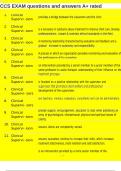
1. Clinical
provides a bridge between the classroom and the clinic
Supervi- sion
2. Clinical
Supervi- sion is a necessary in substance abuse treatment to improve client care, develop
professionalism , impart & maintain ethical standards in the field.
3. Clinical
Supervi- sion A mentoring relationship characterized by evaluation and feedback and a
gradual increase in autonomy and responsibility.
4. Clinical
Supervi- sion A process in which an organization provides monitoring and evaluation of
the performance of its counselors.
5. Clinical
Supervi- sion an intervention provided by a senior member to a junior member of the
same profession to assist therapist understanding of their influence on the
treatment process
6. Clinical
Supervi- sion is founded on a positive relationship with the supervisor and
supervisee that promotes client welfare and professional
7. Clinical development of the supervisee.
Supervi- sors
are teachers, mentors, evaluators, consultants and can be administrators.
8. Clinical
Supervi- sors
provide support, encouragement, education to statt while addressing an
9. Clinical
array of psychological, interpersonal, physical and spiritual issues of
Supervi- sion
clients.
10. Clinical
Supervi- sion ensures clients are competently served.
11. Clinical
Supervi- sion ensures counselors continue to increase their skills, which increases
treatment ettectiveness, client retention and statt satisfaction.
is an intervention provided by a more senior member of the
,CCS EXAM questions and answers A+ rated
profession to a junior
member of the
profession..............................
this relationship is
evaluative , extends
over
time and has simultaneous
purpose enhancing the
professional functioning of
,CCS EXAM questions and answers A+ rated
the more junior persons; monitoring the quality of professional services
ottered to the clients that they see; and serving as the gatekeeper of
those who are to enter the particular profession(Bernard/Goodyear)
12. Clinical is a social influence process that occurs over time in which the
Supervi- sion supervisor par- ticipates with supervisees to ensure quality of clinical care.
Ettective supervisors create and atmosphere that promotes self-
motivation, learning & professional development. They build teams,
create cohesion, resolve conflict and shape agency culture while
attending to ethical & diversity issues in all aspects of the process. Such
supervision is key to both quality improvement and the successful
implementation of consensus and EBP(CSAT)
13. Clinical
Supervi- sion is a disciplined, tutorial process wherein principles are transformed into
practical skills with four overlapping foci: administrative, evaluative,
clinical and supportive (Powell/Brodsky)
14. Clinical
Supervi- sion
acts as the supervisor to the client, counselor and organization the
significance of your position is apparent in the following:
*organizations have an obligation to ensure quality care and quality
improvement of all personnel. The first aim of the clinical supervision is to
ensure quality services and to protect the welfare of the clients.
* Supervision is the right of all employees and has a direct impact on
the workforce development and statt client retention
15. Functions of Clin- Facilitate the integration of counselor self awareness, theoretical
grounding,
ical Supervisiondevelopment of clinical knowledge and skills and to improve functional skills
and professional practices.
16. Functions of Clin- Supervisor is in a unique position as an advocate for the agency, the
counselor
ical Supervisionand the client.
,CCS EXAM questions and answers A+ rated
pervisors interpret and monitor goals, policies and procedures and communicate client needs to
compliance with agency administrators.
1. Clinical
provides a bridge between the classroom and the clinic
Supervi- sion
2. Clinical
Supervi- sion is a necessary in substance abuse treatment to improve client care, develop
professionalism , impart & maintain ethical standards in the field.
3. Clinical
Supervi- sion A mentoring relationship characterized by evaluation and feedback and a
gradual increase in autonomy and responsibility.
4. Clinical
Supervi- sion A process in which an organization provides monitoring and evaluation of
the performance of its counselors.
5. Clinical
Supervi- sion an intervention provided by a senior member to a junior member of the
same profession to assist therapist understanding of their influence on the
treatment process
6. Clinical
Supervi- sion is founded on a positive relationship with the supervisor and
supervisee that promotes client welfare and professional
7. Clinical development of the supervisee.
Supervi- sors
are teachers, mentors, evaluators, consultants and can be administrators.
8. Clinical
Supervi- sors
provide support, encouragement, education to statt while addressing an
9. Clinical
array of psychological, interpersonal, physical and spiritual issues of
Supervi- sion
clients.
10. Clinical
Supervi- sion ensures clients are competently served.
11. Clinical
Supervi- sion ensures counselors continue to increase their skills, which increases
treatment ettectiveness, client retention and statt satisfaction.
is an intervention provided by a more senior member of the
,CCS EXAM questions and answers A+ rated
profession to a junior
member of the
profession..............................
this relationship is
evaluative , extends
over
time and has simultaneous
purpose enhancing the
professional functioning of
,CCS EXAM questions and answers A+ rated
the more junior persons; monitoring the quality of professional services
ottered to the clients that they see; and serving as the gatekeeper of
those who are to enter the particular profession(Bernard/Goodyear)
12. Clinical is a social influence process that occurs over time in which the
Supervi- sion supervisor par- ticipates with supervisees to ensure quality of clinical care.
Ettective supervisors create and atmosphere that promotes self-
motivation, learning & professional development. They build teams,
create cohesion, resolve conflict and shape agency culture while
attending to ethical & diversity issues in all aspects of the process. Such
supervision is key to both quality improvement and the successful
implementation of consensus and EBP(CSAT)
13. Clinical
Supervi- sion is a disciplined, tutorial process wherein principles are transformed into
practical skills with four overlapping foci: administrative, evaluative,
clinical and supportive (Powell/Brodsky)
14. Clinical
Supervi- sion
acts as the supervisor to the client, counselor and organization the
significance of your position is apparent in the following:
*organizations have an obligation to ensure quality care and quality
improvement of all personnel. The first aim of the clinical supervision is to
ensure quality services and to protect the welfare of the clients.
* Supervision is the right of all employees and has a direct impact on
the workforce development and statt client retention
15. Functions of Clin- Facilitate the integration of counselor self awareness, theoretical
grounding,
ical Supervisiondevelopment of clinical knowledge and skills and to improve functional skills
and professional practices.
16. Functions of Clin- Supervisor is in a unique position as an advocate for the agency, the
counselor
ical Supervisionand the client.
,CCS EXAM questions and answers A+ rated
pervisors interpret and monitor goals, policies and procedures and communicate client needs to
compliance with agency administrators.