
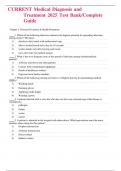
CURRENT Medical
CURRENT Diagnosis
Medical and and
Diagnosis
@w
@w
@w
@w
@w
@w
Treatment Treatment
@w2025 Test Bank/Complete @w
@w @w @w
2019 Testbank/Studyguide
Guide @w
@w
Chapter 1. Disease Prevention & Health Promotion
1. Which of the following behaviors indicates the highest potential for spreading infections
among clients? The nurse:
1) disinfects dirty hands with antibacterial soap.
2) allows alcohol-based rub to dry for 10 seconds.
3) washes hands only after leaving each room.
4) uses cold water for medical asepsis.
2. What is the most frequent cause of the spread of infection among institutionalized
patients?
1) Airborne microbes from other patients
2) Contact with contaminated equipment
3) Hands of healthcare workers
4) Exposure from family members
3. Which of the following nursing activities is of highest priority for maintaining medical
asepsis?
1) Washing hands
2) Donning gloves
3) Applying sterile drapes
4) Wearing a gown
4. A patient infected with a virus but who does not have any outward sign of the disease is
considered a:
1) pathogen.
2) fomite.
3) vector.
4) carrier.
5. A patient is admitted to the hospital with tuberculosis. Which precautions must the nurse
institute when caring for this patient?
1) Droplet transmission
2) Airborne transmission
3) Direct contact
4) Indirect contact
,Chapter 1. Disease Prevention & Health Promotion
1. Which of the following behaviors indicates the highest potential for
spreading infections among clients? The nurse:
1) disinfects dirty hands with antibacterial soap.
2) allows alcohol-based rub to dry for 10 seconds.
3) washes hands only after leaving each room.
4) uses cold water for medical asepsis.
2. What is the most frequent cause of the spread of infection
among institutionalized patients?
1) Airborne microbes from other patients
2) Contact with contaminated equipment
3) Hands of healthcare workers
4) Exposure from family members
3. Which of the following nursing activities is of highest priority for
maintaining medical asepsis?
1) Washing hands
2) Donning gloves
3) Applying sterile drapes
4) Wearing a gown
4. A patient infected with a virus but who does not have any outward
sign of the disease is considered a:
1) pathogen.
2) fomite.
3) vector.
4) carrier.
5. A patient is admitted to the hospital with tuberculosis. Which
precautions must the nurse institute when caring for this patient?
1) Droplet transmission
2) Airborne transmission
3) Direct contact
4) Indirect contact
, @ w 6. @wA @wpatient @wbecomes @winfected @wwith @woral @wcandidiasis @w(thrush) @wwhile
@ w
@wreceiving @wintravenous @wantibiotics @wto @wtreat @wa @wsystemic @winfection. @wWhich @wtype @wof
@winfection @whas @wthe @wpatient @wdeveloped?
1) Endogenous @wnosocomial
2) Exogenous @wnosocomial
3) Latent
4) Primary
@ w @ w 7. @wA @wpatient @wadmitted @wto @wthe @whospital @wwith @wpneumonia @whas @wbeen
@wreceiving @wantibiotics @wfor @w2 @wdays. @wHis @wcondition @whas @wstabilized, @wand @whis
@wtemperature @whas @wreturned @wto @wnormal. @wWhich @wstage @wof @winfection @wis @wthe @wpatient
@wmost @wlikely @wexperiencing?
1) Incubation
2) Prodromal
3) Decline
4) Convalescence
8. @wThe @wnurse @wassists @wa @wsurgeon @wwith @wcentral @wvenous @wcatheter @winsertion.
@wWhich @waction @wis @wnecessary @wto @whelp @wmaintain @wsterile @wtechnique?
1) Closing @wthe @wpatients @wdoor @wto @wlimit @wroom @wtraffic @wwhile @wpreparing @wthe @wsterile
@wfield
2) Using @wclean @wprocedure @wgloves @wto @whandle @wsterile @wequipment
3) Placing @wthe @wnonsterile @wsyringes @wcontaining @wflush @wsolution @won @wthe @wsterile @wfield
4) Remaining @w6 @winches @waway @wfrom @wthe @wsterile @wfield @wduring @wthe @wprocedure
9. @wA @wpatient @wdevelops @wlocalized @wheat @wand @werythema @wover @wan @warea @won @wthe
@wlower @wleg. @wThese @wfindings @ware @windicative @wof @wwhich @wsecondary @wdefense @wagainst
@winfection?
1) Phagocytosis
2) Complement @wcascade
3) Inflammation
4) Immunity
10. @wThe @wpatient @wsuddenly @wdevelops @whives, @wshortness @wof @wbreath, @wand @wwheezing
@wafter @wreceiving @wan @wantibiotic. @wWhich @wantibody @wis @wprimarily @wresponsible @wfor @wthis
@wpatients @wresponse?
1) IgA
2) IgE
3) IgG
4) IgM
11. @wWhat @wtype @wof @wimmunity @wis @wprovided @wby @wintravenous @w(IV)
@wadministration @wof @wimmunoglobulin @wG?
1) Cell-mediated
, 2) Passive
3) Humoral
4) Active
CURRENT Diagnosis
Medical and and
Diagnosis
@w
@w
@w
@w
@w
@w
Treatment Treatment
@w2025 Test Bank/Complete @w
@w @w @w
2019 Testbank/Studyguide
Guide @w
@w
Chapter 1. Disease Prevention & Health Promotion
1. Which of the following behaviors indicates the highest potential for spreading infections
among clients? The nurse:
1) disinfects dirty hands with antibacterial soap.
2) allows alcohol-based rub to dry for 10 seconds.
3) washes hands only after leaving each room.
4) uses cold water for medical asepsis.
2. What is the most frequent cause of the spread of infection among institutionalized
patients?
1) Airborne microbes from other patients
2) Contact with contaminated equipment
3) Hands of healthcare workers
4) Exposure from family members
3. Which of the following nursing activities is of highest priority for maintaining medical
asepsis?
1) Washing hands
2) Donning gloves
3) Applying sterile drapes
4) Wearing a gown
4. A patient infected with a virus but who does not have any outward sign of the disease is
considered a:
1) pathogen.
2) fomite.
3) vector.
4) carrier.
5. A patient is admitted to the hospital with tuberculosis. Which precautions must the nurse
institute when caring for this patient?
1) Droplet transmission
2) Airborne transmission
3) Direct contact
4) Indirect contact
,Chapter 1. Disease Prevention & Health Promotion
1. Which of the following behaviors indicates the highest potential for
spreading infections among clients? The nurse:
1) disinfects dirty hands with antibacterial soap.
2) allows alcohol-based rub to dry for 10 seconds.
3) washes hands only after leaving each room.
4) uses cold water for medical asepsis.
2. What is the most frequent cause of the spread of infection
among institutionalized patients?
1) Airborne microbes from other patients
2) Contact with contaminated equipment
3) Hands of healthcare workers
4) Exposure from family members
3. Which of the following nursing activities is of highest priority for
maintaining medical asepsis?
1) Washing hands
2) Donning gloves
3) Applying sterile drapes
4) Wearing a gown
4. A patient infected with a virus but who does not have any outward
sign of the disease is considered a:
1) pathogen.
2) fomite.
3) vector.
4) carrier.
5. A patient is admitted to the hospital with tuberculosis. Which
precautions must the nurse institute when caring for this patient?
1) Droplet transmission
2) Airborne transmission
3) Direct contact
4) Indirect contact
, @ w 6. @wA @wpatient @wbecomes @winfected @wwith @woral @wcandidiasis @w(thrush) @wwhile
@ w
@wreceiving @wintravenous @wantibiotics @wto @wtreat @wa @wsystemic @winfection. @wWhich @wtype @wof
@winfection @whas @wthe @wpatient @wdeveloped?
1) Endogenous @wnosocomial
2) Exogenous @wnosocomial
3) Latent
4) Primary
@ w @ w 7. @wA @wpatient @wadmitted @wto @wthe @whospital @wwith @wpneumonia @whas @wbeen
@wreceiving @wantibiotics @wfor @w2 @wdays. @wHis @wcondition @whas @wstabilized, @wand @whis
@wtemperature @whas @wreturned @wto @wnormal. @wWhich @wstage @wof @winfection @wis @wthe @wpatient
@wmost @wlikely @wexperiencing?
1) Incubation
2) Prodromal
3) Decline
4) Convalescence
8. @wThe @wnurse @wassists @wa @wsurgeon @wwith @wcentral @wvenous @wcatheter @winsertion.
@wWhich @waction @wis @wnecessary @wto @whelp @wmaintain @wsterile @wtechnique?
1) Closing @wthe @wpatients @wdoor @wto @wlimit @wroom @wtraffic @wwhile @wpreparing @wthe @wsterile
@wfield
2) Using @wclean @wprocedure @wgloves @wto @whandle @wsterile @wequipment
3) Placing @wthe @wnonsterile @wsyringes @wcontaining @wflush @wsolution @won @wthe @wsterile @wfield
4) Remaining @w6 @winches @waway @wfrom @wthe @wsterile @wfield @wduring @wthe @wprocedure
9. @wA @wpatient @wdevelops @wlocalized @wheat @wand @werythema @wover @wan @warea @won @wthe
@wlower @wleg. @wThese @wfindings @ware @windicative @wof @wwhich @wsecondary @wdefense @wagainst
@winfection?
1) Phagocytosis
2) Complement @wcascade
3) Inflammation
4) Immunity
10. @wThe @wpatient @wsuddenly @wdevelops @whives, @wshortness @wof @wbreath, @wand @wwheezing
@wafter @wreceiving @wan @wantibiotic. @wWhich @wantibody @wis @wprimarily @wresponsible @wfor @wthis
@wpatients @wresponse?
1) IgA
2) IgE
3) IgG
4) IgM
11. @wWhat @wtype @wof @wimmunity @wis @wprovided @wby @wintravenous @w(IV)
@wadministration @wof @wimmunoglobulin @wG?
1) Cell-mediated
, 2) Passive
3) Humoral
4) Active


