

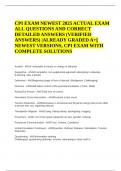
CPI EXAM NEWEST 2025 ACTUAL EXAM
ALL QUESTIONS AND CORRECT
DETAILED ANSWERS (VERIFIED
ANSWERS) |ALREADY GRADED A+||
NEWEST VERSIONS, CPI EXAM WITH
COMPLETE SOLUTIONS
Anxiety - ANSA noticeable increase or change in behavior
Supportive - ANSAn empathic, non-judgmental approach attempting to alleviate.
(Listening, take a break)
Defensive - ANSBeginning stage of loss of rational. (Belligerent, Challenging)
Directive - ANSStaff takes control of the potential escalation. (Timer, Walk)
Acting-Out Person - ANSTotal loss of control.
Nonviolent Crisis Intervention - ANSRestraint is last resort
Tension Reduction - ANSDecreases in emotional and physical energy that occurs after
a person acts out, regaining rational.
Therapeutic Rapport - ANSCrying, falling asleep, apologizing, hugging.
Proxemics - ANS1 1/2-3 feet space (depends on size, gender, cultural)
Paraverval Communication - ANSTone, Volume, Candance
Verbal Escalation Continuum - ANSQuestion, Refusal, Release, Intimidation, Tension
Reduction
Questioning - ANSInformation seeking
Challenging- questioning authority, evasive, attempting to draw staff in
, Questioning interventions - ANSgive arational response
stick to the topic, ignore the challenge
Refusal - ANSnon-compliance, loss of rational
Refusal Interventions - ANSset limits- First...Then
Release - ANSverbal acting out and emotional outburst
Release interventions - ANSallow student to act out, remove audience
Intimidation - ANSverbal/nonverbal
Intimidation Intervention - ANSseek assistance, avoid hands on, take it serious
Tension Reduction - ANSA drop in energy, low level defensive
Verbal Intervention Techniques - ANScalm, isolate situation, enforce limits, listen, be
aware of non verbal, consistant
Empathic Listening - ANSactive process to discern what the person is saying.
non-judgmental, undivided attention, listen carefully, allow silence, restate to clarify
Unproductive Response - ANSfreezing, over reacting, responding inappropriately
Productive Response - ANSincrease speed in strength, increase awareness, decrease
reaction time
Strike - ANSa weapon coming in contact with a target (hit, kick, throw)
Grab - ANSthe control or destruction of a part of one's anatomy
CPI Principals' of personal safety - ANSBlock and Move
Precipitating Factors - ANSinternal/external cause of acting out-staff has no control of
Rational Detachment - ANSstay professional, don't take it personal
Integrated Experience - ANSthe concept the behaviors and attitudes of staff impact the
behaviors and attitudes of those in their care- visa-verse
Precipitating factors Can - ANSprevent behaviors, recognize staff is not the case, avoid
becoming the cause.
CPI Purpose - ANSCare, Welfare, safety, security of all
ALL QUESTIONS AND CORRECT
DETAILED ANSWERS (VERIFIED
ANSWERS) |ALREADY GRADED A+||
NEWEST VERSIONS, CPI EXAM WITH
COMPLETE SOLUTIONS
Anxiety - ANSA noticeable increase or change in behavior
Supportive - ANSAn empathic, non-judgmental approach attempting to alleviate.
(Listening, take a break)
Defensive - ANSBeginning stage of loss of rational. (Belligerent, Challenging)
Directive - ANSStaff takes control of the potential escalation. (Timer, Walk)
Acting-Out Person - ANSTotal loss of control.
Nonviolent Crisis Intervention - ANSRestraint is last resort
Tension Reduction - ANSDecreases in emotional and physical energy that occurs after
a person acts out, regaining rational.
Therapeutic Rapport - ANSCrying, falling asleep, apologizing, hugging.
Proxemics - ANS1 1/2-3 feet space (depends on size, gender, cultural)
Paraverval Communication - ANSTone, Volume, Candance
Verbal Escalation Continuum - ANSQuestion, Refusal, Release, Intimidation, Tension
Reduction
Questioning - ANSInformation seeking
Challenging- questioning authority, evasive, attempting to draw staff in
, Questioning interventions - ANSgive arational response
stick to the topic, ignore the challenge
Refusal - ANSnon-compliance, loss of rational
Refusal Interventions - ANSset limits- First...Then
Release - ANSverbal acting out and emotional outburst
Release interventions - ANSallow student to act out, remove audience
Intimidation - ANSverbal/nonverbal
Intimidation Intervention - ANSseek assistance, avoid hands on, take it serious
Tension Reduction - ANSA drop in energy, low level defensive
Verbal Intervention Techniques - ANScalm, isolate situation, enforce limits, listen, be
aware of non verbal, consistant
Empathic Listening - ANSactive process to discern what the person is saying.
non-judgmental, undivided attention, listen carefully, allow silence, restate to clarify
Unproductive Response - ANSfreezing, over reacting, responding inappropriately
Productive Response - ANSincrease speed in strength, increase awareness, decrease
reaction time
Strike - ANSa weapon coming in contact with a target (hit, kick, throw)
Grab - ANSthe control or destruction of a part of one's anatomy
CPI Principals' of personal safety - ANSBlock and Move
Precipitating Factors - ANSinternal/external cause of acting out-staff has no control of
Rational Detachment - ANSstay professional, don't take it personal
Integrated Experience - ANSthe concept the behaviors and attitudes of staff impact the
behaviors and attitudes of those in their care- visa-verse
Precipitating factors Can - ANSprevent behaviors, recognize staff is not the case, avoid
becoming the cause.
CPI Purpose - ANSCare, Welfare, safety, security of all


