5/3/25, 7:09 PM WEB WOC Wound Care 2025 UPDATE| COMPREHENSIVE QUESTIONS AND VERIFIED ANSWERS (COMPLETE SOLUTIONS) …
WEB WOC Wound Care 2025 UPDATE|
COMPREHENSIVE QUESTIONS AND VERIFIED
ANSWERS (COMPLETE SOLUTIONS)
GUARANTEED. SUCCESS|GRADE A+!! (100%
ACCURATE) GET IT RIGHT!!
Save
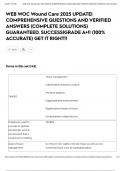
Terms in this set (143)
Tissue management
Inflammation/infection control
Moisture balance
TIMERS
Edge/epithelial advancement
Regeneration/repair of tissue
Social/patient related factors
Framework used to TIMERS
provide an optimal
physiologic wound
environment that is
conducive to healing
Goal of tissue to remove non-viable, necrotic tissue as well as non-
management functional tissue such as hypergranulation
https://quizlet.com/1039129906/web-woc-wound-care-2025-update-comprehensive-questions-and-verified-answers-complete-solutions-guaranteed-s… 1/23
,5/3/25, 7:09 PM WEB WOC Wound Care 2025 UPDATE| COMPREHENSIVE QUESTIONS AND VERIFIED ANSWERS (COMPLETE SOLUTIONS) …
goal of inflammation or eliminate infection and control bioburden
infection control
not too wet and not too dry
goal of moisture balance provide moist wound therapy, absorb excess
drainage, control odor, fill dead space, control
swelling, protect periwound
goal of epithelial/edge keep wound edged open, address epibole and
advancement undermining, remove callous, protect periwound skin
goal of cellular products, tissue based products, advanced
regeneration/repair of therapies such as hyperbaric treatment of NPWT
tissue
goal of social/patient develop a patient-centers POC, patient engagement,
related factors holistic assessment
to remove necrotic tissue or debris, remove and
reduce biofilm, remove infected tissues, in palliative
why use debridement? care to control odor, to facilitate wound visualization,
in chronic wounds to convert to acute wound to
promote healing
a type of non-instrumental debridement that uses the
autolytic debridement body's own WBCs, enzymes, and moisture to re-
hydrate, soften, and liquify hard eschar and slough
benefits of autolytic painless, easily done with moisture retentive
debridement dressings, aides in combination debridement methods
disadvantages of autolytic takes times, may be aesthetically displeasing to the
debridement patient if using a transparent dressing
contraindications to neutropenic patients, those with diabetes mellitus
autolytic debridement (higher risk for infection)
https://quizlet.com/1039129906/web-woc-wound-care-2025-update-comprehensive-questions-and-verified-answers-complete-solutions-guaranteed-s… 2/23
, 5/3/25, 7:09 PM WEB WOC Wound Care 2025 UPDATE| COMPREHENSIVE QUESTIONS AND VERIFIED ANSWERS (COMPLETE SOLUTIONS) …
a type of non-instrumental debridement that uses
concentrated nonionic surfactant dressings (CSDs)
surfactant debridement which can soften and loosen wound debris,
breakdown biofilms, and prevent redevelopment of
biofilms
indications for surfactant stagnant wounds, local wound infections, burns
debridement
cleanses wound without the use of cytogenic agents,
benefits of surfactant
reduces inflammation, reduces biofilm, allows for daily
debridement
visualization of wound
disadvantages of can be expensive, dressing must be changed daily
surfactant debridement
contraindications for sensitivity to chemical properties
surfactant debridement
a type of non-instrumental debridement that uses
enzymatic debridement collagenase to dissolve collagen anchors between
necrotic tissue and the wound bed
benefits of enzymatic faster than autolysis, good option for those at high
debridement risk for bleeding, safe in infected wounds
disadvantages of costly, daily application, can sting, takes longer than
enzymatic debridement sharp or mechanical debridement
contraindications of not compatible with metal products, some antiseptic
enzymatic debridement cleansers reduce its activity/effectiveness
a type of non-instrumental debridement using sodium
chemical debridement by
hypochlorite (diluted bleach) to dissolve collagen
sodium hypochlorite
anchors between necrotic tissue and the wound bed
indications for chemical grossly necrotic or infected wounds
debridement by sodium
hypochlorite
benefits of chemical reduces wound odor, cheap, non-cytotoxic
debridement by sodium
hypochlorite
https://quizlet.com/1039129906/web-woc-wound-care-2025-update-comprehensive-questions-and-verified-answers-complete-solutions-guaranteed-s… 3/23
WEB WOC Wound Care 2025 UPDATE|
COMPREHENSIVE QUESTIONS AND VERIFIED
ANSWERS (COMPLETE SOLUTIONS)
GUARANTEED. SUCCESS|GRADE A+!! (100%
ACCURATE) GET IT RIGHT!!
Save
Terms in this set (143)
Tissue management
Inflammation/infection control
Moisture balance
TIMERS
Edge/epithelial advancement
Regeneration/repair of tissue
Social/patient related factors
Framework used to TIMERS
provide an optimal
physiologic wound
environment that is
conducive to healing
Goal of tissue to remove non-viable, necrotic tissue as well as non-
management functional tissue such as hypergranulation
https://quizlet.com/1039129906/web-woc-wound-care-2025-update-comprehensive-questions-and-verified-answers-complete-solutions-guaranteed-s… 1/23
,5/3/25, 7:09 PM WEB WOC Wound Care 2025 UPDATE| COMPREHENSIVE QUESTIONS AND VERIFIED ANSWERS (COMPLETE SOLUTIONS) …
goal of inflammation or eliminate infection and control bioburden
infection control
not too wet and not too dry
goal of moisture balance provide moist wound therapy, absorb excess
drainage, control odor, fill dead space, control
swelling, protect periwound
goal of epithelial/edge keep wound edged open, address epibole and
advancement undermining, remove callous, protect periwound skin
goal of cellular products, tissue based products, advanced
regeneration/repair of therapies such as hyperbaric treatment of NPWT
tissue
goal of social/patient develop a patient-centers POC, patient engagement,
related factors holistic assessment
to remove necrotic tissue or debris, remove and
reduce biofilm, remove infected tissues, in palliative
why use debridement? care to control odor, to facilitate wound visualization,
in chronic wounds to convert to acute wound to
promote healing
a type of non-instrumental debridement that uses the
autolytic debridement body's own WBCs, enzymes, and moisture to re-
hydrate, soften, and liquify hard eschar and slough
benefits of autolytic painless, easily done with moisture retentive
debridement dressings, aides in combination debridement methods
disadvantages of autolytic takes times, may be aesthetically displeasing to the
debridement patient if using a transparent dressing
contraindications to neutropenic patients, those with diabetes mellitus
autolytic debridement (higher risk for infection)
https://quizlet.com/1039129906/web-woc-wound-care-2025-update-comprehensive-questions-and-verified-answers-complete-solutions-guaranteed-s… 2/23
, 5/3/25, 7:09 PM WEB WOC Wound Care 2025 UPDATE| COMPREHENSIVE QUESTIONS AND VERIFIED ANSWERS (COMPLETE SOLUTIONS) …
a type of non-instrumental debridement that uses
concentrated nonionic surfactant dressings (CSDs)
surfactant debridement which can soften and loosen wound debris,
breakdown biofilms, and prevent redevelopment of
biofilms
indications for surfactant stagnant wounds, local wound infections, burns
debridement
cleanses wound without the use of cytogenic agents,
benefits of surfactant
reduces inflammation, reduces biofilm, allows for daily
debridement
visualization of wound
disadvantages of can be expensive, dressing must be changed daily
surfactant debridement
contraindications for sensitivity to chemical properties
surfactant debridement
a type of non-instrumental debridement that uses
enzymatic debridement collagenase to dissolve collagen anchors between
necrotic tissue and the wound bed
benefits of enzymatic faster than autolysis, good option for those at high
debridement risk for bleeding, safe in infected wounds
disadvantages of costly, daily application, can sting, takes longer than
enzymatic debridement sharp or mechanical debridement
contraindications of not compatible with metal products, some antiseptic
enzymatic debridement cleansers reduce its activity/effectiveness
a type of non-instrumental debridement using sodium
chemical debridement by
hypochlorite (diluted bleach) to dissolve collagen
sodium hypochlorite
anchors between necrotic tissue and the wound bed
indications for chemical grossly necrotic or infected wounds
debridement by sodium
hypochlorite
benefits of chemical reduces wound odor, cheap, non-cytotoxic
debridement by sodium
hypochlorite
https://quizlet.com/1039129906/web-woc-wound-care-2025-update-comprehensive-questions-and-verified-answers-complete-solutions-guaranteed-s… 3/23