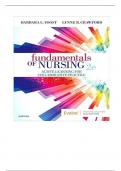
,TEST BANK FOR FUNDAMENTALS OF NURSING: ACTIVE LEARNING FORCOLLABORATIVE
PRACTICE 2ND EDITION, BY BARBARA L YOOST
TABLE OF CONTENTS
1. Nursing, Theory, and Professional Practice
2. Values, Beliefs, and Caring
3. Communication
4. Critical Thinking in Nursing
5. Introduction to the Nursing Process
6. Assessment
7. Nursing Diagnosis
8. Planning
9. Implementation and Evaluation
10. Documentation, Electronic Health Records, and Reporting
11. Ethical and Legal Considerations
12. Leadership and Management
13. Evidence-Based Practice and Nursing Research
14. Health Literacy and Patient Education
15. Nursing Informatics
,16. Health and Wellness
,17. Human Development: Conception through Adolescence
18. Human Development: Young Adult through Older Adult
19. Vital Signs
20. Health History and Physical Assessment
21. Ethnicity and Cultural Assessment
22. Spiritual Health
23. Public Health, Community-Based, and Home Health Care
24. Human Sexuality
25. Safety
26. Asepsis and Infection Control
27. Hygiene and Personal Care
28. Activity, Immobility, and Safe Movement
29. Skin Integrity and Wound Care
30. Nutrition
31. Cognitive and Sensory Alterations
32. Stress and Coping
33. Sleep
34. Diagnostic Testing
,35. Medication Administration
36. Pain Management
37. Perioperative Nursing Care
38. Oxygenation and Tissues Perfusion
39. Fluid, Electrolyte, and Acid-Base Balance
40. Bowel Elimination
41. Urinary Elimination
42. Death and Loss
, Chapter 01: Nursing, Theory, and Professional Practice
MULTIPLE CHOICE
1. A group of students are discussing the impact of non-nursing theories in clinical practice. The
students would be correct if they chose which theory to prioritize patient care?
a. Erikson’s Psychosocial Theory
b. Paul’s Critical Thinking Theory
c. Maslow’s Hierarchy of Needs
d. Rosenstock’s Health Belief Model
ANS: C
Maslow’s hierarchy of needs specifies the psychological and physiologic factors that affect each
person’s physical and mental health. The nurse’s understanding of these factors helps with
formulating nursing diagnoses that address the patient’s needs and values to prioritize care.
Erikson’s Psychosocial Theory of Development and Socialization is based on individuals’ interacting
and learning about their world. Nurses use concepts of developmentaltheory to critically think in
providing care for their patients at various stages of their lives.
Rosenstock (1974) developed the psychological Health Belief Model. The model addressespossible
reasons for why a patient may not comply with recommended health promotion behaviors. This
model is especially useful to nurses as they educate patients.
DIF: Remembering REF: p. 8 | pp. 10-
11OBJ: 1.4 TOP: Planning
MSC: NCLEX Client Needs Category: Safe and Effective Care Environment: Management of CareNOT:
Concepts: Care Coordination
2. A nursing student is preparing study notes from a recent lecture in nursing history. The student
would credit Florence Nightingale for which definition of nursing?
a. The imbalance between the patient and the environment decreases the capacity for
health.
b. The nurse needs to focus on interpersonal processes between nurse and patient.
c. The nurse assists the patient with essential functions toward independence.
d. Human beings are interacting in continuous motion as energy fields.
ANS: A
Florence Nightingale’s (1860) concept of the environment emphasized prevention and clean air,
water, and housing. This theory states that the imbalance between the patient and the environment
decreases the capacity for health and does not allow for conservation of energy. Hildegard Peplau
PRACTICE 2ND EDITION, BY BARBARA L YOOST
TABLE OF CONTENTS
1. Nursing, Theory, and Professional Practice
2. Values, Beliefs, and Caring
3. Communication
4. Critical Thinking in Nursing
5. Introduction to the Nursing Process
6. Assessment
7. Nursing Diagnosis
8. Planning
9. Implementation and Evaluation
10. Documentation, Electronic Health Records, and Reporting
11. Ethical and Legal Considerations
12. Leadership and Management
13. Evidence-Based Practice and Nursing Research
14. Health Literacy and Patient Education
15. Nursing Informatics
,16. Health and Wellness
,17. Human Development: Conception through Adolescence
18. Human Development: Young Adult through Older Adult
19. Vital Signs
20. Health History and Physical Assessment
21. Ethnicity and Cultural Assessment
22. Spiritual Health
23. Public Health, Community-Based, and Home Health Care
24. Human Sexuality
25. Safety
26. Asepsis and Infection Control
27. Hygiene and Personal Care
28. Activity, Immobility, and Safe Movement
29. Skin Integrity and Wound Care
30. Nutrition
31. Cognitive and Sensory Alterations
32. Stress and Coping
33. Sleep
34. Diagnostic Testing
,35. Medication Administration
36. Pain Management
37. Perioperative Nursing Care
38. Oxygenation and Tissues Perfusion
39. Fluid, Electrolyte, and Acid-Base Balance
40. Bowel Elimination
41. Urinary Elimination
42. Death and Loss
, Chapter 01: Nursing, Theory, and Professional Practice
MULTIPLE CHOICE
1. A group of students are discussing the impact of non-nursing theories in clinical practice. The
students would be correct if they chose which theory to prioritize patient care?
a. Erikson’s Psychosocial Theory
b. Paul’s Critical Thinking Theory
c. Maslow’s Hierarchy of Needs
d. Rosenstock’s Health Belief Model
ANS: C
Maslow’s hierarchy of needs specifies the psychological and physiologic factors that affect each
person’s physical and mental health. The nurse’s understanding of these factors helps with
formulating nursing diagnoses that address the patient’s needs and values to prioritize care.
Erikson’s Psychosocial Theory of Development and Socialization is based on individuals’ interacting
and learning about their world. Nurses use concepts of developmentaltheory to critically think in
providing care for their patients at various stages of their lives.
Rosenstock (1974) developed the psychological Health Belief Model. The model addressespossible
reasons for why a patient may not comply with recommended health promotion behaviors. This
model is especially useful to nurses as they educate patients.
DIF: Remembering REF: p. 8 | pp. 10-
11OBJ: 1.4 TOP: Planning
MSC: NCLEX Client Needs Category: Safe and Effective Care Environment: Management of CareNOT:
Concepts: Care Coordination
2. A nursing student is preparing study notes from a recent lecture in nursing history. The student
would credit Florence Nightingale for which definition of nursing?
a. The imbalance between the patient and the environment decreases the capacity for
health.
b. The nurse needs to focus on interpersonal processes between nurse and patient.
c. The nurse assists the patient with essential functions toward independence.
d. Human beings are interacting in continuous motion as energy fields.
ANS: A
Florence Nightingale’s (1860) concept of the environment emphasized prevention and clean air,
water, and housing. This theory states that the imbalance between the patient and the environment
decreases the capacity for health and does not allow for conservation of energy. Hildegard Peplau