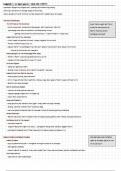
SQ2 (Chapter 3) – 5 points
Chapter 3 Application and Misapplication Exercises
Graphing Behavior and Measuring Change
Miltenberger 7th Edition
*You can insert a picture of the graphs that you have drawn by hand or created
electronically (e.g., Excel, drawing tool) under each question that asks for a graph or
attach as a second document. Graphs must your own original work.
Applications
1. Question N/A
Answer N/A
What kind of research design did the fraternity use to evaluate the
2. Question
effects of their intervention to decrease energy use?
Graph
The fraternity applied an ABAB (reversal) design, which is an extension
of the simple A-B design (where A= baseline and B=treatment). In the
A-B-A-B design, baseline and treatment phases are implemented twice.
Answer
It is called reversal design because after the first treatment phase, the
researcher removes the treatment and reverses back to baseline. This
second baseline is followed by replication of the treatment.
Chapter 3 Application and Misapplication Exercises
Graphing Behavior and Measuring Change
Miltenberger 7th Edition
*You can insert a picture of the graphs that you have drawn by hand or created
electronically (e.g., Excel, drawing tool) under each question that asks for a graph or
attach as a second document. Graphs must your own original work.
Applications
1. Question N/A
Answer N/A
What kind of research design did the fraternity use to evaluate the
2. Question
effects of their intervention to decrease energy use?
Graph
The fraternity applied an ABAB (reversal) design, which is an extension
of the simple A-B design (where A= baseline and B=treatment). In the
A-B-A-B design, baseline and treatment phases are implemented twice.
Answer
It is called reversal design because after the first treatment phase, the
researcher removes the treatment and reverses back to baseline. This
second baseline is followed by replication of the treatment.