
GPSTC Exam 9
Study online at https://quizlet.com/_e4ajaw
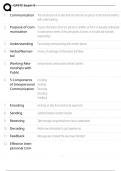
1. Communication The transmission of an idea from the mind of one person to the mind of another,
with understanding
2. Purpose of Com- To pass information from one person to another so that it is mutually understood
munication to make person needs of the participants; to learn; or to build and maintain
relationships
3. Understanding Successfully communicating with another person
4. Verbal/Nonver- Process of exchange of information that flows
bal
5. Working Rela- Interpersonal communication breaks barriers
tionships with
Public
6. 5 Components Encoding
of Interpersonal Sending
Communication Receiving
Decoding
Feedback
7. Encoding Forming an idea that needs to be expressed
8. Sending Symbols between sender/receiver
9. Receiving Take message using verbal/non cues to understand
10. Decoding Relate new information to past experiences
11. Feedback Message was received the way it was intended
12. Effective Inter-
personal Com-
, GPSTC Exam 9
Study online at https://quizlet.com/_e4ajaw
munication Com- 1. The message intended
ponents 2. The message sent
3. The message received
13. Elements of In- Cues - Triggers that cause someone to respond in a particular way
fluence Commu- Distractions - Environmental
nications Creating a trusting environment - Open to communicate
14. Characteristics of Diffusion
Emotions Persistence of emotions
Cumulative effect
15. Title 42 Civil
16. Title 18 Criminal
17. Types of Legal Li- Criminal
ability Civil
Administrative
18. Criminal Liability The liability that arise out of breaking a law or committing a criminal act
State - OCGA 16-5
Federal - Title 18 §241 AND 242
19. Civil Liability Can result in monetary wards for nominal, actual or punitive damages or injunc-
tions
20. Administrative Li- Police agencies are governed and bound by their administrative rules and proce-
ability dures
Violations can result in:
Dismissal
Demotion
Transfer
Study online at https://quizlet.com/_e4ajaw
1. Communication The transmission of an idea from the mind of one person to the mind of another,
with understanding
2. Purpose of Com- To pass information from one person to another so that it is mutually understood
munication to make person needs of the participants; to learn; or to build and maintain
relationships
3. Understanding Successfully communicating with another person
4. Verbal/Nonver- Process of exchange of information that flows
bal
5. Working Rela- Interpersonal communication breaks barriers
tionships with
Public
6. 5 Components Encoding
of Interpersonal Sending
Communication Receiving
Decoding
Feedback
7. Encoding Forming an idea that needs to be expressed
8. Sending Symbols between sender/receiver
9. Receiving Take message using verbal/non cues to understand
10. Decoding Relate new information to past experiences
11. Feedback Message was received the way it was intended
12. Effective Inter-
personal Com-
, GPSTC Exam 9
Study online at https://quizlet.com/_e4ajaw
munication Com- 1. The message intended
ponents 2. The message sent
3. The message received
13. Elements of In- Cues - Triggers that cause someone to respond in a particular way
fluence Commu- Distractions - Environmental
nications Creating a trusting environment - Open to communicate
14. Characteristics of Diffusion
Emotions Persistence of emotions
Cumulative effect
15. Title 42 Civil
16. Title 18 Criminal
17. Types of Legal Li- Criminal
ability Civil
Administrative
18. Criminal Liability The liability that arise out of breaking a law or committing a criminal act
State - OCGA 16-5
Federal - Title 18 §241 AND 242
19. Civil Liability Can result in monetary wards for nominal, actual or punitive damages or injunc-
tions
20. Administrative Li- Police agencies are governed and bound by their administrative rules and proce-
ability dures
Violations can result in:
Dismissal
Demotion
Transfer


