
1
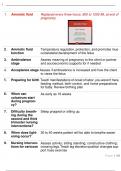
1. Amniotic fluid Replaced every three hours, 800 to 1200 ML at end of
pregnancy
2. Amniotic fluid Temperature regulation, protection, and promotes mus-
function culoskeletal development of the fetus
3. Ambivalence Assess meaning of pregnancy to the client or partner
stage and socioeconomic supports for if needed
4. Acceptance stage Assess if ambivalence is increased and how the client
to views the fetus
5. Preparing for birth Teach manifestations of onset of labor, you weren't here,
feeding method, birth-control, and home preparations
for baby. Review birthing plan
6. When can As early as 16 weeks
colostrum start
during pregnan-
cy?
7. Difficulty breath- Sleep propped or sitting up.
ing during the
second and third
trimester nursing
interventions?
8. When does light- 30 to 40 weeks patient will be able to breathe easier
ening occur?
9. Nursing interven- Assess activity; sitting standing; constructive clothing;
tions for varicose crossing legs. Teach leg elevation position changes sup-
port hose exercise
P a g e 1 | 42
,2
vein's during preg-
nancy?
10. Nausea and vom- Consume dry crackers, 5 to 6 small meals, ginger, rasp-
iting nursing in- berry. Avoid fried order of spicy foods and food truck
terventions during smells. Assess wait and signs of hyperemesis. Teacher
pregnancy called cannot eat or drink for more than 24 hours, urine
become scant or dark, heart pounds or client becomes
dizzy
11. Heartburn nursing Encourage small meals, sit upright for 30 minutes or
interventions dur- more after eating, avoid spicy fatty foods. Drink hot
ing pregnancy? herbal tea
12. What is the av- 25 to 35 pounds
erage weight gain
during pregnan-
cy?
13. What is the caloric An extra 300 to 400 cal, protein increased by 25 g per
intake for preg- day, iron intake 30 mg per day, folate and take 600 µg
nancy per day
14. Presumptive Amenorrhea, fatigue, nausea vomiting, urinary frequen-
signs subjective cy, quickening, breast changes
signs/symptoms
of pregnancy
15. Probable signs of Cervical changes, hegars sign, Chadwick's sign, good-
pregnancy ells sign, ballottement, Braxton hick contractions, posi-
tive pregnancy test
16. What's is hegars Softening and compressibility of lower uterus
sign
P a g e 2 | 42
,3
17. What is Chadwick Deepened Violet bluish color of vaginal mucosa sec-
sign ondary to increased vascularity of the area
18. What is goodells Softening of cervical tip
sign
19. What is ballotte- Rebound of unengaged fetus
ment
20. What is Brax- False contractions, Painless, irregular, and usually re-
ton Hicks contrac- lieved by walking
tions
21. How early can 6 to 11 days and serum and 26 days in urine after
hCG be detected conception
22. Nagel's rule Formula for calculating estimated date of birth. To cal-
culate subtract three months and add seven days to the
first day of the last menstrual period
23. McDonald's Measure uterine final height in centimeters from the
method symphysis pubis to the top of the uterine fundus. Be-
tween 18 and 30 weeks just station the final height
measurement should be approximate gestational age
P a g e 3 | 42
, 4
24. Nursing interven- Seat the client in a reclining chair or place in a semi
tions for non- Fowler's or left lateral position. Apply to belts and trans-
stress test ducers to the clients abdomen
25. Nonreactive Abnormal; does not produce two or more qualifying
stress test accelerations in 20 minutes. If does not meet criteria in
40 minutes, additional testing is indicated; contraction
stress test or biophysical profile
26. Indications for use Assess for fetal well-being and Intact CNS during third
of nonstress test trimester. Assessed because of clients with high-risk
pregnancies such as maternal diabetes hypertension
heart disease history of previous stillbirth or decreased
fetal movement
27. Contraction stress Nipple stimulation and oxytocin IV
test
28. Indications for Nonreactive nonstress test, high-risk pregnancies,
use of contraction same as indications for nonstress test
stress test
29. Nursing interven- Obtain informed consent, obtain baseline fetal heart
tions for contrac- rate, fetal movement and contraction pattern 10 to 20
tion stress test minutes before and 30 minutes after, initiate method
and observe for tachysystole which is hyperstimulation,
update at least three contractions in 10 minutes. Each
lasting 40 to 60 seconds, maintain bed rest during the
procedure
30. Interpretation of Test results are either negative or positive equable sus-
findings in con- picious or unsatisfactory
traction stress test
P a g e 4 | 42


