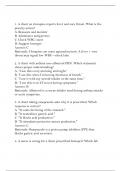
1. A client asks about insulin glargine (Lantus). What is the
correct response?
A. “It works immediately.”
B. “It peaks in 4 hours.”
C. “It has no peak and lasts 24 hours.”
D. “It must be mixed with regular insulin.”
Answer: C
Rationale: Glargine is a long-acting insulin with no pronounced
peak, providing steady glucose control.
2. Which statement indicates proper understanding of
enoxaparin (Lovenox) administration?
A. “I will inject it into my thigh muscle.”
B. “I will rub the site after injection.”
C. “I will inject it into my belly fat.”
D. “I must monitor my INR daily.”
Answer: C
Rationale: Enoxaparin is given subcutaneously, preferably in the
abdomen, and INR monitoring is not required.
3. A client is prescribed loratadine for seasonal allergies. What is
A. key difference from diphenhydramine?
A. Loratadine causes more drowsiness
B. Loratadine causes GI upset
C. Loratadine is non-sedating
D. Loratadine is only available IV
Answer: C
Rationale: Second-generation antihistamines like loratadine are
non-sedating.
4. A client is prescribed loperamide. Which condition is a
,contraindication?
A. IBS
B. Infectious diarrhea
C. Traveler’s diarrhea
D. Post-antibiotic diarrhea
Answer: B
Rationale: Do not use antidiarrheals in infectious diarrhea, as it
may retain toxins in the bowel.
5. A client takes aluminum hydroxide for GERD. What adverse
effect should the nurse monitor?
A. Diarrhea
B. Constipation
C. Hypokalemia
D. Rash
Answer: B
Rationale: Aluminum-based antacids commonly cause
constipation.
6. What lab value should be monitored in a client receiving
propylthiouracil (PTU)?
A. Glucose
B. TSH and T3/T4
C. Calcium
D. Sodium
Answer: B
Rationale: PTU suppresses thyroid hormone. Monitor TSH, T3, and
T4 to assess effectiveness.
7. A child prescribed methylphenidate for ADHD should be
monitored for which effect?
A. Drowsiness
B. Increased appetite
, C. Weight loss and insomnia
D. Bradycardia
Answer: C
Rationale: Stimulants like methylphenidate commonly cause
decreased appetite, insomnia, and weight loss.
8. What should the nurse include when teaching a client taking
ferrous sulfate?
A. Take with milk
B. Take with food if GI upset occurs
C. Expect pale stools
D. Avoid vitamin C
Answer: B
Rationale: Iron can upset the stomach. If so, take with food (but
not dairy). Vitamin C increases absorption.
9. A nurse is administering digoxin to a client. Which finding
requires immediate action?
A. HR 62 bpm
B. Blurred vision with yellow halos
C. BP 140/88 mmHg
D. Urine output 400 mL in 8 hours
Answer: B
Rationale: Visual disturbances and halos are signs of digoxin
toxicity, especially when paired with bradycardia.
10. A client taking phenytoin shows swollen, bleeding gums. What
should the nurse recommend?
A. Discontinue the drug
B. Increase fluid intake
C. Practice good oral hygiene
D. Reduce dietary sugar
Answer: C
correct response?
A. “It works immediately.”
B. “It peaks in 4 hours.”
C. “It has no peak and lasts 24 hours.”
D. “It must be mixed with regular insulin.”
Answer: C
Rationale: Glargine is a long-acting insulin with no pronounced
peak, providing steady glucose control.
2. Which statement indicates proper understanding of
enoxaparin (Lovenox) administration?
A. “I will inject it into my thigh muscle.”
B. “I will rub the site after injection.”
C. “I will inject it into my belly fat.”
D. “I must monitor my INR daily.”
Answer: C
Rationale: Enoxaparin is given subcutaneously, preferably in the
abdomen, and INR monitoring is not required.
3. A client is prescribed loratadine for seasonal allergies. What is
A. key difference from diphenhydramine?
A. Loratadine causes more drowsiness
B. Loratadine causes GI upset
C. Loratadine is non-sedating
D. Loratadine is only available IV
Answer: C
Rationale: Second-generation antihistamines like loratadine are
non-sedating.
4. A client is prescribed loperamide. Which condition is a
,contraindication?
A. IBS
B. Infectious diarrhea
C. Traveler’s diarrhea
D. Post-antibiotic diarrhea
Answer: B
Rationale: Do not use antidiarrheals in infectious diarrhea, as it
may retain toxins in the bowel.
5. A client takes aluminum hydroxide for GERD. What adverse
effect should the nurse monitor?
A. Diarrhea
B. Constipation
C. Hypokalemia
D. Rash
Answer: B
Rationale: Aluminum-based antacids commonly cause
constipation.
6. What lab value should be monitored in a client receiving
propylthiouracil (PTU)?
A. Glucose
B. TSH and T3/T4
C. Calcium
D. Sodium
Answer: B
Rationale: PTU suppresses thyroid hormone. Monitor TSH, T3, and
T4 to assess effectiveness.
7. A child prescribed methylphenidate for ADHD should be
monitored for which effect?
A. Drowsiness
B. Increased appetite
, C. Weight loss and insomnia
D. Bradycardia
Answer: C
Rationale: Stimulants like methylphenidate commonly cause
decreased appetite, insomnia, and weight loss.
8. What should the nurse include when teaching a client taking
ferrous sulfate?
A. Take with milk
B. Take with food if GI upset occurs
C. Expect pale stools
D. Avoid vitamin C
Answer: B
Rationale: Iron can upset the stomach. If so, take with food (but
not dairy). Vitamin C increases absorption.
9. A nurse is administering digoxin to a client. Which finding
requires immediate action?
A. HR 62 bpm
B. Blurred vision with yellow halos
C. BP 140/88 mmHg
D. Urine output 400 mL in 8 hours
Answer: B
Rationale: Visual disturbances and halos are signs of digoxin
toxicity, especially when paired with bradycardia.
10. A client taking phenytoin shows swollen, bleeding gums. What
should the nurse recommend?
A. Discontinue the drug
B. Increase fluid intake
C. Practice good oral hygiene
D. Reduce dietary sugar
Answer: C