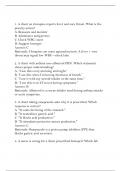
1. A client is prescribed bupropion for smoking cessation. Which
side effect is most serious?
A. Dry mouth
B. Insomnia
C. Seizures
D. Weight loss
Answer: C
Rationale: Bupropion lowers seizure threshold. Clients at risk (e.g.,
with eating disorders) need close monitoring.
2. A client with a penicillin allergy is prescribed cephalexin. What
is the nurse’s priority?
A. Administer as ordered
B. Ask about previous reaction type
C. Hold the dose for 30 minutes
D. Give with food
Answer: B
Rationale: Cross-sensitivity may occur. Ask if the client had a true
anaphylactic reaction before administering.
3. A client taking isoniazid (INH) for tuberculosis develops
numbness and tingling in their hands and feet. What should the
nurse anticipate?
A. The need for increased calcium
B. Administration of pyridoxine (vitamin B6)
C. Discontinuation of therapy
D. Addition of prednisone
Answer: B
Rationale: Isoniazid can cause peripheral neuropathy, often
prevented or treated with vitamin B6.
,4. A client is prescribed exenatide. What is a common side
effect?
A. Hyperglycemia
B. Constipation
C. Nausea
D. Tachycardia
Answer: C
Rationale: Exenatide can cause nausea, especially when initiating
therapy. It’s an injectable incretin mimetic.
5. A client is started on lorazepam for anxiety. Which teaching
point is essential?
A. “Avoid grapefruit juice.”
B. “Take with NSAIDs.”
C. “Do not stop abruptly.”
D. “It may take weeks to work.”
Answer: C
Rationale: Benzodiazepines must be tapered to prevent
withdrawal symptoms and seizures.
6. A nurse is teaching a client how to apply clotrimazole vaginal
cream. What instruction is correct?
A. Use during menstruation
B. Stop once symptoms go away
C. Use applicator at bedtime
D. Use with a tampon
Answer: C
Rationale: For maximum effect, apply at bedtime using the
applicator. Avoid tampons during treatment.
7. A client is prescribed loperamide. Which condition is a
contraindication?
A. IBS
, B. Infectious diarrhea
C. Traveler’s diarrhea
D. Post-antibiotic diarrhea
Answer: B
Rationale: Do not use antidiarrheals in infectious diarrhea, as it
may retain toxins in the bowel.
8. A client receiving methotrexate for cancer reports mouth
sores. What is the nurse's best response?
A. “This is a normal side effect.”
B. “Increase intake of spicy food.”
C. “Use a soft toothbrush and rinse with saline.”
D. “Chew gum frequently.”
Answer: C
Rationale: Mouth sores (stomatitis) are common. Gentle oral care
is essential to prevent infection and discomfort.
9. A client uses sublingual nitroglycerin. Which instruction is
correct?
A. Swallow the pill with water
B. Take up to 3 doses, 5 minutes apart
C. Store it in a warm area
D. Use it once weekly
Answer: B
Rationale: For chest pain, take 1 tablet every 5 minutes, up to 3
doses, and call 911 if no relief after the first.
10. A client taking warfarin has an INR of 4.2. Which action should
the nurse take?
A. Administer the next dose of warfarin
B. Hold the dose and notify the provider
C. Give vitamin K IV immediately
D. Prepare for platelet transfusion
side effect is most serious?
A. Dry mouth
B. Insomnia
C. Seizures
D. Weight loss
Answer: C
Rationale: Bupropion lowers seizure threshold. Clients at risk (e.g.,
with eating disorders) need close monitoring.
2. A client with a penicillin allergy is prescribed cephalexin. What
is the nurse’s priority?
A. Administer as ordered
B. Ask about previous reaction type
C. Hold the dose for 30 minutes
D. Give with food
Answer: B
Rationale: Cross-sensitivity may occur. Ask if the client had a true
anaphylactic reaction before administering.
3. A client taking isoniazid (INH) for tuberculosis develops
numbness and tingling in their hands and feet. What should the
nurse anticipate?
A. The need for increased calcium
B. Administration of pyridoxine (vitamin B6)
C. Discontinuation of therapy
D. Addition of prednisone
Answer: B
Rationale: Isoniazid can cause peripheral neuropathy, often
prevented or treated with vitamin B6.
,4. A client is prescribed exenatide. What is a common side
effect?
A. Hyperglycemia
B. Constipation
C. Nausea
D. Tachycardia
Answer: C
Rationale: Exenatide can cause nausea, especially when initiating
therapy. It’s an injectable incretin mimetic.
5. A client is started on lorazepam for anxiety. Which teaching
point is essential?
A. “Avoid grapefruit juice.”
B. “Take with NSAIDs.”
C. “Do not stop abruptly.”
D. “It may take weeks to work.”
Answer: C
Rationale: Benzodiazepines must be tapered to prevent
withdrawal symptoms and seizures.
6. A nurse is teaching a client how to apply clotrimazole vaginal
cream. What instruction is correct?
A. Use during menstruation
B. Stop once symptoms go away
C. Use applicator at bedtime
D. Use with a tampon
Answer: C
Rationale: For maximum effect, apply at bedtime using the
applicator. Avoid tampons during treatment.
7. A client is prescribed loperamide. Which condition is a
contraindication?
A. IBS
, B. Infectious diarrhea
C. Traveler’s diarrhea
D. Post-antibiotic diarrhea
Answer: B
Rationale: Do not use antidiarrheals in infectious diarrhea, as it
may retain toxins in the bowel.
8. A client receiving methotrexate for cancer reports mouth
sores. What is the nurse's best response?
A. “This is a normal side effect.”
B. “Increase intake of spicy food.”
C. “Use a soft toothbrush and rinse with saline.”
D. “Chew gum frequently.”
Answer: C
Rationale: Mouth sores (stomatitis) are common. Gentle oral care
is essential to prevent infection and discomfort.
9. A client uses sublingual nitroglycerin. Which instruction is
correct?
A. Swallow the pill with water
B. Take up to 3 doses, 5 minutes apart
C. Store it in a warm area
D. Use it once weekly
Answer: B
Rationale: For chest pain, take 1 tablet every 5 minutes, up to 3
doses, and call 911 if no relief after the first.
10. A client taking warfarin has an INR of 4.2. Which action should
the nurse take?
A. Administer the next dose of warfarin
B. Hold the dose and notify the provider
C. Give vitamin K IV immediately
D. Prepare for platelet transfusion