

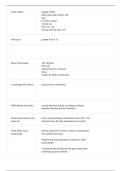
sinus rhythm regular rhythm
Set by SA node at 60 to 100
bpm
P waves normal
normal qrs
PR 0.12 - 0.2
normal qrs less than 0.10
wide qrs is greater than 0.12
Sinus Tachycardia 100-160 bpm
SA node
reduced time for ventricle
filling
assess for SOB or chest pain
a prolonged QT interval more prone to arrhythmia
NSR reflects the heart's normal electrical activity, providing synchrony
between the atria and the ventricles.
Sinus tachycardia occurs sinus node discharges impulses too fast (100 - 160
when the beats/minute). All other parameters are normal
Facts about sinus Normal response of heart in certain circumstances
tachycardia (for example exercise)
•Begins and ends gradually in contrast to other
tachycardias
•Usually benign arrhythmia that goes away when
underlying cause is treated
, •Common causes: Anxiety, hypoxia, hypovolemia,
hypotension, heart failure, pain, drugs that
increase sympathetic tone (epinephrine,
norepinephrine, dopamine, dobutamine,
isoproterenol, nitroprusside), and drugs that
decrease parasympathetic tone (atropine)
•Persistent sinus tachycardia may result in
decreased cardiac output due to a decrease in
stroke volume. Cardiac output = stroke volume
×heart rate. A decrease in either stroke volume or
heart rate may result in a decrease in cardiac
output.
Sinus bradycardia the sinus node discharges
occurs when impulses too slow (40 - 60
beats/minute). All other
parameters are normal.
Sinus bradycardia regular rhythm, rate 40-60
features bpm
Normal p waves
PR interval normal 0.12 to 0.2
QRS normal less than 0.1
,Facts about sinus Normal response of heart in certain circumstances
bradycardia (for example relaxation, sleep)
•Most common arrhythmia associated with acute
inferior wall myocardial infarction
•Other causes: Reperfusion rhythm following
myocardial reperfusion procedures (thrombolytic
administration, angioplasty); vagal stimulation;
sleep apnea; hyperkalemia; increased intracranial
pressure; disease of SA node; and administration
of drugs, such as digitalis, calcium channel
blockers, and beta blockers
•Persistent bradycardia may result in decreased
cardiac output due to a decrease in heart rate.
Cardiac output = stroke volume ×heart rate. A
decrease in either stroke volume or heart rate may
result in a decrease in cardiac output.
Treatment of sinus No treatment is necessary if patient is
bradycardia asymptomatic.
•Symptomatic bradycardia is initially treated with
oxygen and atropine IV push. If unsuccessful,
external pacing or transvenous pacing may be
used.
•Chronic sinus bradycardia may require a
permanent pacemaker.
Sinus arrhythmia occurs the sinus node discharges impulses irregularly. The
when heart rate may be normal range or slow. All other
parameters are normal.
Sinus arrhythmia ECG irregular rhythm
features rate normal or slow
P waves normal
PR interval normal 0.12 to 0.20
QRS normal less than 0.1
, Facts about sinus Normal phenomenon usually associated with
arrhythmia phases of respiration (heart rate increases with
inspiration and decreases with expiration)
•Most commonly observed in infants, children, and
young adults, although it may occur in any age-
group
•Frequently occurs along with sinus bradycardia, in
which case it is usually called sinus arrhythmia with
a bradycardic rate
•Treatment: Does not require intervention unless
accompanied by symptomatic bradycardia (follow
symptomatic bradycardia protocols)
Sinus pause A broad term used to describe a sudden pause in
the basic rhythm with one or more missing beats;
two rhythms fall under this category:
Sinus arrest and Sinus exit block
sinus arrest SA node fails to initiate impulse; represents a
problem with SA node automaticity; basic rhythm
does not resume on time following pause.
Sinus exit block SA node initiates impulse, but impulse is blocked
as it exits SA node; represents a problem with SA
node conductivity; basic rhythm resumes on time
following pause.
Sinus arrest and sinus Rhythm: basic is regular with
exit block ECG sudden pause with one or
more missing beats, HR may
slow for several beats after
pause but then return to basic
rate.
P waves: sinus with basic
rhythm, absent during pause
PR interval: normal during
basic, absent during pause
Set by SA node at 60 to 100
bpm
P waves normal
normal qrs
PR 0.12 - 0.2
normal qrs less than 0.10
wide qrs is greater than 0.12
Sinus Tachycardia 100-160 bpm
SA node
reduced time for ventricle
filling
assess for SOB or chest pain
a prolonged QT interval more prone to arrhythmia
NSR reflects the heart's normal electrical activity, providing synchrony
between the atria and the ventricles.
Sinus tachycardia occurs sinus node discharges impulses too fast (100 - 160
when the beats/minute). All other parameters are normal
Facts about sinus Normal response of heart in certain circumstances
tachycardia (for example exercise)
•Begins and ends gradually in contrast to other
tachycardias
•Usually benign arrhythmia that goes away when
underlying cause is treated
, •Common causes: Anxiety, hypoxia, hypovolemia,
hypotension, heart failure, pain, drugs that
increase sympathetic tone (epinephrine,
norepinephrine, dopamine, dobutamine,
isoproterenol, nitroprusside), and drugs that
decrease parasympathetic tone (atropine)
•Persistent sinus tachycardia may result in
decreased cardiac output due to a decrease in
stroke volume. Cardiac output = stroke volume
×heart rate. A decrease in either stroke volume or
heart rate may result in a decrease in cardiac
output.
Sinus bradycardia the sinus node discharges
occurs when impulses too slow (40 - 60
beats/minute). All other
parameters are normal.
Sinus bradycardia regular rhythm, rate 40-60
features bpm
Normal p waves
PR interval normal 0.12 to 0.2
QRS normal less than 0.1
,Facts about sinus Normal response of heart in certain circumstances
bradycardia (for example relaxation, sleep)
•Most common arrhythmia associated with acute
inferior wall myocardial infarction
•Other causes: Reperfusion rhythm following
myocardial reperfusion procedures (thrombolytic
administration, angioplasty); vagal stimulation;
sleep apnea; hyperkalemia; increased intracranial
pressure; disease of SA node; and administration
of drugs, such as digitalis, calcium channel
blockers, and beta blockers
•Persistent bradycardia may result in decreased
cardiac output due to a decrease in heart rate.
Cardiac output = stroke volume ×heart rate. A
decrease in either stroke volume or heart rate may
result in a decrease in cardiac output.
Treatment of sinus No treatment is necessary if patient is
bradycardia asymptomatic.
•Symptomatic bradycardia is initially treated with
oxygen and atropine IV push. If unsuccessful,
external pacing or transvenous pacing may be
used.
•Chronic sinus bradycardia may require a
permanent pacemaker.
Sinus arrhythmia occurs the sinus node discharges impulses irregularly. The
when heart rate may be normal range or slow. All other
parameters are normal.
Sinus arrhythmia ECG irregular rhythm
features rate normal or slow
P waves normal
PR interval normal 0.12 to 0.20
QRS normal less than 0.1
, Facts about sinus Normal phenomenon usually associated with
arrhythmia phases of respiration (heart rate increases with
inspiration and decreases with expiration)
•Most commonly observed in infants, children, and
young adults, although it may occur in any age-
group
•Frequently occurs along with sinus bradycardia, in
which case it is usually called sinus arrhythmia with
a bradycardic rate
•Treatment: Does not require intervention unless
accompanied by symptomatic bradycardia (follow
symptomatic bradycardia protocols)
Sinus pause A broad term used to describe a sudden pause in
the basic rhythm with one or more missing beats;
two rhythms fall under this category:
Sinus arrest and Sinus exit block
sinus arrest SA node fails to initiate impulse; represents a
problem with SA node automaticity; basic rhythm
does not resume on time following pause.
Sinus exit block SA node initiates impulse, but impulse is blocked
as it exits SA node; represents a problem with SA
node conductivity; basic rhythm resumes on time
following pause.
Sinus arrest and sinus Rhythm: basic is regular with
exit block ECG sudden pause with one or
more missing beats, HR may
slow for several beats after
pause but then return to basic
rate.
P waves: sinus with basic
rhythm, absent during pause
PR interval: normal during
basic, absent during pause


