

100% satisfaction guarantee Immediately available after payment Both online and in PDF No strings attached 4.2 TrustPilot
logo-home
Exam (elaborations)

Certified Healthcare Safety Professional (CHSP) Exam (Latest 2025/ 2026 Update) | Verified Solutions |GRADED A

Rating
-
Sold
-
Pages
7
Grade
A+
Uploaded on
16-04-2025
Written in
2024/2025

Certified Healthcare Safety Professional (CHSP) Exam (Latest 2025/ 2026 Update) | Verified Solutions |GRADED A Joint Commision core value Quality of care and safety of patients The Patient Safety and Quality Improvement Act of 2005 to report events, near misses, unsafe conditions and to decrease medical errors. defined requirements for reporting events that threaten patient safety Patient Safety the avoidance and prevention of patient injuries or adverse events resulting from the processes of health care delivery. Patient safety event event, incident, or condition that could have resulted or did result in harm to a patient adverse event A patient safety event that resulted in harm to a patient sentinel event a patient safety event not primarily rekated to the patients illness or underlying condition that leads to death, permanent harm or severe temporary harm. Reactive risk reduction Attempts to prevent recurrence of problems that have already caused patient harm. Proactive risk reduction Solves problems before patients are harmed Sentinel event alert A notification that defines processes and identifies measures that can be used to prevent errors and improve outcomes Process Decision Program Charts (PDPC) Finds errors in plans while it is being created. American Osteopathic Association (AOA) inspects and accedidates critical access hospitals Accreditation canada Camadian non profit organization that provides health organizations with peer reviews CARF (Commission on Accreditation of Rehabilitation Facilities) Focuses on rehabilitation, employment, child and family and aging services. CAP (College of American Pathologists) offers laboratory inspection and proficiency testing NAM (National Academy of Medicine) Provides guidelines for respirator use in healthcare. Formerly called Institute of Medicine AHCA / NCAL American Health Care Association National centers for assisted living American Hospital Association (AHA) advocacy group for health care organizations, particularly hospitals American Society of Healthcare Risk Management ASHRM Association for the health care environment AHE NCQA National Committee for Quality Assurance; an accreditation body that has become the primary group that accredits health plans. Association of occupational health professionals in healthcare (AOHP) Advocate for occupational health professionals. Meet with OSHA ECRI Has templates for HVAs. American Society of Healthcare Engineering ASHE Tenosynovitis inflammation of the tendon and synovial membrane DeQuervain's Disease tenosynovitis of abductor pollicus longus and extensor pollicus brevus Trigger Finger A condition whereby the finger flexors contract but are unable to reextend because of a nodule within the tendon sheath or due to the sheath being too constricted to allow for free motion. Tennis elbow painful inflammation of the tendon at the outer border of the elbow resulting from overuse of lower arm muscles (as in twisting of the hand) Carpal Tunnel Syndrome compression of the median nerve as it passes between the ligament and the bones and tendons of the wrist Raynaud's syndrome a peripheral arterial occlusive disease in which intermittent attacks are triggered by cold or stress Ethylene oxide gas used to sterilize surgical instruments and other supplies 1910,1047 AL = 0.5 ppm PEL = 1 ppm STEL = 5 ppm Formaldehyde 1910.1048 Action level = 0.5 ppm PEL = 0.75 ppm Glutaraldehyde (Cidex) Liquid disinfectant and sterilizing agent but can require long submersion times to be effective. a cheaper and effective alternative is a 1:10 bleach solution. Chemical disinfectants cannot be used on patients skin. Cytotoxic agents Drugs used to kill cancer cells that are actively growing or dividing. Pentamidine isethionate interferes with nuclear metabolism by inhibition of DNA, RNA, phospholipids and protein synthesis Hierachy of controls Elimination Substitution Engineering controls Administrative controls PPE Hazard vulnerability analysis (HVA) An assessment to help an organization identify potential hazards, threats, and adverse events and their impact on the care, treatment, and services that must be sustained during an emergency Drills Tabletop Walk through Functional drill Full emergency drill Incident Command System (ICS) a subset of the National Incident Management System (NIMS) designed specifically for management of multiple-casualty incidents. EPCRA (Emergency Planning and Community Right-to-Know Act) created to help communities plan for chemical emergencies. It also requires industry to report on the storage, use and releases of hazardous substances to federal, state, and local governments. Contaminated Sharps Any contaminated object that can penetrate the skin including, but not limited to, needles, scalpels, broken glass, and exposed ends of wires. Decontamination The removal of blood or other potentially infectious materials on an item's surface and the removal of visible debris or residue such as dust, hair, and skin. Exposure incident specific eye, mouth, other mucous membrane, non-intact skin, or parenteral contact with blood or other potentially infectious materials that results from the performance of an employee's duties Other Potentially Infectious Materials (OPIM) any materials or bodily fluids other than blood; precautions should be taken to avoid contact Parenteral taken into the body or administered in a manner other than through the digestive tract Infectious waste Waste that is capable of transmitting an infectious disease Medical Waste Tracking Act Expired in 1991. Set the stage for future regulatory requirements. Radioactive waste Need to be separated into subcategories Incinerator a furnace for destroying things by burning them, especially waste Autoclave Piece of equipment used to sterilize articles by way of steam under pressure and/or dry heat Not medical waste -unused medical products - iv bags - Urine and stool containers - Diapers Hospital, medical and infectious waste incinerators (HMIWI) Regulated under CAA Medical waste - infectious - hazardous - radioactive - general ATSDR (Agency for Toxic Substances and Disease Registry) protects communities from harmful health effects related to exposure to natural and man-made hazardous substances MRI (magnetic resonance imaging) a technique that uses a magnetic field to create a computerized image of internal bodily structures Bacteria single-celled organisms that lack a nucleus; prokaryotes Viruses tiny particles, smaller than bacteria and other pathogens, which must invade living cells in order to reproduce; when they invade, the cells are damaged or destroyed in the process releasing new particles to infect other cells Biological Toxins Poisons produced by pathogens, plants, or animals. They can also occur in animals as a result of their diet. Radiation Controls Time, distance, shielding Healthcare occupancies (NFPA 101) Healthcare Ambulatory healthcare Business Residential NFPA 72 The National Fire Alarm and signaling code, the standard to which fire alarm systems are to be installed NFPA 80 Standard for Fire Doors and Other Opening Protectives Combustible Liquid Liquid having a flash point at or above 100°F. Class II - flash below 140ºF Class III Flammable liquid (NFPA 30) a liquid that has a flash point that is below 100ºF and a maximum vapor pressure of 2068 mmHg at 100ºF Elimination Physically remove the hazard Substitution Replace the hazard Engineering controls Isolate people from the hazard Administrative controls Change the way people work PPE Least effective hazard control NFPA 1600 focuses on disaster and emergency management and business continuity. Ties back to NFPA 99 for healthcare Ergonomic risk factors forceful exertions, repetition, awkward or static posturing, contact stress, excessive vibration, cold temperatures ANSI Z535.1 Color codes and signs ASME A13.1 Identification of piping systems NFPA 37 Standard for the Installation and Use of Stationary Combustion Engines and Gas Turbines NFPA 110 Emergency and standby power systems Emergency power supply system (EPSS) Level 1 = human life Level 2 = not as critical CGA Compressed Gas Association ASHRAE 55 Thermal Environmental Condition for Human Occupancy specifies the combinations of indoor space environment and personal factors that will produce thermal environmental conditions acceptable to 80% or more of the occupants within a space. Health Care Occupancy An occupancy used for purposes of medical or other treatment or care of four or more persons where such occupants are mostly incapable of self preservation due to age, physical or mental disability or because of security measures not under the occupants control. Ambulatory Health Care Occupancy An occupancy used to provide services or treatment simultaneously to four or more patients, that provides treatment, anesthesia, or urgent care on an outpatient basis which renders the patients incapable of taking action under emergency conditions without the assistance of others. ASHRAE 62.1-2010 A standard that specifies minimum ventilation rates and other measures intended to provide indoor air quality that is acceptable to human occupants and that minimizes adverse health effects, and is the recognized standard for ventilation system design and acceptable indoor air quality. ASHRAE SP91 HVAC design manual for hospitals and clinics ASHRAE 52.2-2017 Air filter standards Liquid oxygen Are meant for patients who receive long-term oxygen therapy, generally need to be kept upright and have special requirements fro filling, large-volume storage, and cylinder transfer. Building system categories (NFPA 99) Category 1 = work or be available at all times Category 2 = limited short durations of downtime Category 3 = normal building system reliability Category 4 = no impact in patient care NFPA 551 Guide for the Evaluation of Fire Risk Assessments Infectious substances (49 CFR 173.134) Substances that are known or are reasonably expected to contain pathogens. Patient Specimen Human or animal material collected directly from humans or animals and transported for research, diagnosis, investigational activities, or disease treatment or prevention. Includes excreta, secreta, blood and its components, tissue and tissue swabs, body parts, and specimens in transport media (e/g transwabs, culture media, and blood culture bottles) Category A (Shipping name) Infectious substance, affecting humans (UN2814) and infectious substance, affecting animals Anemometer An instrument used to measure wind speed Category B shipping (49 CFR 173.134) Not category A. Biological Substance, Category B (UN3373) Radioactive materials (49 CFR 173.403) Contain radionuclides at concentrations above tables in DOT reg. BEI Biological exposure indices Static Pressure the pressure of air at rest, or that portion in moving air, if the air stream were to stop Manometer instrument to measure pressure Dilution Ventilation Adding clean air to dilute the contaminant concentration NFPA 90A Installation of air conditioning and ventilating systems Legionella Genus of bacteria responsible for the disease legionellosis Sick Building Syndrome (SBS) a condition associated with a particular indoor environment that appears to be unhealthy for the human occupants Building-related illness A term used when symptoms of a diagnosable illness are identified and attributed directly to an airborne building contaminant. Multiple chemical sensitivity (MCS) Also known as "environmental illness," a condition whereby individuals experience adverse reactions when exposed to low levels of chemicals found in everyday substances. Biocide substance that destroys living microorganisms NFPA 418 Heliports antibiotic resistance the evolution of populations of pathogenic bacteria that antibiotics are unable to kill Joint commission center for transforming healthcare Solutions to health care's most critical safety and quality problems. Center's targeted solutions tool (TST) 49 CFR 172.101 Subpart B - Table of Hazardous Materials and Special Provisions Isopropyl alcohol Rubbing alcohol; 70% alcohol solution used as a cleaner Ammonia (NH3) A compound of nitrogen and hydrogen. This is the result of Nitrogen gas (N2) once it is "fixed." Quaternary ammonium compounds Also known as quats; disinfectants that are very effective when used properly Mercury Medical waste incinerators Antineoplastic drugs medication that blocks the development, growth, or proliferation of malignant cells Nitrous Oxide (N2O) A colorless sweet gas used along with oxygen to produce a conscious sedation chemical fume hood Used for human protection against chemical fumes and splashes CDC standard precautions Infection prevention practices that apply to all patients Based on principles that all blood, body fluids, secretions, excretions except sweat, nonintact skin, and mucous membranes may contain transmissible infectious agents -hand hygiene -gloves, gown, mask, eye protection/face shield -Respiratory hygiene/cough etiquette MRSA (methicillin-resistant Staphylococcus aureus) Infection that is resistant to certain antibiotics; commonly found on the skin and starts as small, red bumps Needlestick Safety and Prevention Act Revision to Bloodborne Pathogens standard that requires employers to minimize employees' exposure to blood through sharps injuries. Needleless Systems equipment that eliminates the need for needles Tuberculosis (TB) infectious bacterial disease, most commonly spread by inhalation of small particles and usually affecting the lungs; may spread to other organs. CDC published guidelines in 1994 Tuberculosis infection control CDC Guidelines Biosafety levels 1. Low pathogenicity (low likelihood to cause harm)- cause disease in immunocompetent adult, no safety equipment 2. organisms could cause harm if injected or ingested - our lab is level 2 -safety equipment 3. High likelihood of infection -organisms transmitted through respiratory -safety equipment -keep room locked 4. Dangerous agents that pose high risk of life threatening disease - full body protection Biosafety Level 1 (BSL-1) Handling pathogens that do not cause disease in healthy humans Aspergillus Mold spore Pseudomonas The most common organism in burn-related infections. Medical Waste regulations Mainly regulated by the states. National Patient Safety Goals (NPSGs) Identify patients correctly Improve staff communication Use medicines safely Use alarms safely Prevent infection Identify patient safety risks Prevent mistakes in surgery Universal Protocol preoperative process to prevent surgery on wrong site, wrong procedure, wrong person Biosafety level 2 exposure to infectious agents that can cause disease in humans but whose potential for transmission is limited Labcoat, glasses, gloves Biosafety level 3 All manipulations of microbes done in safety cabinets Biosafety level 4 Handling extremely dangerous substances. sealed negative pressure, exhaust air filtered twice HIPPA (Health Insurance Portability and Accountability Act) a federal law that sets standards for protecting the privacy of patients' health information Piped gas and vacuum systems Cat 1 medical-surgical vacuum applications Cat 2 building system categories Cat 3 office based care Essential Electrical System (NFPA 99) A system comprised of alternate sources of power and all connected distribution systems and ancillary equipment, designed to ensure continuity of electrical power to designated areas and functions of a health care facility during disruption of normal power sources, and also to minimize disruption within the internal wiring system Information management (IM) Use of technology to collect, process, and condense information with a goal of efficient management of information as an organizational resource. SVA A security vulnerability assessment (NFPA 99) Article 517 NEC reference for healhcare facilities 21 CFR 1040 Laser performance (FDA) Safe Medical Devices Act of 1990 The law requires reporting of all injuries and deaths resulting from medical devices.. Laser control officer Required under ANSI Z136 for class 3B and 4 AORN association of perioperative registered nurses facilitates the management, teaching, and practice of perioperative nursing. Lasers Laser categories Class 1 = low Class 2 Class 3 Class 4 = most used in surgury HACCP (Hazard Analysis Critical Control Point) 7 steps. A means to identify critical points in a food's production and delivery process, generally to prevent hazards. Absorbed dose The amount of energy per unit mass absorbed by an irradiated object Radiation absorbed dose (rad) A standard unit of absorbed ionizing radiation dose equal to 100 ergs ansorbed per gram. Roentgen Equivalent Man (REM) Radiation dose unit that equals the dose in rads multiplied by the appropriate value of relative biological effect or quality factor. 5 Rem = annual dose, whole body Nuclear Regulatory Commission an independent federal agency created in 1974 to license and regulate nuclear power plants Radiation Safety Officer (RSO) Individual in a hospital setting expressly charged by the administration to be directly responsible for the execution, enforcement, and maintenance of the ALARA program ALARA concept As Low As Reasonably Achievable Pathology study of disease Cytology study of cells Serology the study of antigen-antibody reactions Hemotology Study of blood and tissues which form blood Microscopy specimens Are usually urine collections and therefore do not require a blood collection system microbiology studies identify the microorganisms that cause disease and infection 29 CFR 1910.1450 Occupational Exposure to Hazardous Chemicals in Laboratories NIAHO National Integrated Accreditation for Healthcare Organization (DNV) Center for Medicare and Medicaid Services (CMS) The Heath & Human Services (HHS) agency responsible for Medicare & parts of Medicaid. Maintains UB04, oversight of HIPAA and maintains HCPCS code set & Medicare remittance advice (RA) remark codes. They promote higher quality care HFAP (Healthcare Facilities Accreditation Program) Now merged with ACHC. On-site survey every 3 years; standards for accreditation: CMS CoPs 10 CFR Nuclear Regulatory Commission (NRC), Dept of Energy 21 CFR FDA, DHHS, lasers, labels on med equipment 42 CFR Part 2 The regulations directing the implementation of confidentiality of alcohol and drug abuse patients (DHHS) 44 CFR Emergency management and assistance, FEMA, DHS Facility Guidelines Institute (FGI) Guidelines for design and construction of hospitals Patient safety systems (PS) Quality of care and the safety of patients Safety culture Product of individual and group beliefs, values, attitutes, perceptions, competencies, and patterns of behavior that determine the organization's commitment to objectives such as quality and safety. Run chart A chart that displays the history and pattern of variation of a process over time SAMHSA Substance Abuse and Mental Health Administration; coordinates and funds sustainable substance abuse and mental health programs in communities or community health agencies Statistical Process Control Chart a chart with statistical upper and lower limits; if the process stays between these limits over time, it is in control and a problem does not exist Capability chart Whether process will function as expected Proactive Risk Assessment At least every 18 months the hospital selects ne high risk process and conducts a proctove risk assessment. Emergency Management (EM) The hospital develops and maintains a written Emergency Operations Plan that describes the response procedires to follow when emergencies occur Institute for Safe Medication Practices (ISMP) An organization devoted to safe medication practices and the prevention of errors Potential problem analysis (PPA) What can go wrong in a plan under development Environment of Care (EC) Environment of care standards include the following: safety and security management, hazardous materials and waste management, fire safety management, medical equipment management, utilities management. Management Leadership Mission, vision and goals of hospital support the safety and quality of care, treatment and service. Employee involvement the degree to which employees influence how their work is organized and carried out Medical staff (MS) The organized medical staff defines the circumstances requiring monitoring and evaluation of a practicioner's professional performance. Nursing (NR) The nurse executive directs the hospital's nursing services Provision of care, treatment, and services (PC) The hospital reports deaths associated with the use of restraints and seclusion. Performance improvement (PI) The hospital collects data to monitor its performance Human Resources (HR) The hospital evaluates staff based on performance expectations that reflect their job resposibilities Worksite Analysis Identify jobs or locations with the greatest risk of violence as well as processes and procedures that put employees at risk of assault, including how often and when Rights and Responsibilities of the Individual (RI) The hospital respects, protects, and promotes patient rights. Hazard prevention and control Action to minimize risks Safety and Health Training For management & employees General and job-specific training Patient Activation Measure (PAM) Measures client activation level. Pts with higher scores are better able to engage in their health and have better health outcomes and lower HC costs. Lower scores- more likely to feel overwhelmed with managing their health; less likely to understand or have confidence. By understanding a pts level of activation, can create individualized care plans to increase activation and engagement. Injury and Illness Rates by Industry, Hospitals highest cases per 100 full time employees Lost Time cases per 10,000 full time employees Hospitals highest at 157.5 cases Lost time days in healthcare by healthcare sector Nursing and residential care are #1 Lost times in hospitals by type Sprains and strains 54% Top 5 causes of injuries Overexertion and body reaction, 48% Minimal Lift Program Acknowledges circumstances where mechanical lifting cannot be used. Violent incidents by industry Healthcare and social assistance #1 Source of violent incidents Patient 80% Hospital lost times in general, source of injury Healthcare patient, 33% Fatalities in heathcare, Transportation incidents, 96 Occupations in hospitals Registered Nurses 1,556,930 Age distribution oh hospital workers, 2011 45-54 years old = 25% Incident rate by heathcare occupation Nursing aides, orderlies and attendants 419.9 per 10k Cause of injury, healthcare occupations Overexertion / Nursing aides, orderlies and attendants % of lost time $ spent, by cause Strain and sprain 46% Optically Stimulated Luminescence Dosimeter OSL. electron trap technique that uses light to measure the amount of radioactivity accumulated by crystals in sediments (such as sand grains) since burial Healthcare violent injuries by cause Hitting, kicking, beating, shoving, nursing psychiatric and home aides thermoluminescent dosimetry TLD, highly accurate (and more appropriate than the film badge for some radiation tasks) Total Case Incident Rate (TCIR) 25% above 8.5, 25% below 3.1 Contaminated Laundry laundry that has been soiled with blood or other potentially infectious materials or may contain sharps Days Away, Restricted, or Transferred A DART incident rate. 25% higher than 3.2, 25% lower than 0.6 Clinical Laboratory A workplace where diagnostic or other screening procedures are performed on blood or other potentially infectious materials Source individual Any individual, living or dead, whose blood, or other potentially infectious materials may be a source of occupational exposure to the employee Sterilize Use of a physical or chemical procedure to destroy all microbial life including highly resistant bacterial endospores Hepatitis B vaccine within 10 days of employement and at a reasonable time and place ACHC Accreditation Commission for Health Care - A private nonprofit accreditation organization offering accreditation services for home health, hospice, and alternate site healthcare such as infusion nursing, and home/durable medical equipment supplies. HRSA (Health Resources and Services Administration) This agency is the primary Federal agency for improving access to health care services for people who are uninsured, isolated or medically vulnerable. Americans with Disabilities Act (ADA) Legislation passed in 1990 that prohibits discrimination against people with disabilities. Under this Act, discrimination against a disabled person is illegal in employment, transportation, public accommodations, communications and government activities. Clinical Laboratory Improvement Amendments (CLIA) Federal standards that regulate laboratory testing, handling, and processing Requires lab certification Regulated by TDSHS in Texas NSF/ANSI 49 Biosafety cabinetry standard Clear Air Workbench Prevents dirt or dust from contaminating the material being worked on National Environmental Health Association NEHA Aldehydes cause cross-linking that inactivates proteins and nucleic acids Association for professionals in infection control and epidemiology A voluntary international organization dedicated to the prevention and control of infections and related outcomes. Center for Devices and Radiological Health (CDRH) sets and regulates the standards for radiation-producing equipment; (pacemakers) it also continues to research possible ways of minimizing exposure HEM Healthcare Environmental Manager CAOHC Council for Accreditation in Occupational Hearing Conservation Droplet precautions Must be followed for a patient known or suspected to be infected with pathogens transmitted by largeparticle droplets expelled during coughing, sneezing, talking, or laughing. FMEA Failure Mode and Effects Analysis: process used to identify potential failures before they result with the intent to minimize or eliminate them Fire door Require annual inspection as per NFPA 80 FSES Fire Safety Evaluation System FSIS (Food Safety and Inspection Service) Public health agency in the USDA responsible for ensuring the nation's commercial supply of meat, egg, and poultry products is safe, wholesome, correctly labeled, and packaged as required. - FDA, USDA Halothane General anesthetic prototype: inhaled halogenated hydrocarbon. Causes cardiovascular and respiratory depression and relaxes skeletal and smooth muscle. Use has decreased due to sensitization of heart to catecholamines, and occurrence (rare) of hepatitis and malignant hyperthermia Hydrogen Cyanide (HCN) Present in laser smoke nosocomial infection an infection acquired during hospitalization NCCMERP address interdisciplinary causes of medication errors and strategies for prevention ASHRAE 170 Ventilation of healthcare facilities NFPA 45 Standard on Fire Protection for Laboratories Using Chemicals NFPA 55 Compressed Gases and Cryogenic Fluids Code Accreditation participation requirements (APR) The hospital notifies the public about how to contact its hospital management and the Joint Commission to report concerns about patient safety and quality of care Infection prevention and control (IC) The hospital idetifies risks for acquiring and transmitting infections. Leadership (LD) The mission, vision and goals of the hospital support the safety and quality of care, treatment, and services. Medication Management (MM) The hospital responds to actual or potential adverse drug events, significant adverse drug reactions, and medication errors. hyperbaric chamber using pressure chamber to cause more oxygen to dissolve into blood (kill bacteria. CO poison, heart patients) NFPA 96 Standard for Ventilation Control and Fire Protection of Commercial Cooking Operations NFPA 91 Standard for Exhaust Systems for Air Conveying of Vapors, Gases, Mists, and Noncombustible Particulate Solids NFPA 13 Standard for the Installation of Sprinkler Systems NFPA 82 Standard on Incinerators and Waste and Linen Handling Systems and Equipment NFPA 25 Standard for the Inspection, Testing, and Maintenance of Water-Based Fire Protection Systems NFPA 730 Guide for Premises Security ASME A17.3 Safety code for exisiting elevators and escalators AHRQ (Agency for Healthcare Research and Quality) An agency within the Department of Health and Human Services. Has tools to help hospitals in disaster training drills. Chrysotile white asbestos, accounts for about 95% of asbestos found Medicare Drug Improvement and Modernization Act of 2003 1. provides for voluntary prescription drug benefit to medicare beneficiaries 2. adds preventive medical benefits to senior citizens 3. medicare part d prescription plan allows beneficiaries to enroll in either regional or national based insurance plans CMS referenced fire and life safety codes Nfpa 10 - 2010 Nfpa 13 - 2010 Npfa 25 - 2011 Nfpa 80 - 2010 Nfpa 99 - 2012 Nfpa 101 - 2012 Alternate Power Source One or more generator sets, or battery systems where permitted, intended to provide power during the interruption of the normal electrical service; or the public utility electrical service intended to provide power during interruption of service normally provided by the generating facilities on the premises. Anesthetizing Location Any area of a facility that has been designated to be used for the administration of general anesthesia Battery powered lighting units Individual unit equipment for backup illumination consisting of a rechargeable battery, battery-charging means, provisions for one or more lamps mounted on the equipment, or with terminals for remote lamps, or both, and relaying device arranged to energize the lamps automatically upon failure of the supply to the unit equipment. Critical Branch A system of feeders and branch circuits supplying power for task illumination, fixed equipment, select receptacles, and select power circuits serving areas and functions related to patient care that are automatically connected to alternate power sources by one or more transfer switches during interruption of the normal power source. Electrical Life-Support Equipment Electrically powered equipment whose continuous operation is necessary to maintain a patient's life. Flammable anesthetics Gases or vapors such as fluroxene, cyclopropane, divinyl ether, ethyl chloride, ethyl ether and ethylene which may form flammable or explosive mixtures with air, oxygen or reducing agents such as nitrous oxide Isolation transformer a transformer of the multiple winding type with the primary and secondary winding physically separated which inductively couples i ts secondary winding to the grounded feeder system that energize its primary winding. Life Safety Branch A system of feeders and branch circuits supplying power for lighting, receptacles, and equipment essential for life safety that are automatically connected to alternate power sources by one or more transfer switches during interruption of the normal power source Patient Care Space Any space of a health care facility wherein patients are intended to be examined or treated. Wet Procedure Location The area in a patient care space where a procedure is performed that is normally subject to wet conditions while patients are present including standing fluids on the floor or drenching of the work area., where either such condition is intimate to the patient or staff. Patient Care Vicinity A space within avlocation intended for the examination and treatment of patients extending 6 ft beyond the normal location of the patient bed, chair table, treadmill or other device that supports the patient during examination and treatment and extending vertically 7ft 6in above the floor. WAGD (waste anesthesia gas disposal) purple Values moral beliefs Perception the process of organizing and interpreting sensory information, enabling us to recognize meaningful objects and events positive safety culture Just culture Flexible culture Reporting culture Safety committment High Reliability Organizations (HROs) entities or businesses with systems in place that are exceptionally consistent in accomplishing their goals and avoiding potentially catastrophic errors just culture culture where staff are willing to come forward with information about errors so everyone can learn from mistakes; the culture recognizes the need for accountability & at times disciplinary action RPA Respirator Program Administrator ISO/IEC 31010 Risk mamagement techniques Telecommunication equipment room (TER) Special purpose room for telecommunication equipment entrance facility The location where an incoming network service (whether phone, Internet, or long-distance service) enters a building and connects with the building's backbone cabling. hospital hierarchy Report up through the CEO NFPA 101A Guide on Alternative Approaches to Life Safety OSHA 300 Log Log of work-related injuries and illnesses OSHA 300A Form should only be posted from Feb 1st to Mar 31st & signed by the highest ranking Executive on the site 29 CFR 1910.145 Specification for accident prevention signs and tags Adjustment of grinder tool rests 1/8 inch 29 CFR 1910.95 Hearing conservation program

Show more Read less
Institution
Certified Healthcare Safety Professional
Course
Certified Healthcare Safety Professional


Whoops! We can’t load your doc right now. Try again or contact support.

Written for

Institution
Certified Healthcare Safety Professional
Course
Certified Healthcare Safety Professional

Document information

Uploaded on
April 16, 2025
Number of pages
7
Written in
2024/2025
Type
Exam (elaborations)
Contains
Questions & answers

Subjects

Content preview

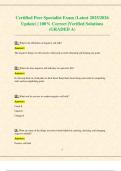
Certified Peer Specialist Exam (Latest 2025/2026
Update) | 100% Correct |Verified Solutions
(GRADED A)

Q: What is the definition of negative self-talk?
Answer:
The negative things we tell ourselves that keep us from obtaining and keeping our goals.


Q: What role does negative self-talk play in a person's life?
Answer:
It can keep them in a bad place in their head. Keep them from being successful at completing
tasks and accomplishing goals.


Q: What tool do you use to combat negative self-talk?
Answer:
Catch It
Check It
Change It


Q: What are some of the things you have found helpful in catching, checking, and changing
negative selftalk?

Answer:
Positive self-talk

1

, Ask yourself "what would you tell a friend?"
Show yourself grace.


Q: What is the relationship of "fears" to "comfort zone"?
Answer:
Fears keep us in our comfort zone. Coming out of your comfort zone moves you past your fears.


Q: The fear behind all fears is that we are afraid that we will not be able to handle the
"__________" that will arise if we face a particular fear.

Answer:
FEELINGS


Q: What are some things that you can do to help another person get over some fears that is
keeping him or her from doing what he or she wants to do?

Answer:
Help them to come up with a safety net. (Plan B)


Q: True or False: Peer Specialists can make an active linkage by providing a peer a phone
number for a local agency.

Answer:
False this is a passive linkage


2

Get to know the seller

Seller avatar
Reputation scores are based on the amount of documents a seller has sold for a fee and the reviews they have received for those documents. There are three levels: Bronze, Silver and Gold. The better the reputation, the more your can rely on the quality of the sellers work.
Quizbit07 Rasmussen College
View profile
Follow You need to be logged in order to follow users or courses
Sold
95
Member since
2 year
Number of followers
49
Documents
2300
Last sold
3 weeks ago
High-Quality Exams, Study guides, Reviews, Notes, Case Studies

Welcome! Here, you will find well-structured and exam-oriented study materials created to help you understand complex topics with ease. Whether you’re preparing for nursing licensure exams (NCLEX, ATI, HESI, ANCC, AANP), healthcare certification reviews (ACLS, BLS, PALS, PMHNP, AGNP), or entrance and readiness tests (TEAS, HESI, PAX, NLN), my resources are designed to guide you step-by-step. I also provide study support for university programs and major courses, including Chamberlain University, WGU programs, Portage Learning, as well as Medical-Surgical Nursing, Pharmacology, Anatomy & Physiology, and more. Everything is updated for 2025/2026, organized for quick studying and understanding.

Read more Read less
4.0

13 reviews

5
7
4
2
3
2
2
1
1
1

Recently viewed by you

Why students choose Stuvia

Created by fellow students, verified by reviews

Quality you can trust: written by students who passed their tests and reviewed by others who've used these notes.

Didn't get what you expected? Choose another document

No worries! You can instantly pick a different document that better fits what you're looking for.

Pay as you like, start learning right away

No subscription, no commitments. Pay the way you're used to via credit card and download your PDF document instantly.

Student with book image

“Bought, downloaded, and aced it. It really can be that simple.”

Alisha Student

Frequently asked questions

