

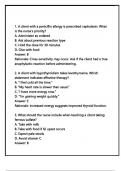
1. A client with a penicillin allergy is prescribed cephalexin. What
is the nurse’s priority?
A. Administer as ordered
B. Ask about previous reaction type
C. Hold the dose for 30 minutes
D. Give with food
Answer: B
Rationale: Cross-sensitivity may occur. Ask if the client had a true
anaphylactic reaction before administering.
2. A client with hypothyroidism takes levothyroxine. Which
statement indicates effective therapy?
A. “I feel cold all the time.”
B. “My heart rate is slower than usual.”
C. “I have more energy now.”
D. “I’m gaining weight quickly.”
Answer: C
Rationale: Increased energy suggests improved thyroid function.
3. What should the nurse include when teaching a client taking
ferrous sulfate?
A. Take with milk
B. Take with food if GI upset occurs
C. Expect pale stools
D. Avoid vitamin C
Answer: B
,Rationale: Iron can upset the stomach. If so, take with food (but
not dairy). Vitamin C increases absorption.
4. A client asks about insulin glargine (Lantus). What is the correct
response?
A. “It works immediately.”
B. “It peaks in 4 hours.”
C. “It has no peak and lasts 24 hours.”
D. “It must be mixed with regular insulin.”
Answer: C
Rationale: Glargine is a long-acting insulin with no pronounced
peak, providing steady glucose control.
5. A nurse is teaching a client how to apply clotrimazole vaginal
cream. What instruction is correct?
A. Use during menstruation
B. Stop once symptoms go away
C. Use applicator at bedtime
D. Use with a tampon
Answer: C
Rationale: For maximum effect, apply at bedtime using the
applicator. Avoid tampons during treatment.
6. A client taking carbidopa/levodopa reports facial twitching and
eye spasms. What should the nurse do?
A. Reassure the client this is expected
B. Hold the dose and notify the provider
C. Administer diphenhydramine
, D. Document and continue monitoring
Answer: B
Rationale: Facial twitching and spasms are signs of toxicity. Notify
the provider to adjust dosage.
7. A client is prescribed exenatide. What is a common side effect?
A. Hyperglycemia
B. Constipation
C. Nausea
D. Tachycardia
Answer: C
Rationale: Exenatide can cause nausea, especially when initiating
therapy. It’s an injectable incretin mimetic.
8. A client is prescribed loperamide. Which condition is a
contraindication?
A. IBS
B. Infectious diarrhea
C. Traveler’s diarrhea
D. Post-antibiotic diarrhea
Answer: B
Rationale: Do not use antidiarrheals in infectious diarrhea, as it
may retain toxins in the bowel.
9. A client on clozapine reports fever and sore throat. What is the
priority action?
A. Reassure and monitor
B. Administer antipyretics
is the nurse’s priority?
A. Administer as ordered
B. Ask about previous reaction type
C. Hold the dose for 30 minutes
D. Give with food
Answer: B
Rationale: Cross-sensitivity may occur. Ask if the client had a true
anaphylactic reaction before administering.
2. A client with hypothyroidism takes levothyroxine. Which
statement indicates effective therapy?
A. “I feel cold all the time.”
B. “My heart rate is slower than usual.”
C. “I have more energy now.”
D. “I’m gaining weight quickly.”
Answer: C
Rationale: Increased energy suggests improved thyroid function.
3. What should the nurse include when teaching a client taking
ferrous sulfate?
A. Take with milk
B. Take with food if GI upset occurs
C. Expect pale stools
D. Avoid vitamin C
Answer: B
,Rationale: Iron can upset the stomach. If so, take with food (but
not dairy). Vitamin C increases absorption.
4. A client asks about insulin glargine (Lantus). What is the correct
response?
A. “It works immediately.”
B. “It peaks in 4 hours.”
C. “It has no peak and lasts 24 hours.”
D. “It must be mixed with regular insulin.”
Answer: C
Rationale: Glargine is a long-acting insulin with no pronounced
peak, providing steady glucose control.
5. A nurse is teaching a client how to apply clotrimazole vaginal
cream. What instruction is correct?
A. Use during menstruation
B. Stop once symptoms go away
C. Use applicator at bedtime
D. Use with a tampon
Answer: C
Rationale: For maximum effect, apply at bedtime using the
applicator. Avoid tampons during treatment.
6. A client taking carbidopa/levodopa reports facial twitching and
eye spasms. What should the nurse do?
A. Reassure the client this is expected
B. Hold the dose and notify the provider
C. Administer diphenhydramine
, D. Document and continue monitoring
Answer: B
Rationale: Facial twitching and spasms are signs of toxicity. Notify
the provider to adjust dosage.
7. A client is prescribed exenatide. What is a common side effect?
A. Hyperglycemia
B. Constipation
C. Nausea
D. Tachycardia
Answer: C
Rationale: Exenatide can cause nausea, especially when initiating
therapy. It’s an injectable incretin mimetic.
8. A client is prescribed loperamide. Which condition is a
contraindication?
A. IBS
B. Infectious diarrhea
C. Traveler’s diarrhea
D. Post-antibiotic diarrhea
Answer: B
Rationale: Do not use antidiarrheals in infectious diarrhea, as it
may retain toxins in the bowel.
9. A client on clozapine reports fever and sore throat. What is the
priority action?
A. Reassure and monitor
B. Administer antipyretics


