

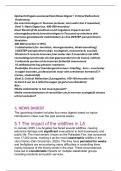
Opdracht Engels examenartikel (News Digest + Critical Reflection)
Onderwerp:
De overstromingen in Toscane (actueel, niet ouder dan 2 maanden)
Deel 1: News Digest (ca. 400-500 woorden)
Doel: Beschrijf de positieve en/of negatieve impact van het
nieuwsgebeurtenis (overstromingen in Toscane) op minstens drie
toerisme-gerelateerde stakeholders én drie DESTEP-perspectieven.
Vereisten:
400-500 woorden (±10%)
3 stakeholders (bv. toeristen, reisorganisaties, lokale bevolking)
3 DESTEP-perspectieven (bijv. ecologisch, economisch, sociaal)
Minstens 5 recente bronnen (niet ouder dan 2 maanden) met APA-
vermelding (wordt later als lijst gepresenteerd in de Canva-outline)
3 relevante quotes uit de bronnen (letterlijk overnemen)
15 zelfbedachte key phrases markeren
Duidelijke structuur (hamburgerstructuur: inleiding - kern - conclusie)
In eigen woorden, professioneel maar niet overdreven formeel (C1-
niveau, studentstijl)
Deel 2: Critical Reflection (2 paragrafen, 100-150 woorden elk)
Je kiest 2 van de 4 reflectievragen (je gaf al voorbeelden):
Bijv.:
Welke stakeholder is het meest geraakt?
Welke overeenkomsten of verschillen zie je met een soortgelijk nieuws
uit het verleden?
The upcoming chapter includes four news digests based on topics
introduced in class over the past several weeks.
5.1 The impact of the wildfires in LA
In January 2025, Los Angeles has faced several wildfires, causing
extensive damage and significant evacuations to both businesses and
public life. The most severe, known as the Palisades Fire, has consumed
over 17,000 acres, marking it as the most catastrophic wildfire in the
city's history (Dan Grossman, 2025). The fires have persisted for weeks
and firefighters are encountering many difficulties in controlling them,
mainly because of the strong winds in the area. These circumstances
have led to considerable impacts on multiple stakeholder groups
including residents and public services.
, Consequently, the fire departments faced unprecedented operational
and psychological pressure during the ongoing wildfires. One of the
major challenges was the limited availability of water, caused by extreme
stress on the water infrastructure of the city. During the most intense
phase of the wildfire, the municipal water system operated up to four
times above the normal level for 15 hours, which made it increasingly
difficult to keep up with the demand. As National Geographic (2025)
explains, "The water infrastructure was not built to handle the high
demands of large wildfires, leading to a serious lack of supply.’’
This shortage of resources is making it much harder for firefighters to
manage the fires effectively (Colleen Hagerty, 2025). The limited access
to water not only delays response efforts but also requires fire
departments to make critical decisions under pressure during
emergency situations.
Economisch
While authorities worked to contain the situation, the emotional and
social impact on residents increased rapidly as the wildfires continued to
spread. The disaster distrusted daily routines, impacted the emotional
well-being and weakened social connections across affected
communities. The recent wildfires have caused serious property damage
and forced thousands of locals to leave their homes. Approximately
30,000 individuals were forced to evacuate, while more than 13,000
properties remain at risk, leaving many inhabitants in a state of
uncertainty (Associated Press, 2025). many locals forced to leave behind
not only their homes but also cherished personal items and memories. In
response, the American Red Cross and other relief organizations have
provided essential short-term support including food, water and hygiene
products for evacuees. However, the assistance provided is temporary
and does not resolve the long-term challenges faced by fire survivors. As
the Red Cross noted ‘’ while our emergency shelters and supplies
offer short-term relief, they are not a permanent solution’’ (American
Red Cross, 2025). Many households are currently staying in temporary
accommodations or with relatives, facing ongoing uncertainty about
when they will be able to return to permanent housing. The absence of a
comprehensive recovery plan has extended their time in displacement,
heightened emotional challenges and slowed the rebuilding process.
Ecologisch
Onderwerp:
De overstromingen in Toscane (actueel, niet ouder dan 2 maanden)
Deel 1: News Digest (ca. 400-500 woorden)
Doel: Beschrijf de positieve en/of negatieve impact van het
nieuwsgebeurtenis (overstromingen in Toscane) op minstens drie
toerisme-gerelateerde stakeholders én drie DESTEP-perspectieven.
Vereisten:
400-500 woorden (±10%)
3 stakeholders (bv. toeristen, reisorganisaties, lokale bevolking)
3 DESTEP-perspectieven (bijv. ecologisch, economisch, sociaal)
Minstens 5 recente bronnen (niet ouder dan 2 maanden) met APA-
vermelding (wordt later als lijst gepresenteerd in de Canva-outline)
3 relevante quotes uit de bronnen (letterlijk overnemen)
15 zelfbedachte key phrases markeren
Duidelijke structuur (hamburgerstructuur: inleiding - kern - conclusie)
In eigen woorden, professioneel maar niet overdreven formeel (C1-
niveau, studentstijl)
Deel 2: Critical Reflection (2 paragrafen, 100-150 woorden elk)
Je kiest 2 van de 4 reflectievragen (je gaf al voorbeelden):
Bijv.:
Welke stakeholder is het meest geraakt?
Welke overeenkomsten of verschillen zie je met een soortgelijk nieuws
uit het verleden?
The upcoming chapter includes four news digests based on topics
introduced in class over the past several weeks.
5.1 The impact of the wildfires in LA
In January 2025, Los Angeles has faced several wildfires, causing
extensive damage and significant evacuations to both businesses and
public life. The most severe, known as the Palisades Fire, has consumed
over 17,000 acres, marking it as the most catastrophic wildfire in the
city's history (Dan Grossman, 2025). The fires have persisted for weeks
and firefighters are encountering many difficulties in controlling them,
mainly because of the strong winds in the area. These circumstances
have led to considerable impacts on multiple stakeholder groups
including residents and public services.
, Consequently, the fire departments faced unprecedented operational
and psychological pressure during the ongoing wildfires. One of the
major challenges was the limited availability of water, caused by extreme
stress on the water infrastructure of the city. During the most intense
phase of the wildfire, the municipal water system operated up to four
times above the normal level for 15 hours, which made it increasingly
difficult to keep up with the demand. As National Geographic (2025)
explains, "The water infrastructure was not built to handle the high
demands of large wildfires, leading to a serious lack of supply.’’
This shortage of resources is making it much harder for firefighters to
manage the fires effectively (Colleen Hagerty, 2025). The limited access
to water not only delays response efforts but also requires fire
departments to make critical decisions under pressure during
emergency situations.
Economisch
While authorities worked to contain the situation, the emotional and
social impact on residents increased rapidly as the wildfires continued to
spread. The disaster distrusted daily routines, impacted the emotional
well-being and weakened social connections across affected
communities. The recent wildfires have caused serious property damage
and forced thousands of locals to leave their homes. Approximately
30,000 individuals were forced to evacuate, while more than 13,000
properties remain at risk, leaving many inhabitants in a state of
uncertainty (Associated Press, 2025). many locals forced to leave behind
not only their homes but also cherished personal items and memories. In
response, the American Red Cross and other relief organizations have
provided essential short-term support including food, water and hygiene
products for evacuees. However, the assistance provided is temporary
and does not resolve the long-term challenges faced by fire survivors. As
the Red Cross noted ‘’ while our emergency shelters and supplies
offer short-term relief, they are not a permanent solution’’ (American
Red Cross, 2025). Many households are currently staying in temporary
accommodations or with relatives, facing ongoing uncertainty about
when they will be able to return to permanent housing. The absence of a
comprehensive recovery plan has extended their time in displacement,
heightened emotional challenges and slowed the rebuilding process.
Ecologisch


