
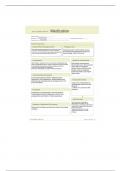
ACTIVE LEARNING TEMPLATE: Medication
STUDENT NAME _____________________________________
Prochlorperazine
MEDICATION __________________________________________________________________________ REVIEW MODULE CHAPTER ___________
Antipsychotic
CATEGORY CLASS ______________________________________________________________________
PURPOSE OF MEDICATION
Expected Pharmacological Action Therapeutic Use
Block dopamine receptors/depress the RAS limiting stimuli Frequently used to control severe nausea
to the brain. Widely distributed in the tissues and stored
there for up to 6 months after drug is stopped. Metabolized and vomiting associated with surgery and
in the liver and excreted through the bile and urine. chemotherapy. Used Pre/Post op
Complications Medication Administration
CNS- sedation, weakness, tremor, drowsiness, extrapyramidal side Oral, Rectal, and parenteral.
effects, pseudoparkinsonism, dystonia, akathisia, tardive dyskinesia, IM provides four to five times the
and potentially irreversible neuroleptic malignant syndrome.
active dose as oral doses.
*risk for developing DM and weight gain.
Respiratory- laryngospasm, dyspnea and bronchospasm. caution when switching routes.
Children tend to metabolize
faster than adults, may require
larger doses.
Contraindications/Precautions
Any dopamine blocking effects. CNS depression,
Parkinsons, CAD, Hypotension, *Elderly patients with Nursing Interventions
dementia-use associated with an increased risk of CV
events and death. -Assess for contraindications.
-myelography within 24 or next
48 hours
- children <12 screen for CNS
Interactions infections
Combination of antipsychotics with beta blockers.
**deutetrabenazine and valbenazine- used to treat
antipsychotic side effects of Tardive dyskinesia
Client Education
-Do not crush or chew tablets.
-keep patient recumbent for 30
Evaluation of Medication Effectiveness minutes due to orthostatic hypotension
-warning PT or famiily about the risk of
Nausea and vomiting associated with chemo and surgery tradive dyskinesias.
subsides. -sugarless candy and ice chips.
-Vision examinations for ocular
changes.
ACTIVE LEARNING TEMPLATES THERAPEUTIC PROCEDURE A7


