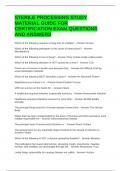
STERILE PROCESSING STUDY
MATERIAL GUIDE FOR
CERTIFICATION EXAM QUESTIONS
AND ANSWERS
Which of the following requires a living host to multiply? - Answer-Viruses
Which of the following pathogens is the cause of tuberculosis? - Answer-
Mycobacteria
Which of the following is true of fungi? - Answer-They include single celled yeasts
Which of the following diseases is NOT caused by a virus? - Answer-CJD
Prions are of concern in health care because they: - Answer-Are difficult to kill by
usual sterilization methods
Which of the following BEST describes a prion? - Answer-An Abnormal Protein
Staphylococcus Aureus is a: - Answer-Gram-Positive Coccus
VRE can survive on the hands for: - Answer-Hours
A healthcare-acquired infection is generally termed a: - Answer-Nosocomial Infection
Healthcare-acquired infections account for more than: - Answer-90,000 deaths
annually
The principal living reservoir of human disease comes from: - Answer-The Human
Body
Water that has been contaminated by the feces of humans and other animals is most
notably responsible for: - Answer-Gastrointestinal Disease
The principal route of nosocomial infections is: - Answer-Direct Contact
The general term for any inanimate object involved in the spread of infection is: -
Answer-Fomite
Which of the following is NOT a disease spread by droplets? - Answer-Measles
The pathogens that cause tuberculosis, whooping cough, pneumonia, measles,
mumps, and smallpox are discharged through the: - Answer-Respiratory Tract
Living things responsible for causing disease are called: - Answer-Vectors
,One of the most common portals of exit in disease transmission is: - Answer-The
Respiratory Tract
An infection caused by a needle stick enters through which portal of entry? - Answer-
Parenteral Tissue
The single most effective way to prevent infection is to: - Answer-Wash Hands
The MINIMUM time needed for effective hand washing is: - Answer-15 seconds
Unless the water turns off automatically, the water should be: - Answer-Turned off
using a disposable towel
Bloodborne pathogen exposure is regulated by: - Answer-OSHA
Which concentration is most effective in alcohol hand sanitizers? - Answer-60% to
95%
Waterless hand antiseptics are NOT appropriate when: - Answer-Hands are visually
soiled
Under standard precautions, all blood and other potentially infectious materials are: -
Answer-Handled as if they were infectious
A confidential medical evaluation must be performed any time: - Answer-An
employee is exposed to blood or body fluid
According to AAMI, "The removal of contamination from an item to the extent
necessary for further processing or for the intended use" defines": - Answer-Cleaning
According to OSHA, the use of physical or chemical means to inactivate bloodborne
pathogens from a surface is known as: - Answer-Decontamination
What is the first step in the decontamination process? - Answer-Manual and/or
automated, mechanical cleaning
Microorganisms on contaminated items are referred to as: - Answer-Bioburden
Which of the following terms refers to disease-producing microorganisms? - Answer-
Pathogens
The number of air exchanges in the decontamination area should be: - Answer-10
The ventilation system in the decontamination area must be maintained at: - Answer-
Negative Pressure
OSHA recommends that contaminated scrub attire be: - Answer-Laundered by the
facility
, When a new medical device is purchased and received into SPD, what information
must the technician have before processing it? - Answer-Request written instructions
for processing from the manufacturer
A solution is considered neutral when the pH is: - Answer-7
A solution having a pH of 9 is: - Answer-Alkaline
Enzyme-based detergents contain organic substances that assist in the breakdown
of: - Answer-Protein soils and blood
What is the temperature range for enzymatic cleaners? - Answer-109 to 140 degrees
F
A proteolytic enzyme detergent breaks down: - Answer-Blood
Which of the following should never be used to remove gross soil on instruments? -
Answer-Saline
Before any item with multiple parts is cleaned, it must be: - Answer-Disassembled
Metal-bristled brushes may be used to clean: - Answer-Tungsten carbide jaws of
needle holders
The final rinse in the cleaning process should be performed using: - Answer-Treated
Water
The mechanical action in the automated cleaning process that uses sound waves
and imploding bubbles is called: - Answer-Cavitation
Prior to processing instruments in an ultrasonic cleaner: - Answer-The gross soil
should be removed
Powered equipment should be: - Answer-Cleaned as specified by the manufacturer
Generally, fiberoptic light cables should be cleaned: - Answer-Using a soft cloth and
detergent
Before it is manually cleaned, what must be done to a flexible endoscope? - Answer-
It must be tested for leaks
All instruments and devices received from another facility should be: - Answer-
Completely reprocessed
What material can be used as a simple test to check the functioning of the ultrasonic
cleaner? - Answer-Aluminum Foil
The TOSI line of products is used to verify the effectiveness of: - Answer-Mechanical
washers
MATERIAL GUIDE FOR
CERTIFICATION EXAM QUESTIONS
AND ANSWERS
Which of the following requires a living host to multiply? - Answer-Viruses
Which of the following pathogens is the cause of tuberculosis? - Answer-
Mycobacteria
Which of the following is true of fungi? - Answer-They include single celled yeasts
Which of the following diseases is NOT caused by a virus? - Answer-CJD
Prions are of concern in health care because they: - Answer-Are difficult to kill by
usual sterilization methods
Which of the following BEST describes a prion? - Answer-An Abnormal Protein
Staphylococcus Aureus is a: - Answer-Gram-Positive Coccus
VRE can survive on the hands for: - Answer-Hours
A healthcare-acquired infection is generally termed a: - Answer-Nosocomial Infection
Healthcare-acquired infections account for more than: - Answer-90,000 deaths
annually
The principal living reservoir of human disease comes from: - Answer-The Human
Body
Water that has been contaminated by the feces of humans and other animals is most
notably responsible for: - Answer-Gastrointestinal Disease
The principal route of nosocomial infections is: - Answer-Direct Contact
The general term for any inanimate object involved in the spread of infection is: -
Answer-Fomite
Which of the following is NOT a disease spread by droplets? - Answer-Measles
The pathogens that cause tuberculosis, whooping cough, pneumonia, measles,
mumps, and smallpox are discharged through the: - Answer-Respiratory Tract
Living things responsible for causing disease are called: - Answer-Vectors
,One of the most common portals of exit in disease transmission is: - Answer-The
Respiratory Tract
An infection caused by a needle stick enters through which portal of entry? - Answer-
Parenteral Tissue
The single most effective way to prevent infection is to: - Answer-Wash Hands
The MINIMUM time needed for effective hand washing is: - Answer-15 seconds
Unless the water turns off automatically, the water should be: - Answer-Turned off
using a disposable towel
Bloodborne pathogen exposure is regulated by: - Answer-OSHA
Which concentration is most effective in alcohol hand sanitizers? - Answer-60% to
95%
Waterless hand antiseptics are NOT appropriate when: - Answer-Hands are visually
soiled
Under standard precautions, all blood and other potentially infectious materials are: -
Answer-Handled as if they were infectious
A confidential medical evaluation must be performed any time: - Answer-An
employee is exposed to blood or body fluid
According to AAMI, "The removal of contamination from an item to the extent
necessary for further processing or for the intended use" defines": - Answer-Cleaning
According to OSHA, the use of physical or chemical means to inactivate bloodborne
pathogens from a surface is known as: - Answer-Decontamination
What is the first step in the decontamination process? - Answer-Manual and/or
automated, mechanical cleaning
Microorganisms on contaminated items are referred to as: - Answer-Bioburden
Which of the following terms refers to disease-producing microorganisms? - Answer-
Pathogens
The number of air exchanges in the decontamination area should be: - Answer-10
The ventilation system in the decontamination area must be maintained at: - Answer-
Negative Pressure
OSHA recommends that contaminated scrub attire be: - Answer-Laundered by the
facility
, When a new medical device is purchased and received into SPD, what information
must the technician have before processing it? - Answer-Request written instructions
for processing from the manufacturer
A solution is considered neutral when the pH is: - Answer-7
A solution having a pH of 9 is: - Answer-Alkaline
Enzyme-based detergents contain organic substances that assist in the breakdown
of: - Answer-Protein soils and blood
What is the temperature range for enzymatic cleaners? - Answer-109 to 140 degrees
F
A proteolytic enzyme detergent breaks down: - Answer-Blood
Which of the following should never be used to remove gross soil on instruments? -
Answer-Saline
Before any item with multiple parts is cleaned, it must be: - Answer-Disassembled
Metal-bristled brushes may be used to clean: - Answer-Tungsten carbide jaws of
needle holders
The final rinse in the cleaning process should be performed using: - Answer-Treated
Water
The mechanical action in the automated cleaning process that uses sound waves
and imploding bubbles is called: - Answer-Cavitation
Prior to processing instruments in an ultrasonic cleaner: - Answer-The gross soil
should be removed
Powered equipment should be: - Answer-Cleaned as specified by the manufacturer
Generally, fiberoptic light cables should be cleaned: - Answer-Using a soft cloth and
detergent
Before it is manually cleaned, what must be done to a flexible endoscope? - Answer-
It must be tested for leaks
All instruments and devices received from another facility should be: - Answer-
Completely reprocessed
What material can be used as a simple test to check the functioning of the ultrasonic
cleaner? - Answer-Aluminum Foil
The TOSI line of products is used to verify the effectiveness of: - Answer-Mechanical
washers