3/15/25, 4:31 PM Walden 6630 Psychopharmacology Midterm Study Guide / All-In-One Comprehensive Study Guide – Expert Strategies, Full Revie…
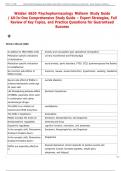
Walden 6630 Psychopharmacology Midterm Study Guide
/ All-In-One Comprehensive Study Guide – Expert Strategies, Full
Review of Key Topics, and Practice Questions for Guaranteed
Success
Terms in this set (180)
In addition to MDD SNRIs treat Anxiety and neuropathic pain (peripheral neuropathy)
Medication specific indications urinary incontinence and Fibromyalgia
of duloxetine:
Medication specific indications social anxiety, panic disorders, PTSD, OCD, postmenopausal hot flashes
of venlafaxine:
Six common side effects of Insomnia, nausea, sexual dysfunction, hypertension, sweating, headaches
SNRIs include:
Severe side effect of SNRIs in suicidal ideation
children/adolescents under age
25 years old:
Life threatening adverse effect Serotonin Syndrome
of SNRIs, especially when used
in combination with other
serotonergic drugs:
This SNRI is an inhibitor of venlafaxine
Cytochrome P450 enzymes:
This SNRI is hepatotoxic: duloxetine
MAOIs increase the levels of: Serotonin, Norepinephrine, and Dopamine
Norepinephrine regulates: alertness and focus
Dopamine regulates: cognitive function, motivation, and awakeness
In the synaptic cleft, Monoamine Serotonin, Norepinephrine, and Dopamine
Oxidase A breaks down:
In the synaptic cleft, Monoamine Dopamine
Oxidase B breaks down:
Atypical depression (mood responds to positive events and
MAOIs are especially effective
in: symptoms include increased appetite, weight gain,
sleepiness, and fatigue)
-… 1/19
,3/15/25, 4:31 PM Walden 6630 Psychopharmacology Midterm Study Guide / All-In-One Comprehensive Study Guide – Expert Strategies, Full Revie…
Non-selective MAOIs inhibit MAO-A and MAO-B
enzymes:
Selective MAOIs only inhibit the MAO-B
enzyme:
Three non-selective MAOIs: isocarboxazid, phenelzine, tranylcypromine
Non-selective MAOIs increase Serotonin, Norepinephrine, Dopamine
the levels of these
neurotransmitters:
These three non-selective MAOIs isocarboxazid, phenelzine, tranylcypromine
bind irreversibly to MAO
enzymes to
permanently block their function:
Two selective MAOIs: selegeline, rasagiline
Selective MAOIs increase the Dopamine
level of this neurotransmitter:
These selective MAOIs are more selegeline, rasagiline
commonly prescribed to treat
Parkinson's Disease (a
neurodegenerative disorder that
effects the dopaminergic
neurons in the substantia nigra
region of the brain):
Adverse effects of MAOIs Serotonin syndrome and hypertensive crisis
include:
Before starting another Two weeks (to allow for the body to replace MAO enzymes
antidepressant MAOIs so that serotonin syndrome does not occur)
should be stopped for at
least:
Five main symptoms of hyperthermia, hypertension, tachycardia, arrhythmias, agitation
hypertensive crisis:
Hypertensive crisis commonly tyramine (cheese, wine, beer, cured/smoked meats)
occurs when people taking
MAOIs consume foods or
drinks high in:
Foods and drinks rich in cheese, wine, beer, cured/smoked meats
tyramine:
When uninhibited, these two MAO-A and MAO-B
enzymes are responsible for
breaking down tyramine:
-… 2/19
, 3/15/25, 4:31 PM Walden 6630 Psychopharmacology Midterm Study Guide / All-In-One Comprehensive Study Guide – Expert Strategies, Full Revie…
When tyramine is not broken Norepinephrine
down, it increases the release
of this
neurotransmitter,
which causes
hypertensive crisis:
Due to its action as an adrenergic Phentolamine
antagonist this drug is the
treatment of hypertensive
crisis:
TCAs are subdivided into these Tertiary TCAs and Secondary TCAs
two groups:
Three Tertiary TCAs: amitriptyline, imipramine, clomipramine
Two Secondary TCAs: desipramine, nortriptyline
Tertiary TCAs are non-selective Serotonin and Norephinephrine transporters (increase 5HT and NE)
and act on:
Secondary TCAs are selective Norepinephrine transporters (increase NE)
and act only on:
Therapeutic benefits from TCAs 2-4 weeks
typically take approximately:
In addition to treatment of Phobic disorders, chronic neuropathic pain, migraine prophylaxis
depression, other
indications for TCAs
include:
Medication specific indication OCD
for clomipramine:
Medication specific indication Nocturnal enuresis
for imipramine:
In addition to SERTs and NETs, Histamine (H1) receptors, Muscarinic receptors, and Alpha 1 receptors
TCAs block (causes side
effects):
TCAs inhibitory effects on sedation
Histamine (H1) receptors
results in this side effect:
TCAs inhibitory effects on anticholinergic side effects
Muscarinic
receptors results in this side
effect profile:
These TCAs more commonly amitriptyline, imipramine, clomipramine (Tertiary TCAs)
cause anticholinergic side
effects:
-… 3/19
Walden 6630 Psychopharmacology Midterm Study Guide
/ All-In-One Comprehensive Study Guide – Expert Strategies, Full
Review of Key Topics, and Practice Questions for Guaranteed
Success
Terms in this set (180)
In addition to MDD SNRIs treat Anxiety and neuropathic pain (peripheral neuropathy)
Medication specific indications urinary incontinence and Fibromyalgia
of duloxetine:
Medication specific indications social anxiety, panic disorders, PTSD, OCD, postmenopausal hot flashes
of venlafaxine:
Six common side effects of Insomnia, nausea, sexual dysfunction, hypertension, sweating, headaches
SNRIs include:
Severe side effect of SNRIs in suicidal ideation
children/adolescents under age
25 years old:
Life threatening adverse effect Serotonin Syndrome
of SNRIs, especially when used
in combination with other
serotonergic drugs:
This SNRI is an inhibitor of venlafaxine
Cytochrome P450 enzymes:
This SNRI is hepatotoxic: duloxetine
MAOIs increase the levels of: Serotonin, Norepinephrine, and Dopamine
Norepinephrine regulates: alertness and focus
Dopamine regulates: cognitive function, motivation, and awakeness
In the synaptic cleft, Monoamine Serotonin, Norepinephrine, and Dopamine
Oxidase A breaks down:
In the synaptic cleft, Monoamine Dopamine
Oxidase B breaks down:
Atypical depression (mood responds to positive events and
MAOIs are especially effective
in: symptoms include increased appetite, weight gain,
sleepiness, and fatigue)
-… 1/19
,3/15/25, 4:31 PM Walden 6630 Psychopharmacology Midterm Study Guide / All-In-One Comprehensive Study Guide – Expert Strategies, Full Revie…
Non-selective MAOIs inhibit MAO-A and MAO-B
enzymes:
Selective MAOIs only inhibit the MAO-B
enzyme:
Three non-selective MAOIs: isocarboxazid, phenelzine, tranylcypromine
Non-selective MAOIs increase Serotonin, Norepinephrine, Dopamine
the levels of these
neurotransmitters:
These three non-selective MAOIs isocarboxazid, phenelzine, tranylcypromine
bind irreversibly to MAO
enzymes to
permanently block their function:
Two selective MAOIs: selegeline, rasagiline
Selective MAOIs increase the Dopamine
level of this neurotransmitter:
These selective MAOIs are more selegeline, rasagiline
commonly prescribed to treat
Parkinson's Disease (a
neurodegenerative disorder that
effects the dopaminergic
neurons in the substantia nigra
region of the brain):
Adverse effects of MAOIs Serotonin syndrome and hypertensive crisis
include:
Before starting another Two weeks (to allow for the body to replace MAO enzymes
antidepressant MAOIs so that serotonin syndrome does not occur)
should be stopped for at
least:
Five main symptoms of hyperthermia, hypertension, tachycardia, arrhythmias, agitation
hypertensive crisis:
Hypertensive crisis commonly tyramine (cheese, wine, beer, cured/smoked meats)
occurs when people taking
MAOIs consume foods or
drinks high in:
Foods and drinks rich in cheese, wine, beer, cured/smoked meats
tyramine:
When uninhibited, these two MAO-A and MAO-B
enzymes are responsible for
breaking down tyramine:
-… 2/19
, 3/15/25, 4:31 PM Walden 6630 Psychopharmacology Midterm Study Guide / All-In-One Comprehensive Study Guide – Expert Strategies, Full Revie…
When tyramine is not broken Norepinephrine
down, it increases the release
of this
neurotransmitter,
which causes
hypertensive crisis:
Due to its action as an adrenergic Phentolamine
antagonist this drug is the
treatment of hypertensive
crisis:
TCAs are subdivided into these Tertiary TCAs and Secondary TCAs
two groups:
Three Tertiary TCAs: amitriptyline, imipramine, clomipramine
Two Secondary TCAs: desipramine, nortriptyline
Tertiary TCAs are non-selective Serotonin and Norephinephrine transporters (increase 5HT and NE)
and act on:
Secondary TCAs are selective Norepinephrine transporters (increase NE)
and act only on:
Therapeutic benefits from TCAs 2-4 weeks
typically take approximately:
In addition to treatment of Phobic disorders, chronic neuropathic pain, migraine prophylaxis
depression, other
indications for TCAs
include:
Medication specific indication OCD
for clomipramine:
Medication specific indication Nocturnal enuresis
for imipramine:
In addition to SERTs and NETs, Histamine (H1) receptors, Muscarinic receptors, and Alpha 1 receptors
TCAs block (causes side
effects):
TCAs inhibitory effects on sedation
Histamine (H1) receptors
results in this side effect:
TCAs inhibitory effects on anticholinergic side effects
Muscarinic
receptors results in this side
effect profile:
These TCAs more commonly amitriptyline, imipramine, clomipramine (Tertiary TCAs)
cause anticholinergic side
effects:
-… 3/19