
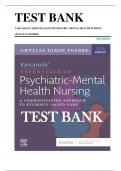
TEST BANK
VARCAROLIS’ ESSENTIALS OF PSYCHIATRIC MENTAL HEALTH NURSING
CHYLLIA D FOSBRE
5th Edition
TEST BANK
,Table of Contents
Table of Contents
Chapter 01: Practicing the Science and the Art of Psychiatric Nursing
Chapter 02: Mental Health and Mental Illness
Chapter 03: Theories and Therapies
Chapter 04: Biological Basis for Understanding Psychopharmacology
Chapter 05: Settings for Psychiatric Care
Chapter 06: Legal and Ethical Basis for Practice
Chapter 07: Nursing Process and QSEN: The Foundation for Safe and Effective Care
Chapter 08: Communication Skills: Medium for All Nursing Practice
Chapter 09: Therapeutic Relationships and the Clinical Interview
Chapter 10: Trauma and Stress-Related Disorders
Chapter 11: Anxiety, Anxiety Disorders, and Obsessive-Compulsive Disorders
Chapter 12: Somatic System Disorders and Dissociative Disorders
Chapter 13: Personality Disorders
Chapter 14: Eating Disorders
Chapter 15: Mood Disorders: Depression
Chapter 16: Bipolar Spectrum Disorders
Chapter 17: Schizophrenia Spectrum Disorders and Other Psychotic Disorders
Chapter 18: Neurocognitive Disorders
Chapter 19: Substance-Related and Addictive Disorders
Chapter 20: Crisis and Mass Disaster
Chapter 21: Child, Partner, and Elder Violence
,Chapter 22: Sexual Violence
Chapter 23: Suicidal Thoughts and Behavior
Chapter 24: Anger, Aggression, and Violence
Chapter 25: Care for the Dying and Those Who Grieve
Chapter 26: Children and Adolescents
Chapter 27: Adults
Chapter 28: Older Adults
,Test Bank: Essentials of Psychiatric Mental Health Nursing (5th Edition by Varcarolis) 2
Chapter 01: Practicing the Science and the Art of Psychiatric Nursing MULTIPLE
CHOICE
1. Which outcome, focused on recovery, would be expected in the plan of care for a patient
living in the community and diagnosed with serious and persistent mental illness? Within 3
months, the patient will: a. deny suicidal ideation.
b. report a sense of well-being.
c. take medications as prescribed.
d. attend clinic appointments on time.
ANS: B
Recovery emphasizes managing symptoms, reducing psychosocial disability, and improving
role performance.
The goal of recovery is to empower the individual with mental illness to achieve a sense of
meaning and satisfaction in life and to function at the highest possible level of wellness. The
incorrect options focus on the classic medical model rather than recovery.
DIF: Cognitive Level: Application (Applying) REF: 2
TOP: Nursing Process: Outcomes Identification
MSC: NCLEX: Health Promotion and Maintenance
2. In the shift-change report, an off-going nurse criticizes a patient who wears heavy
makeup. Which comment by the nurse who receives the report best demonstrates
advocacy?
a. This is a psychiatric hospital. Craziness is what we are all about.
b. Lets all show acceptance of this patient by wearing lots of makeup too.
c. Your comments are inconsiderate and inappropriate. Keep the report objective.
d. Our patients need our help to learn behaviors that will help them get along in society.
ANS: D
Accepting patients needs for self-expression and seeking to teach skills that will contribute
to their well-being demonstrate respect and are important parts of advocacy. The on-
,coming nurse needs to take action to ensure that others are not prejudiced against the
patient. Humor can be appropriate within the privacy of a shift report but not at the
expense of respect for patients. Judging the off-going nurse in a critical way will create
conflict.
Nurses must show compassion for each other.
DIF: Cognitive Level: Application (Applying) REF: 8
TOP: Nursing Process: Implementation MSC: NCLEX: Safe, Effective Care Environment
3. A nurse assesses a newly admitted patient diagnosed with major depressive disorder.
Whichstatement is an example of attending?
a. We all have stress in life. Being in a psychiatric hospital isnt the end of the world.
b. Tell me why you felt you had to be hospitalized to receive treatment for your depression.
c. You will feel better after we get some antidepressant medication started for you.
d. Id like to sit with you a while so you may feel more comfortable talking with me.
ANS: D
Attending is a technique that demonstrates the nurses commitment to the relationship and
reduces feelings of isolation. This technique shows respect for the patient and
demonstrates caring. Generalizations, probing, and false reassurances are non-therapeutic.
DIF: Cognitive Level: Application (Applying) REF: 8
TOP: Nursing Process: Implementation MSC: NCLEX: Psychosocial Integrity
4. A patient is hospitalized for depression and suicidal ideation after their spouse asks for a
divorce. Selectthe nurses most caring comment.
a. Lets discuss some means of coping other than suicide when you have these feelings.
b. I understand why youre so depressed. When I got divorced, I was devastated too.
c. You should forget about your marriage and move on with your life.
d. How did you get so depressed that hospitalization was necessary?
Test Bank: Essentials of Psychiatric Mental Health Nursing (5th Edition by Varcarolis) 3
ANS: A
The nurses communication should evidence caring and a commitment to work with the
patient. This commitment lets the patient know the nurse will help. Probing and advice are
not helpful or therapeutic interventions.
,DIF: Cognitive Level: Application (Applying) REF: 6
TOP: Nursing Process: Implementation MSC: NCLEX: Psychosocial Integrity
5. A patient shows the nurse an article from the Internet about a health problem. Which
characteristic of the web sites address most alerts the nurse that the site may have biased
and prejudicedinformation?
a. Address ends in .org.
b. Address ends in .com.
c. Address ends in .gov.
d. Address ends in .net.
ANS: B
Financial influences on a site are a clue that the information may be biased. .com at the end
of the address indicates that the site is a commercial one. .gov indicates that the site is
maintained by a government entity.
.org indicates that the site is nonproprietary; the site may or may not have reliable
information, but it does not profit from its activities. .net can have multiple meanings.
DIF: Cognitive Level: Comprehension (Understanding) REF: 5
TOP: Nursing Process: Evaluation MSC: NCLEX: Health Promotion and Maintenance
6. A nurse says, When I was in school, I learned to call upset patients by name to get their
attention; however, I read a descriptive research study that says that this approach does not
work. I plan to stop calling patients by name. Which statement is the best appraisal of this
nurses comment?
a. One descriptive research study rarely provides enough evidence to change practice.
b. Staff nurses apply new research findings only with the help from clinical nurse
specialists.
c. New research findings should be incorporated into clinical algorithms before using them
in practice.
d. The nurse misinterpreted the results of the study. Classic tenets of practice do not
change.
ANS: A
,Descriptive research findings provide evidence for practice but must be viewed in relation
to other studies before practice changes. One study is not enough. Descriptive studies are
low on the hierarchy of evidence.
Clinical algorithms use flow charts to manage problems and do not specify one response to
a clinical problem.
Classic tenets of practice should change as research findings provide evidence for change.DIF:
Cognitive Level: Analysis (Analyzing) REF: 3
TOP: Nursing Process: Evaluation MSC: NCLEX: Health Promotion and Maintenance
7. Twonursing zstudents zdiscuss zcareer zplans zafter zgraduation. zOne zstudent zwants zto
zenter zpsychiatric znursing.
The zother zstudent zasks, zWhy zwould zyou zwant zto zbe za zpsychiatric znurse? zAll zthey zdo zis
ztalk. zYou zwill zlose zyour zskills. zSelect zthe zbest zresponse zby zthe zstudent zinterested zin
zpsychiatric znursing.
a. Psychiatric znurses zpractice zin zsafer zenvironments zthan zother zspecialties. zNurse-to-
patient zratios zmust zbe zbetter zbecause zof zthe znature zof zpatients zproblems.
b. Psychiatric znurses zuse zcomplex zcommunication zskills, zas zwell zas zcritical zthinking, zto
zsolve zmultidimensional zproblems. zIm zchallenged zby zthose zsituations.
c. I zthink zI zwill zbe zgood zin zthe zmental zhealth zfield. zI zdo znot zlike zclinical zrotations zin
zschool, zso zI zdo znot zwant zto zcontinue zthem zafter zI zgraduate.
d. Psychiatric znurses zdo znot zhave zto zdeal zwith zas zmuch zpain zand zsuffering zas
zmedical zsurgical znurses. zThat zappeals zto zme.
ANS: zB
The zpractice zof zpsychiatric znursing zrequires za zdifferent zset zof zskills zthan zmedical
zsurgical znursing, zalthough zsubstantial zoverlap zdoes zexist. zPsychiatric znurses zmust zbe
zable zto zhelp zpatients zwith zmedical zand zmental zhealth zproblems, zreflecting zthe zholistic
zperspective zthese znurses zmust zhave. zNurse-patient zratios zand zworkloads zin
zpsychiatric zsettings zhave zincreased, zsimilar zto zother zspecialties. zPsychiatric znursing
zinvolves zclinical zpractice,
Test zBank: zEssentials zof zPsychiatric zMental zHealth zNursing z(5th z Edition zby zVarcarolis) z4
not zsimply zdocumentation. zPsychosocial zpain zis zreal zand zcan zcause zas zmuch zsuffering zas
zphysical zpain.
DIF: zCognitive zLevel: zApplication z(Applying) zREF: z3
, TOP: zNursing zProcess: zImplementation zMSC: zNCLEX: zSafe, zEffective zCare zEnvironment
8. Which zresearch zevidence zwould zmost zinfluence za zgroup zof znurses zto zchange
ztheir zpractice?
a. Expert zcommittee zreport zof zrecommendations zfor zpractice
b. Systematic zreview zof zrandomized zcontrolled ztrials
c. Nonexperimental z descriptive z study
d. Critical
zpathway zANS: zB
Research zfindings zare zgraded zusing za zhierarchy zof zevidence. zA zsystematic zreview zof
zrandomized zcontrolled ztrials zis zLevel zA zand zprovides zthe zstrongest zevidence zfor
zchanging zpractice. zExpert zcommittee zrecommendations zand zdescriptive zstudies zlend
zless zpowerful zand zinfluential zevidence. zA zcritical zpathway zis znot zevidence; zit
zincorporates zresearch zfindings zafter zthey zhave zbeen zanalyzed.
DIF: zCognitive zLevel: zComprehension z(Understanding) zREF: z3
TOP: zNursing zProcess: zPlanning zMSC: zNCLEX: zSafe, zEffective zCare zEnvironment
9. A zbill zintroduced zin zCongress zwould zreduce zfunding zfor zthe zcare zof zpeople zdiagnosed
zwith zmental zillnesses.
A zgroup zof znurses zwrite zletters zto ztheir zelected zrepresentatives zin zopposition zto
zthe zlegislation. zWhich zrole zhave zthe znurses zfulfilled?
a. Advocacy
b. Attending
c. Recovery
d. Evidence-based zpractice
zANS: zA
An zadvocate zdefends zor zasserts zanothers zcause, zparticularly zwhen zthe zother zperson
zlacks zthe zability zto zdo zthat zfor zhimself zor zherself. zExamples zof zindividual zadvocacy
zinclude zhelping zpatients zunderstand ztheir zrights zor zmake zdecisions. zOn za zcommunity
zscale, zadvocacy zincludes zpolitical zactivity, zpublic zspeaking, zand zpublication zin zthe
zinterest zof zimproving zthe zindividuals zwith zmental zillness; zthe zletter-writing zcampaign
zadvocates zfor zthat zcause zon zbehalf zof zpatients zwho zare zunable zto zarticulate ztheir zown
zneeds.
DIF: zCognitive zLevel: zComprehension z(Understanding) zREF: z8
VARCAROLIS’ ESSENTIALS OF PSYCHIATRIC MENTAL HEALTH NURSING
CHYLLIA D FOSBRE
5th Edition
TEST BANK
,Table of Contents
Table of Contents
Chapter 01: Practicing the Science and the Art of Psychiatric Nursing
Chapter 02: Mental Health and Mental Illness
Chapter 03: Theories and Therapies
Chapter 04: Biological Basis for Understanding Psychopharmacology
Chapter 05: Settings for Psychiatric Care
Chapter 06: Legal and Ethical Basis for Practice
Chapter 07: Nursing Process and QSEN: The Foundation for Safe and Effective Care
Chapter 08: Communication Skills: Medium for All Nursing Practice
Chapter 09: Therapeutic Relationships and the Clinical Interview
Chapter 10: Trauma and Stress-Related Disorders
Chapter 11: Anxiety, Anxiety Disorders, and Obsessive-Compulsive Disorders
Chapter 12: Somatic System Disorders and Dissociative Disorders
Chapter 13: Personality Disorders
Chapter 14: Eating Disorders
Chapter 15: Mood Disorders: Depression
Chapter 16: Bipolar Spectrum Disorders
Chapter 17: Schizophrenia Spectrum Disorders and Other Psychotic Disorders
Chapter 18: Neurocognitive Disorders
Chapter 19: Substance-Related and Addictive Disorders
Chapter 20: Crisis and Mass Disaster
Chapter 21: Child, Partner, and Elder Violence
,Chapter 22: Sexual Violence
Chapter 23: Suicidal Thoughts and Behavior
Chapter 24: Anger, Aggression, and Violence
Chapter 25: Care for the Dying and Those Who Grieve
Chapter 26: Children and Adolescents
Chapter 27: Adults
Chapter 28: Older Adults
,Test Bank: Essentials of Psychiatric Mental Health Nursing (5th Edition by Varcarolis) 2
Chapter 01: Practicing the Science and the Art of Psychiatric Nursing MULTIPLE
CHOICE
1. Which outcome, focused on recovery, would be expected in the plan of care for a patient
living in the community and diagnosed with serious and persistent mental illness? Within 3
months, the patient will: a. deny suicidal ideation.
b. report a sense of well-being.
c. take medications as prescribed.
d. attend clinic appointments on time.
ANS: B
Recovery emphasizes managing symptoms, reducing psychosocial disability, and improving
role performance.
The goal of recovery is to empower the individual with mental illness to achieve a sense of
meaning and satisfaction in life and to function at the highest possible level of wellness. The
incorrect options focus on the classic medical model rather than recovery.
DIF: Cognitive Level: Application (Applying) REF: 2
TOP: Nursing Process: Outcomes Identification
MSC: NCLEX: Health Promotion and Maintenance
2. In the shift-change report, an off-going nurse criticizes a patient who wears heavy
makeup. Which comment by the nurse who receives the report best demonstrates
advocacy?
a. This is a psychiatric hospital. Craziness is what we are all about.
b. Lets all show acceptance of this patient by wearing lots of makeup too.
c. Your comments are inconsiderate and inappropriate. Keep the report objective.
d. Our patients need our help to learn behaviors that will help them get along in society.
ANS: D
Accepting patients needs for self-expression and seeking to teach skills that will contribute
to their well-being demonstrate respect and are important parts of advocacy. The on-
,coming nurse needs to take action to ensure that others are not prejudiced against the
patient. Humor can be appropriate within the privacy of a shift report but not at the
expense of respect for patients. Judging the off-going nurse in a critical way will create
conflict.
Nurses must show compassion for each other.
DIF: Cognitive Level: Application (Applying) REF: 8
TOP: Nursing Process: Implementation MSC: NCLEX: Safe, Effective Care Environment
3. A nurse assesses a newly admitted patient diagnosed with major depressive disorder.
Whichstatement is an example of attending?
a. We all have stress in life. Being in a psychiatric hospital isnt the end of the world.
b. Tell me why you felt you had to be hospitalized to receive treatment for your depression.
c. You will feel better after we get some antidepressant medication started for you.
d. Id like to sit with you a while so you may feel more comfortable talking with me.
ANS: D
Attending is a technique that demonstrates the nurses commitment to the relationship and
reduces feelings of isolation. This technique shows respect for the patient and
demonstrates caring. Generalizations, probing, and false reassurances are non-therapeutic.
DIF: Cognitive Level: Application (Applying) REF: 8
TOP: Nursing Process: Implementation MSC: NCLEX: Psychosocial Integrity
4. A patient is hospitalized for depression and suicidal ideation after their spouse asks for a
divorce. Selectthe nurses most caring comment.
a. Lets discuss some means of coping other than suicide when you have these feelings.
b. I understand why youre so depressed. When I got divorced, I was devastated too.
c. You should forget about your marriage and move on with your life.
d. How did you get so depressed that hospitalization was necessary?
Test Bank: Essentials of Psychiatric Mental Health Nursing (5th Edition by Varcarolis) 3
ANS: A
The nurses communication should evidence caring and a commitment to work with the
patient. This commitment lets the patient know the nurse will help. Probing and advice are
not helpful or therapeutic interventions.
,DIF: Cognitive Level: Application (Applying) REF: 6
TOP: Nursing Process: Implementation MSC: NCLEX: Psychosocial Integrity
5. A patient shows the nurse an article from the Internet about a health problem. Which
characteristic of the web sites address most alerts the nurse that the site may have biased
and prejudicedinformation?
a. Address ends in .org.
b. Address ends in .com.
c. Address ends in .gov.
d. Address ends in .net.
ANS: B
Financial influences on a site are a clue that the information may be biased. .com at the end
of the address indicates that the site is a commercial one. .gov indicates that the site is
maintained by a government entity.
.org indicates that the site is nonproprietary; the site may or may not have reliable
information, but it does not profit from its activities. .net can have multiple meanings.
DIF: Cognitive Level: Comprehension (Understanding) REF: 5
TOP: Nursing Process: Evaluation MSC: NCLEX: Health Promotion and Maintenance
6. A nurse says, When I was in school, I learned to call upset patients by name to get their
attention; however, I read a descriptive research study that says that this approach does not
work. I plan to stop calling patients by name. Which statement is the best appraisal of this
nurses comment?
a. One descriptive research study rarely provides enough evidence to change practice.
b. Staff nurses apply new research findings only with the help from clinical nurse
specialists.
c. New research findings should be incorporated into clinical algorithms before using them
in practice.
d. The nurse misinterpreted the results of the study. Classic tenets of practice do not
change.
ANS: A
,Descriptive research findings provide evidence for practice but must be viewed in relation
to other studies before practice changes. One study is not enough. Descriptive studies are
low on the hierarchy of evidence.
Clinical algorithms use flow charts to manage problems and do not specify one response to
a clinical problem.
Classic tenets of practice should change as research findings provide evidence for change.DIF:
Cognitive Level: Analysis (Analyzing) REF: 3
TOP: Nursing Process: Evaluation MSC: NCLEX: Health Promotion and Maintenance
7. Twonursing zstudents zdiscuss zcareer zplans zafter zgraduation. zOne zstudent zwants zto
zenter zpsychiatric znursing.
The zother zstudent zasks, zWhy zwould zyou zwant zto zbe za zpsychiatric znurse? zAll zthey zdo zis
ztalk. zYou zwill zlose zyour zskills. zSelect zthe zbest zresponse zby zthe zstudent zinterested zin
zpsychiatric znursing.
a. Psychiatric znurses zpractice zin zsafer zenvironments zthan zother zspecialties. zNurse-to-
patient zratios zmust zbe zbetter zbecause zof zthe znature zof zpatients zproblems.
b. Psychiatric znurses zuse zcomplex zcommunication zskills, zas zwell zas zcritical zthinking, zto
zsolve zmultidimensional zproblems. zIm zchallenged zby zthose zsituations.
c. I zthink zI zwill zbe zgood zin zthe zmental zhealth zfield. zI zdo znot zlike zclinical zrotations zin
zschool, zso zI zdo znot zwant zto zcontinue zthem zafter zI zgraduate.
d. Psychiatric znurses zdo znot zhave zto zdeal zwith zas zmuch zpain zand zsuffering zas
zmedical zsurgical znurses. zThat zappeals zto zme.
ANS: zB
The zpractice zof zpsychiatric znursing zrequires za zdifferent zset zof zskills zthan zmedical
zsurgical znursing, zalthough zsubstantial zoverlap zdoes zexist. zPsychiatric znurses zmust zbe
zable zto zhelp zpatients zwith zmedical zand zmental zhealth zproblems, zreflecting zthe zholistic
zperspective zthese znurses zmust zhave. zNurse-patient zratios zand zworkloads zin
zpsychiatric zsettings zhave zincreased, zsimilar zto zother zspecialties. zPsychiatric znursing
zinvolves zclinical zpractice,
Test zBank: zEssentials zof zPsychiatric zMental zHealth zNursing z(5th z Edition zby zVarcarolis) z4
not zsimply zdocumentation. zPsychosocial zpain zis zreal zand zcan zcause zas zmuch zsuffering zas
zphysical zpain.
DIF: zCognitive zLevel: zApplication z(Applying) zREF: z3
, TOP: zNursing zProcess: zImplementation zMSC: zNCLEX: zSafe, zEffective zCare zEnvironment
8. Which zresearch zevidence zwould zmost zinfluence za zgroup zof znurses zto zchange
ztheir zpractice?
a. Expert zcommittee zreport zof zrecommendations zfor zpractice
b. Systematic zreview zof zrandomized zcontrolled ztrials
c. Nonexperimental z descriptive z study
d. Critical
zpathway zANS: zB
Research zfindings zare zgraded zusing za zhierarchy zof zevidence. zA zsystematic zreview zof
zrandomized zcontrolled ztrials zis zLevel zA zand zprovides zthe zstrongest zevidence zfor
zchanging zpractice. zExpert zcommittee zrecommendations zand zdescriptive zstudies zlend
zless zpowerful zand zinfluential zevidence. zA zcritical zpathway zis znot zevidence; zit
zincorporates zresearch zfindings zafter zthey zhave zbeen zanalyzed.
DIF: zCognitive zLevel: zComprehension z(Understanding) zREF: z3
TOP: zNursing zProcess: zPlanning zMSC: zNCLEX: zSafe, zEffective zCare zEnvironment
9. A zbill zintroduced zin zCongress zwould zreduce zfunding zfor zthe zcare zof zpeople zdiagnosed
zwith zmental zillnesses.
A zgroup zof znurses zwrite zletters zto ztheir zelected zrepresentatives zin zopposition zto
zthe zlegislation. zWhich zrole zhave zthe znurses zfulfilled?
a. Advocacy
b. Attending
c. Recovery
d. Evidence-based zpractice
zANS: zA
An zadvocate zdefends zor zasserts zanothers zcause, zparticularly zwhen zthe zother zperson
zlacks zthe zability zto zdo zthat zfor zhimself zor zherself. zExamples zof zindividual zadvocacy
zinclude zhelping zpatients zunderstand ztheir zrights zor zmake zdecisions. zOn za zcommunity
zscale, zadvocacy zincludes zpolitical zactivity, zpublic zspeaking, zand zpublication zin zthe
zinterest zof zimproving zthe zindividuals zwith zmental zillness; zthe zletter-writing zcampaign
zadvocates zfor zthat zcause zon zbehalf zof zpatients zwho zare zunable zto zarticulate ztheir zown
zneeds.
DIF: zCognitive zLevel: zComprehension z(Understanding) zREF: z8


