

OB NURSING 2.2 NURSE A
Fetal Heart Tones
Fetal monitoring allows the nurse to recognize signs of fetal wellbeing or compromise
!
Baseline
Baseline fetal heart rate is determined by finding a 2 minute segment of heart rate on a 10 minute segmen
fetal monitoring strip. The baseline is the fetal heart during that time rounded to the nearest 5 BPM increm
DOES NOT INCLUDE: periods of marked variability, segments of fetal heart rate with changes such as
decelerations, segments of fetal heart rate that differ by more than 25 BPM
Normal baseline FHR is 110 - 160 BPM
Bradycardia: FHR < 110 BPM for > 10 mins Tachycardia: FHR > 160 BPM for > 10 mins
‣ maternal hypotension ‣ infection
‣ supine hypotensive syndrome ‣ dehydration
‣ fetal decompression ‣ fever
‣ late fetal hypoxia ‣ fetal hypoxemia
‣ cord compression ‣ anemia
‣ abruptio placenta ‣ prematurity
‣ vagal stimulation ‣ terbutaline
‣ caffeine
‣ epinephrine
‣ theophylline
‣ illicit drugs
Variability
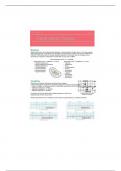
Fluctuations in baseline fetal heart rate; beat to beat changes
Grades of fluctuation are based on amplitude changes (from peak to trough of beat):
‣ Absent variability: amplitude range is not detectable; usually looks like a flat line
‣ Minimal: amplitude is < 5 BPM
‣ Moderate: amplitude is 6 - 25 BPM
‣ Marked: amplitude is > 25 BPM
Persistently minimal or absent FHR variability appears to be the most Amplitude range of 10 BPM
significant sign of fetal compromise. (moderate variability)
Wandering baselines with no variability could indicate congenital defects or metabolic acidosis!
ABSENT MINIMAL
MODERATE 1
MARKED
Fetal Heart Tones
Fetal monitoring allows the nurse to recognize signs of fetal wellbeing or compromise
!
Baseline
Baseline fetal heart rate is determined by finding a 2 minute segment of heart rate on a 10 minute segmen
fetal monitoring strip. The baseline is the fetal heart during that time rounded to the nearest 5 BPM increm
DOES NOT INCLUDE: periods of marked variability, segments of fetal heart rate with changes such as
decelerations, segments of fetal heart rate that differ by more than 25 BPM
Normal baseline FHR is 110 - 160 BPM
Bradycardia: FHR < 110 BPM for > 10 mins Tachycardia: FHR > 160 BPM for > 10 mins
‣ maternal hypotension ‣ infection
‣ supine hypotensive syndrome ‣ dehydration
‣ fetal decompression ‣ fever
‣ late fetal hypoxia ‣ fetal hypoxemia
‣ cord compression ‣ anemia
‣ abruptio placenta ‣ prematurity
‣ vagal stimulation ‣ terbutaline
‣ caffeine
‣ epinephrine
‣ theophylline
‣ illicit drugs
Variability
Fluctuations in baseline fetal heart rate; beat to beat changes
Grades of fluctuation are based on amplitude changes (from peak to trough of beat):
‣ Absent variability: amplitude range is not detectable; usually looks like a flat line
‣ Minimal: amplitude is < 5 BPM
‣ Moderate: amplitude is 6 - 25 BPM
‣ Marked: amplitude is > 25 BPM
Persistently minimal or absent FHR variability appears to be the most Amplitude range of 10 BPM
significant sign of fetal compromise. (moderate variability)
Wandering baselines with no variability could indicate congenital defects or metabolic acidosis!
ABSENT MINIMAL
MODERATE 1
MARKED


