

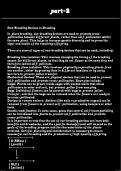
part-2
Out-Breeding Devices in Breeding
In plant breeding, out-breeding devices are used to promote cross-
pollination between different plants, rather than self-pollination within
the same plant. This helps to increase genetic diversity and improve the
vigor and health of the resulting offspring.
There are several types of out-breeding devices that can be used, including:
Breeding time isolation: This involves changing the timing of the breeding
season for different plants, so that they do not flower at the same time and
therefore cannot self-pollinate.
Breeding place isolation: This involves physically separating plants from
one another, either by growing them in different locations or by using
barriers to prevent pollen transfer.
Mechanical devices: These are physical devices that can be used to prevent
self-pollination and promote cross-pollination. Examples include:
Cages: Plants can be grown inside cages with meshed walls that allow
pollinators to enter and exit, but prevent pollen from escaping.
Bags: Individual flowers can be covered with bags to prevent pollen
transfer, and then the bags can be removed when the flowers are ready to
be cross-pollinated.
Devices to remove anthers: Anthers (the male reproductive organs) can be
removed from flowers to prevent self-pollination, using tweezers or other
tools.
Genetic modification: In some cases, genes that control self-incompatibility
can be introduced into plants to prevent self-pollination and promote
cross-pollination.
It is important to note that the use of out-breeding devices can have both
benefits and drawbacks, and the specific device(s) used will depend on the
goals of the breeding program and the characteristics of the plants
involved. Careful planning and consideration is necessary to ensure
successful out-breeding and the production of high-quality offspring.
+---------------+
| S-RNase |
| (pistil) |
+---------------+
|
|
v
+---------------+
| SLF |
| (pollen) |
, +---------------+
|
|
v
+---------------+
| Compatible |
| (fertilization)|
+---------------+
|
|
v
+---------------+
| Incompatible|
| (rejection) |
+---------------+
A Code Sample: Simulating Self-Incompatibility
Here's a simple Python code sample to simulate self-incompatibility:
def self_incompatibility(s_rnase, slf):
if s_rnase == slf:
return "Incompatible"
else:
return "Compatible"
# Test the function
s_rnase = "S1"
slf = "S1"
print(self_incompatibility(s_rnase, slf)) # Output: Incompatible
s_rnase = "S1"
slf = "S2"
print(self_incompatibility(s_rnase, slf)) # Output: Compatible
This code sample demonstrates the basic principle of self-incompatibility,
where the S-RNase and SLF proteins interact to determine compatibility.
The Importance of Self-Incompatibility
Self-incompatibility is a crucial mechanism that promotes genetic
diversity in plants. By preventing self-fertilization, plants can avoid
inbreeding depression and increase their chances of survival and
reproduction.
In conclusion, self-incompatibility is a complex and fascinating process
that involves the interaction of S-RNase and SLF proteins. Understanding
this mechanism can provide insights into plant breeding and genetics, and
has important implications for agriculture and conservation.
the model is not overfitting to the seed structure and is instead capturing
the overall patterns in the data.
Out-Breeding Devices in Breeding
In plant breeding, out-breeding devices are used to promote cross-
pollination between different plants, rather than self-pollination within
the same plant. This helps to increase genetic diversity and improve the
vigor and health of the resulting offspring.
There are several types of out-breeding devices that can be used, including:
Breeding time isolation: This involves changing the timing of the breeding
season for different plants, so that they do not flower at the same time and
therefore cannot self-pollinate.
Breeding place isolation: This involves physically separating plants from
one another, either by growing them in different locations or by using
barriers to prevent pollen transfer.
Mechanical devices: These are physical devices that can be used to prevent
self-pollination and promote cross-pollination. Examples include:
Cages: Plants can be grown inside cages with meshed walls that allow
pollinators to enter and exit, but prevent pollen from escaping.
Bags: Individual flowers can be covered with bags to prevent pollen
transfer, and then the bags can be removed when the flowers are ready to
be cross-pollinated.
Devices to remove anthers: Anthers (the male reproductive organs) can be
removed from flowers to prevent self-pollination, using tweezers or other
tools.
Genetic modification: In some cases, genes that control self-incompatibility
can be introduced into plants to prevent self-pollination and promote
cross-pollination.
It is important to note that the use of out-breeding devices can have both
benefits and drawbacks, and the specific device(s) used will depend on the
goals of the breeding program and the characteristics of the plants
involved. Careful planning and consideration is necessary to ensure
successful out-breeding and the production of high-quality offspring.
+---------------+
| S-RNase |
| (pistil) |
+---------------+
|
|
v
+---------------+
| SLF |
| (pollen) |
, +---------------+
|
|
v
+---------------+
| Compatible |
| (fertilization)|
+---------------+
|
|
v
+---------------+
| Incompatible|
| (rejection) |
+---------------+
A Code Sample: Simulating Self-Incompatibility
Here's a simple Python code sample to simulate self-incompatibility:
def self_incompatibility(s_rnase, slf):
if s_rnase == slf:
return "Incompatible"
else:
return "Compatible"
# Test the function
s_rnase = "S1"
slf = "S1"
print(self_incompatibility(s_rnase, slf)) # Output: Incompatible
s_rnase = "S1"
slf = "S2"
print(self_incompatibility(s_rnase, slf)) # Output: Compatible
This code sample demonstrates the basic principle of self-incompatibility,
where the S-RNase and SLF proteins interact to determine compatibility.
The Importance of Self-Incompatibility
Self-incompatibility is a crucial mechanism that promotes genetic
diversity in plants. By preventing self-fertilization, plants can avoid
inbreeding depression and increase their chances of survival and
reproduction.
In conclusion, self-incompatibility is a complex and fascinating process
that involves the interaction of S-RNase and SLF proteins. Understanding
this mechanism can provide insights into plant breeding and genetics, and
has important implications for agriculture and conservation.
the model is not overfitting to the seed structure and is instead capturing
the overall patterns in the data.


