

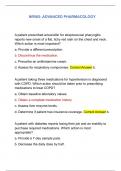
NR565- ADVANCED PHARMACOLOGY
A patient prescribed amoxicillin for streptococcal pharyngitis
reports new onset of a flat, itchy red rash on the chest and neck.
Which action is most important?
a. Provide a different prescription.
b. Discontinue the medication.
c. Prescribe an antihistamine cream.
d. Assess for respiratory compromise. Correct Answer b.
A patient taking three medications for hypertension is diagnosed
with COPD. Which action should be taken prior to prescribing
medications to treat COPD?
a. Obtain baseline laboratory values.
b. Obtain a complete medication history.
c. Assess liver enzyme levels.
d. Determine if patient has insurance coverage. Correct Answer b.
A patient with diabetes reports losing their job and an inability to
purchase required medications. Which action is most
appropriate?
a. Provide a 7-day sample pack.
b. Decrease the daily dose by half.
,c. Contact a different pharmacy.
d. Prescribe a different medication. Correct Answer c.
A patient recently prescribed hydrocodone calls to report they are
unable to fill the prescription. Which factors could contribute to the
inability to fill the prescription?Select all that apply.
a. DEA number missing from prescription
b. Prescription sent via electronic messenger
c. Dose higher than typically prescribed
d. Prescriber license number not included
e. Patient name and date of birth were handwritten Correct
Answer a.
b.
d.
A patient reports that a medication prescribed for recurrent
migraine headaches is not working. Which action should be taken
first?
a. Ask the patient about the number and frequency of tablets
taken.
b. Assess the patient's headache pain on a scale from 1 to 10.
c. Report the patient's complaint to the prescriber.
d. Suggest biofeedback as an adjunct to drug therapy. Correct
Answer a.
,A patient is prescribed metronidazole for bacterial vaginosis.
Which patient history finding would be most concerning?
a. Recent yeast infection
b. Family history of cervical cancer
c. Drinks two glasses of wine every night
d. Patient is currently unemployed Correct Answer c.
A patient is using a metered-dose inhaler containing albuterol for
asthma. The medication label instructs the patient to administer
"two puffs every 4 hours as needed for coughing or wheezing."
The patient reports feeling jittery sometimes when taking the
medication, and she doesn't feel that the medication is always
effective. Which action is most appropriate?
a. Asking the patient to demonstrate use of the inhaler
b. Assessing the patient's exposure to tobacco smoke
c. Auscultating lung sounds and obtaining vitalsigns
d. Suggesting that the patient use one puff to reduce side effects
Correct Answer c.
A patient newly diagnosed with diabetes is to be discharged from
the hospital. Which action should be taken first during medication
education?
a. Asking the patient to demonstrate how to measure and
administer insulin
, b. Discussing methods of storing insulin and discarding syringes
c. Giving information about how diet and exercise affect insulin
requirements
d. Teaching the patient about the long-term consequences of poor
diabetes control Correct Answer a.
The drug manual states that older adult patients are at increased
risk for hepatic side effects. Which action is most important when
prescribing this medication to an 80-year-old patient?
a. Obtain pretreatment laboratory work.
b. Ensure that the drug is given in the correct dose at the correct
time to minimize the risk of
adverse effects.
c. Discontinue the order; the drug is contraindicated for this
patient.
d. Give the medication intravenously so that the drug does not
pass through the liver. Correct Answer a.
A patient recently diagnosed with HIV is prescribed several
medications to treat the condition. Which factors could impact the
patient's adherence to the treatment regimen?Select all that
apply.
a. The patient is uninsured
b. The patient works three part-time jobs
c. The medication regimen includes six different pills
A patient prescribed amoxicillin for streptococcal pharyngitis
reports new onset of a flat, itchy red rash on the chest and neck.
Which action is most important?
a. Provide a different prescription.
b. Discontinue the medication.
c. Prescribe an antihistamine cream.
d. Assess for respiratory compromise. Correct Answer b.
A patient taking three medications for hypertension is diagnosed
with COPD. Which action should be taken prior to prescribing
medications to treat COPD?
a. Obtain baseline laboratory values.
b. Obtain a complete medication history.
c. Assess liver enzyme levels.
d. Determine if patient has insurance coverage. Correct Answer b.
A patient with diabetes reports losing their job and an inability to
purchase required medications. Which action is most
appropriate?
a. Provide a 7-day sample pack.
b. Decrease the daily dose by half.
,c. Contact a different pharmacy.
d. Prescribe a different medication. Correct Answer c.
A patient recently prescribed hydrocodone calls to report they are
unable to fill the prescription. Which factors could contribute to the
inability to fill the prescription?Select all that apply.
a. DEA number missing from prescription
b. Prescription sent via electronic messenger
c. Dose higher than typically prescribed
d. Prescriber license number not included
e. Patient name and date of birth were handwritten Correct
Answer a.
b.
d.
A patient reports that a medication prescribed for recurrent
migraine headaches is not working. Which action should be taken
first?
a. Ask the patient about the number and frequency of tablets
taken.
b. Assess the patient's headache pain on a scale from 1 to 10.
c. Report the patient's complaint to the prescriber.
d. Suggest biofeedback as an adjunct to drug therapy. Correct
Answer a.
,A patient is prescribed metronidazole for bacterial vaginosis.
Which patient history finding would be most concerning?
a. Recent yeast infection
b. Family history of cervical cancer
c. Drinks two glasses of wine every night
d. Patient is currently unemployed Correct Answer c.
A patient is using a metered-dose inhaler containing albuterol for
asthma. The medication label instructs the patient to administer
"two puffs every 4 hours as needed for coughing or wheezing."
The patient reports feeling jittery sometimes when taking the
medication, and she doesn't feel that the medication is always
effective. Which action is most appropriate?
a. Asking the patient to demonstrate use of the inhaler
b. Assessing the patient's exposure to tobacco smoke
c. Auscultating lung sounds and obtaining vitalsigns
d. Suggesting that the patient use one puff to reduce side effects
Correct Answer c.
A patient newly diagnosed with diabetes is to be discharged from
the hospital. Which action should be taken first during medication
education?
a. Asking the patient to demonstrate how to measure and
administer insulin
, b. Discussing methods of storing insulin and discarding syringes
c. Giving information about how diet and exercise affect insulin
requirements
d. Teaching the patient about the long-term consequences of poor
diabetes control Correct Answer a.
The drug manual states that older adult patients are at increased
risk for hepatic side effects. Which action is most important when
prescribing this medication to an 80-year-old patient?
a. Obtain pretreatment laboratory work.
b. Ensure that the drug is given in the correct dose at the correct
time to minimize the risk of
adverse effects.
c. Discontinue the order; the drug is contraindicated for this
patient.
d. Give the medication intravenously so that the drug does not
pass through the liver. Correct Answer a.
A patient recently diagnosed with HIV is prescribed several
medications to treat the condition. Which factors could impact the
patient's adherence to the treatment regimen?Select all that
apply.
a. The patient is uninsured
b. The patient works three part-time jobs
c. The medication regimen includes six different pills


