TEST BANK
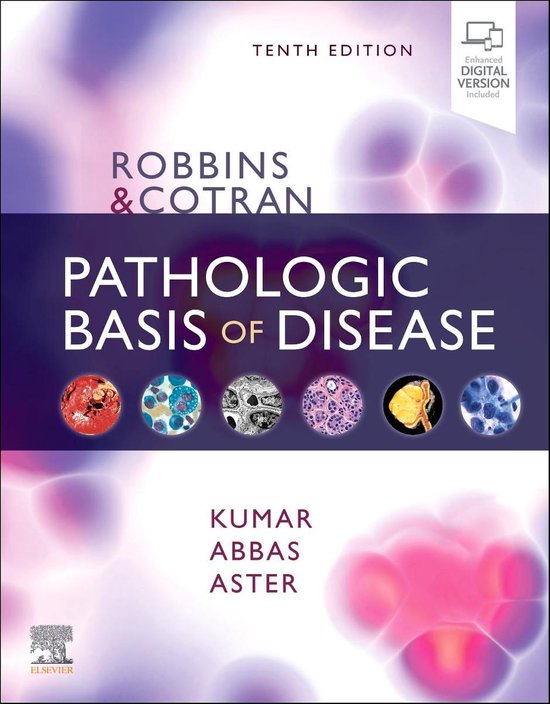
Robbins & Cotran Pathologic Basis of Disease
Vinay Kumar, Abul K. Abbas, and Jon C. Aster
10th Edition
,Table of Contents
Chapter 01 The Cell as a Unit of Health and Disease 1
Chapter 02 Cell Injury, Cell Death, and Adaptations 2
Chapter 03 Inflammation and Repair 5
Chapter 04 Hemodynamic Disorders, Thromboembolic Disease, and Shock 8
Chapter 05 Genetic Disorders 12
Chapter 06 Diseases of the Immune System 15
Chapter 07 Neoplasia 21
Chapter 08 Infectious Diseases 25
Chapter 09 Environmental and Nutritional Diseases 29
Chapter 10 Diseases of Infancy and Childhood 32
Chapter 11 Blood Vessels 35
Chapter 12 The Heart 37
Chapter 13 Diseases of White Blood Cells, Lymph Nodes, Spleen, and Thymus 42
Chapter 14 Red Blood Cell and Bleeding Disorders 45
Chapter 15 The Lung 48
Chapter 16 Head and Neck 53
Chapter 17 The Gastrointestinal Tract 56
Chapter 18 Liver and Gallbladder 63
Chapter 19 The Pancreas 69
Chapter 20 The Kidney 71
Chapter 21 The Lower Urinary Tract and Male Genital System 74
Chapter 22 The Female Genital Tract 78
Chapter 23 The Breast 83
Chapter 24 The Endocrine System 86
Chapter 25 The Skin 89
Chapter 26 Bones, Joints, and Soft Tissue Tumors 91
Chapter 27 Peripheral Nerves and Skeletal Muscles 93
Chapter 28 The Central Nervous System 94
Chapter 29 The Eye 95
,______________________________________________________________________________________________
Test Bank - Robbins and Cotran Pathologic Basis of Disease, 10th Edition (Kumar, 2021)
Chapter 01: The Cell as a Unit of Health and Disease
Kumar: Robbins and Cotran Pathologic Basis of Disease, 10th Edition
MULTIPLE CHOICE
1. Fibrillin is important for the scaffolding and deposition of which other component of the
extracellular matrix?
a. Collagen type I
b. Collagen type III
c. Elastic fibers
d. Fibronectin
e. Laminin
ANS: C
Fibrillin, a 350 kD glycoprotein, is part of the microfibrils that are important for the
scaffolding and deposition of elastic fibers. A congenital defect of fibrillin, as seen in patients
with Marfan syndrome, is associated with reduced elasticity of arteries and formation of
aneurysms.
2. Which growth factor is the most potent promotor of angiogenesis in the granulation tissue?
a. Angiotensin
b. Platelet-derived growth factor
c. Tumor growth factor ß
d. Vascular endothelial growth factor
e. Epidermal growth factor
ANS: D
Vascular endothelial growth factor (VEGF) is the most important promotor of angiogenesis in
the granulation tissue.
3. A 20-year-old woman suffered extensive burns and developed large irregular scars over her
hands. These scars limited the movement of her fingers, and she was unable to fully extend
them. What are these lesions called?
a. Contractures
b. Desmoids
c. Aggressive fibromatoses
d. Keloids
e. Wound dehiscences
ANS: A
Contractures are extensive scars overlying the joints that limit movements and cause
permanent flexure.
______________________________________________________________________________________________
1|Page
,______________________________________________________________________________________________
Test Bank - Robbins and Cotran Pathologic Basis of Disease, 10th Edition (Kumar, 2021)
Chapter 02: Cell Injury, Cell Death, and Adaptations
Kumar: Robbins and Cotran Pathologic Basis of Disease, 10th Edition
MULTIPLE CHOICE
1. A 60-year-old man who had generalized atherosclerosis died 24 hours after having a stroke. A
cerebral infarct was found at autopsy. Necrosis of the brain is classified as
a. coagulative necrosis
b. liquefactive necrosis
c. fat necrosis
d. fibrinoid necrosis
e. caseous necrosis
ANS: B
Brain infarcts are characterized by liquefactive necrosis.
2. A 30-year-old woman who had leukemia was treated with bone marrow transplantation. She
developed a skin rash that was interpreted as a sign of a graft-versus- host reaction. A skin
biopsy was performed. In the epidermis, there were scattered dead epidermal cells that had
rounded contours and pyknotic nuclei. This form of cell death is caused by
a. activation of caspases through receptor transmitted signals on the cell surface
b. inhibition of ATPase
c. inhibition of oxidative phosphorylation
d. activation of lysosomal enzymes
e. depletion of glycogen
ANS: A
Graft-versus-host–induced cell death in the epidermis is a form of apoptosis. It is mediated by
caspases and other enzymes of the suicide pathway of "programmed cell death."
3. Uptake of bacteria into the cytoplasm of neutrophilic leukocytes is called
a. Autophagocytosis
b. Heterophagocytosis
c. Exocytosis
d. Pinocytosis
e. Involution
ANS: B
Uptake of bacteria and other exogenous particulate material into the phagosomes is called
phagocytosis.
4. A 90-year-old man died in a nursing home. During the past 10 years, he was unable to care for
himself and was mentally incoherent. He had no memory and could not hold a conversation.
He was unaware of his surroundings. At autopsy, the brain showed signs of Alzheimer
disease, and there were neurons containing numerous neurofibrillary tangles. These
cytoplasmic structures are formed from which component of the neurons?
a. Nucleus
b. Rough endoplasmic reticulum
c. Smooth endoplasmic reticulum
d. Mitochondria
______________________________________________________________________________________________
2|Page
,______________________________________________________________________________________________
Test Bank - Robbins and Cotran Pathologic Basis of Disease, 10th Edition (Kumar, 2021)
e. Cytoskeleton
ANS: E
Neurofibrillary tangles are composed of microtubule-associated proteins and neurofilaments,
which form the cytoskeleton of nerve cells.
5. Continuous expression of the gene for atrial natriuretic factor in the myocardial cells of the
left ventricle is typically a consequence of
a. myocardial infarction
b. angina pectoris
c. Hypertension
d. Hypotension
e. ventricular fibrillation
ANS: C
Atrial natriuretic factor (ANF) is produced during fetal life in both the atrial and ventricular
cells of the heart. After birth, the ANF gene remains active only in the atrium, but can be
activated in ventricular cells undergoing hypertrophy. Arterial hypertension is the most
common cause of ventricular hypertrophy.
6. Ubiquitin-proteasome degradation of plasma proteins is opposed by
a. Insulin
b. interleukin-1
c. tumor necrosis factor á
d. Glucocorticoids
e. thyroid hormones
ANS: A
Insulin can oppose ubiquitin-proteasome degradation of plasma proteins, whereas all other
hormones and mediators of inflammation listed here accelerate it.
7. A 28-year-old man was found to have cirrhosis of the liver and pulmonary emphysema. The
liver cells contained globular inclusions in their cytoplasm, which by electron microscopy are
shown to be located inside the
a. Golgi apparatus
b. smooth endoplasmic reticulum
c. rough endoplasmic reticulum
d. Mitochondria
e. Peroxisomes
ANS: C
The clinical history (i.e., the concurrence of cirrhosis and pulmonary emphysema) suggests
that this young man has 1-antitrypsin (AAT) deficiency. The cytoplasmic globules in the
liver cells represent misfolded AAT, which cannot be excreted from the liver cells and
remains inside the liver cells in the dilated cisterns of the rough endoplasmic reticulum.
8. A 60-year-old obese man was admitted to the hospital for treatment of alcoholism. He has
diabetes mellitus. A liver biopsy was performed, and the specimen showed that the liver cells
contain increased amounts of
a. hemosiderin
b. bile
______________________________________________________________________________________________
3|Page
,______________________________________________________________________________________________
Test Bank - Robbins and Cotran Pathologic Basis of Disease, 10th Edition (Kumar, 2021)
c. triglycerides
d. bilirubin
e. insulin
ANS: C
The three most common causes of fatty liver are obesity, alcoholism, and diabetes mellitus.
Fat is stored in the liver cells predominantly in the form of triglycerides.
9. A 55-year-old man who was on renal dialysis was admitted to the hospital for evaluation of
nausea and vomiting. A gastric biopsy was performed. The gastric mucosa contained foci of
amorphous, bluish (basophilic) material forming aggregates 10-20 m in diameter. These
aggregates were seen mostly in the stroma between the foveolar cells. No other abnormalities
were seen, and the pathologist concluded that these changes represent evidence of
a. Helicobacter pylori infection
b. peptic ulcer formation
c. dystrophic calcification
d. metastatic calcification
e. Apoptosis
ANS: D
Bluish material in the stroma of the stomach represents foci of calcification. In patients who
have chronic renal disease, such calcifications occur in the stomach, the lungs, or the kidneys,
and are classified as metastatic. Metastatic calcifications occur in patients who have
hypercalcemia, which in this patient was most likely caused by secondary
hyperparathyroidism.
______________________________________________________________________________________________
4|Page
,______________________________________________________________________________________________
Test Bank - Robbins and Cotran Pathologic Basis of Disease, 10th Edition (Kumar, 2021)
Chapter 03: Inflammation and Repair
Kumar: Robbins and Cotran Pathologic Basis of Disease, 10th Edition
MULTIPLE CHOICE
1. Transmembrane adhesive heterodimeric proteins, composed of an and a ß chain, are
expressed on activated leukocytes during inflammation. They bind primarily to intercellular
adhesion molecule 1 (ICAM-1) and vascular cell adhesion molecule 1 (VCAM-1), both of
which belong to the family of proteins known as
a. selectins
b. integrins
c. immunoglobulins
d. lectins
e. growth factors
ANS: C
Surface proteins expressed on activated leukocytes are integrins, and they bind to intercellular
adhesion molecule 1 (ICAM-1) and vascular cell adhesion molecule 1 (VCAM- 1), which
belong to the immunoglobulin family of proteins.
2. Which of the following mediators of inflammation has chemotactic properties and is increased
in persons taking aspirin?
a. Thromboxane A2
b. Prostaglandin E2
c. Platelet-activating factor
d. Leukotriene B4
e. Interleukin-1
ANS: D
Leukotriene B4 is chemotactic. It is increased in persons who take aspirin, because aspirin
inhibits the cyclooxygenase pathway, thus shunting more arachidonic acid early derivatives
into the lipoxygenase pathway. This promotes the synthesis of leukotrienes.
3. A 2-year-old child known to suffer from recurrent bacterial infections and poor wound healing
was found to have leukocyte adhesion molecule deficiency 1 (LAD-1). The leukocytes of this
patient do not express CD18, a molecule classified as belonging to the family of
a. selectins
b. integrins
c. lectin type of vascular adhesion molecules
d. aminotransferases
e. glycosidases
ANS: B
LAD-1 is characterized by a deficiency of CD18, a cell surface molecule that is a ß2 integrin.
The infections occur because the defective leukocytes cannot adhere to endothelial cells,
cannot spread and attach, and cannot phagocytose bacteria. PBD7 62
4. Bradykinin is produced from a high-molecular weight kininogen circulating in the blood. This
reaction is mediated by
______________________________________________________________________________________________
5|Page
,______________________________________________________________________________________________
Test Bank - Robbins and Cotran Pathologic Basis of Disease, 10th Edition (Kumar, 2021)
a. coagulation factor X
b. kallikrein
c. Hageman factor
d. complement C3
e. protein C
ANS: B
Kallikrein promotes the formation of bradykinin from the high-molecular weight kininogen.
PBD7 67
5. Nitric oxide synthesis is augmented in endothelial cells by a calmodulin-mediated influx of
which element?
a. Calcium
b. Sodium
c. Potassium
d. Oxygen
e. Nitrate
ANS: A
Endothelial cell nitric oxide synthase is constitutively expressed at low levels, but it can be
increased by a calmodulin-mediated influx of calcium into the endothelial cells. PBD7 72
6. Which of the following mediators of inflammation causes pain?
a. Nitric oxide
b. Complement C3a
c. Bradykinin
d. Leukotriene B4
e. Interleukin-1
ANS: C
Bradykinin causes pain. Other pain-causing substances are substance P and prostaglandin E2.
PBD7 65
7. Aspirin lowers the body temperature by inhibiting the synthesis of which regulator of the
central thermostat in the hypothalamus?
a. Leukotriene B4
b. Lipoxin
c. Thromboxane A2
d. Prostacyclin
e. Prostaglandin E2
ANS: E
Aspirin inhibits the action of cyclooxygenase, and thus inhibits the synthesis of thromboxane
A2, prostacyclin, and prostaglandin E2. However, only prostaglandin E2 is involved in
thermoregulation. The synthesis of lipoxin and leukotrienes is not inhibited by aspirin. PBD7
70
8. C-reactive protein binds to the surface of microbes in tissues acting as a(n)
a. caspase
b. peroxidase
c. opsonin
______________________________________________________________________________________________
6|Page
,______________________________________________________________________________________________
Test Bank - Robbins and Cotran Pathologic Basis of Disease, 10th Edition (Kumar, 2021)
d. anaphylatoxin
e. membrane attack protein
ANS: C
C-reactive protein, an acute phase protein produced by the liver in acute and chronic
inflammation, binds to microbes acting as an opsonin. Opsonization of bacteria facilitates
phagocytosis.
______________________________________________________________________________________________
7|Page
, ______________________________________________________________________________________________
Test Bank - Robbins and Cotran Pathologic Basis of Disease, 10th Edition (Kumar, 2021)
Chapter 04: Hemodynamic Disorders, Thromboembolic Disease, and Shock
Kumar: Robbins and Cotran Pathologic Basis of Disease, 10th Edition
MULTIPLE CHOICE
1. A 60-year-old man had congestive heart failure and sodium retention. Pitting edema of the
lower extremities in this patient is most likely associated with an increased blood level of
a. albumin
b. globulin
c. aldosterone
d. troponin
e. plasminogen
ANS: C
Renal hypoperfusion due to heart failure leads to secondary hyperaldosteronism and
consequent retention of sodium and water.
2. A 60-year-old woman had a mastectomy for advanced cancer in her left breast, followed by
chemotherapy and radiation therapy. She developed edema of the left arm. This edema is
caused by
a. obstruction of the lymph flow
b. arterial thrombosis
c. venous thrombosis
d. spread of cancer into the soft tissue of the arm
e. hypoalbuminemia secondary to liver injury caused by hepatic metastases
ANS: A
Arm edema following a mastectomy is a complication of breast cancer treatment caused by an
obstruction of the lymphatics in the axilla. This obstruction of lymphatics is a consequence of
radiation injury or scarring associated with surgery.
3. A 63-year-old woman died 2 days after the onset of severe myocardial ischemia caused by
coronary thrombosis. At autopsy, the lungs were heavy. Upon sectioning of the lungs, frothy
fluid was seen oozing from the cut surface of the parenchyma. Which of the following is the
most likely diagnosis?
a. Pulmonary embolism
b. Pulmonary infarction
c. Pulmonary edema
d. Atelectasis
e. Lobar pneumonia
ANS: C
Lungs that are heavy and on cross section show oozing of frothy fluid are filled with edema
fluid. In this case, edema developed due to left-sided heart failure.
4. A 60-year-old man who had longstanding congestive heart failure complained of pain under
the right costal margin. He died of worsening heart failure. At autopsy, the liver appeared
enlarged and congested, showing a "nutmeg pattern" on cross section. Histologically this liver
will show
a. atrophy of bile ducts
______________________________________________________________________________________________
8|Page
Robbins & Cotran Pathologic Basis of Disease
Vinay Kumar, Abul K. Abbas, and Jon C. Aster
10th Edition
,Table of Contents
Chapter 01 The Cell as a Unit of Health and Disease 1
Chapter 02 Cell Injury, Cell Death, and Adaptations 2
Chapter 03 Inflammation and Repair 5
Chapter 04 Hemodynamic Disorders, Thromboembolic Disease, and Shock 8
Chapter 05 Genetic Disorders 12
Chapter 06 Diseases of the Immune System 15
Chapter 07 Neoplasia 21
Chapter 08 Infectious Diseases 25
Chapter 09 Environmental and Nutritional Diseases 29
Chapter 10 Diseases of Infancy and Childhood 32
Chapter 11 Blood Vessels 35
Chapter 12 The Heart 37
Chapter 13 Diseases of White Blood Cells, Lymph Nodes, Spleen, and Thymus 42
Chapter 14 Red Blood Cell and Bleeding Disorders 45
Chapter 15 The Lung 48
Chapter 16 Head and Neck 53
Chapter 17 The Gastrointestinal Tract 56
Chapter 18 Liver and Gallbladder 63
Chapter 19 The Pancreas 69
Chapter 20 The Kidney 71
Chapter 21 The Lower Urinary Tract and Male Genital System 74
Chapter 22 The Female Genital Tract 78
Chapter 23 The Breast 83
Chapter 24 The Endocrine System 86
Chapter 25 The Skin 89
Chapter 26 Bones, Joints, and Soft Tissue Tumors 91
Chapter 27 Peripheral Nerves and Skeletal Muscles 93
Chapter 28 The Central Nervous System 94
Chapter 29 The Eye 95
,______________________________________________________________________________________________
Test Bank - Robbins and Cotran Pathologic Basis of Disease, 10th Edition (Kumar, 2021)
Chapter 01: The Cell as a Unit of Health and Disease
Kumar: Robbins and Cotran Pathologic Basis of Disease, 10th Edition
MULTIPLE CHOICE
1. Fibrillin is important for the scaffolding and deposition of which other component of the
extracellular matrix?
a. Collagen type I
b. Collagen type III
c. Elastic fibers
d. Fibronectin
e. Laminin
ANS: C
Fibrillin, a 350 kD glycoprotein, is part of the microfibrils that are important for the
scaffolding and deposition of elastic fibers. A congenital defect of fibrillin, as seen in patients
with Marfan syndrome, is associated with reduced elasticity of arteries and formation of
aneurysms.
2. Which growth factor is the most potent promotor of angiogenesis in the granulation tissue?
a. Angiotensin
b. Platelet-derived growth factor
c. Tumor growth factor ß
d. Vascular endothelial growth factor
e. Epidermal growth factor
ANS: D
Vascular endothelial growth factor (VEGF) is the most important promotor of angiogenesis in
the granulation tissue.
3. A 20-year-old woman suffered extensive burns and developed large irregular scars over her
hands. These scars limited the movement of her fingers, and she was unable to fully extend
them. What are these lesions called?
a. Contractures
b. Desmoids
c. Aggressive fibromatoses
d. Keloids
e. Wound dehiscences
ANS: A
Contractures are extensive scars overlying the joints that limit movements and cause
permanent flexure.
______________________________________________________________________________________________
1|Page
,______________________________________________________________________________________________
Test Bank - Robbins and Cotran Pathologic Basis of Disease, 10th Edition (Kumar, 2021)
Chapter 02: Cell Injury, Cell Death, and Adaptations
Kumar: Robbins and Cotran Pathologic Basis of Disease, 10th Edition
MULTIPLE CHOICE
1. A 60-year-old man who had generalized atherosclerosis died 24 hours after having a stroke. A
cerebral infarct was found at autopsy. Necrosis of the brain is classified as
a. coagulative necrosis
b. liquefactive necrosis
c. fat necrosis
d. fibrinoid necrosis
e. caseous necrosis
ANS: B
Brain infarcts are characterized by liquefactive necrosis.
2. A 30-year-old woman who had leukemia was treated with bone marrow transplantation. She
developed a skin rash that was interpreted as a sign of a graft-versus- host reaction. A skin
biopsy was performed. In the epidermis, there were scattered dead epidermal cells that had
rounded contours and pyknotic nuclei. This form of cell death is caused by
a. activation of caspases through receptor transmitted signals on the cell surface
b. inhibition of ATPase
c. inhibition of oxidative phosphorylation
d. activation of lysosomal enzymes
e. depletion of glycogen
ANS: A
Graft-versus-host–induced cell death in the epidermis is a form of apoptosis. It is mediated by
caspases and other enzymes of the suicide pathway of "programmed cell death."
3. Uptake of bacteria into the cytoplasm of neutrophilic leukocytes is called
a. Autophagocytosis
b. Heterophagocytosis
c. Exocytosis
d. Pinocytosis
e. Involution
ANS: B
Uptake of bacteria and other exogenous particulate material into the phagosomes is called
phagocytosis.
4. A 90-year-old man died in a nursing home. During the past 10 years, he was unable to care for
himself and was mentally incoherent. He had no memory and could not hold a conversation.
He was unaware of his surroundings. At autopsy, the brain showed signs of Alzheimer
disease, and there were neurons containing numerous neurofibrillary tangles. These
cytoplasmic structures are formed from which component of the neurons?
a. Nucleus
b. Rough endoplasmic reticulum
c. Smooth endoplasmic reticulum
d. Mitochondria
______________________________________________________________________________________________
2|Page
,______________________________________________________________________________________________
Test Bank - Robbins and Cotran Pathologic Basis of Disease, 10th Edition (Kumar, 2021)
e. Cytoskeleton
ANS: E
Neurofibrillary tangles are composed of microtubule-associated proteins and neurofilaments,
which form the cytoskeleton of nerve cells.
5. Continuous expression of the gene for atrial natriuretic factor in the myocardial cells of the
left ventricle is typically a consequence of
a. myocardial infarction
b. angina pectoris
c. Hypertension
d. Hypotension
e. ventricular fibrillation
ANS: C
Atrial natriuretic factor (ANF) is produced during fetal life in both the atrial and ventricular
cells of the heart. After birth, the ANF gene remains active only in the atrium, but can be
activated in ventricular cells undergoing hypertrophy. Arterial hypertension is the most
common cause of ventricular hypertrophy.
6. Ubiquitin-proteasome degradation of plasma proteins is opposed by
a. Insulin
b. interleukin-1
c. tumor necrosis factor á
d. Glucocorticoids
e. thyroid hormones
ANS: A
Insulin can oppose ubiquitin-proteasome degradation of plasma proteins, whereas all other
hormones and mediators of inflammation listed here accelerate it.
7. A 28-year-old man was found to have cirrhosis of the liver and pulmonary emphysema. The
liver cells contained globular inclusions in their cytoplasm, which by electron microscopy are
shown to be located inside the
a. Golgi apparatus
b. smooth endoplasmic reticulum
c. rough endoplasmic reticulum
d. Mitochondria
e. Peroxisomes
ANS: C
The clinical history (i.e., the concurrence of cirrhosis and pulmonary emphysema) suggests
that this young man has 1-antitrypsin (AAT) deficiency. The cytoplasmic globules in the
liver cells represent misfolded AAT, which cannot be excreted from the liver cells and
remains inside the liver cells in the dilated cisterns of the rough endoplasmic reticulum.
8. A 60-year-old obese man was admitted to the hospital for treatment of alcoholism. He has
diabetes mellitus. A liver biopsy was performed, and the specimen showed that the liver cells
contain increased amounts of
a. hemosiderin
b. bile
______________________________________________________________________________________________
3|Page
,______________________________________________________________________________________________
Test Bank - Robbins and Cotran Pathologic Basis of Disease, 10th Edition (Kumar, 2021)
c. triglycerides
d. bilirubin
e. insulin
ANS: C
The three most common causes of fatty liver are obesity, alcoholism, and diabetes mellitus.
Fat is stored in the liver cells predominantly in the form of triglycerides.
9. A 55-year-old man who was on renal dialysis was admitted to the hospital for evaluation of
nausea and vomiting. A gastric biopsy was performed. The gastric mucosa contained foci of
amorphous, bluish (basophilic) material forming aggregates 10-20 m in diameter. These
aggregates were seen mostly in the stroma between the foveolar cells. No other abnormalities
were seen, and the pathologist concluded that these changes represent evidence of
a. Helicobacter pylori infection
b. peptic ulcer formation
c. dystrophic calcification
d. metastatic calcification
e. Apoptosis
ANS: D
Bluish material in the stroma of the stomach represents foci of calcification. In patients who
have chronic renal disease, such calcifications occur in the stomach, the lungs, or the kidneys,
and are classified as metastatic. Metastatic calcifications occur in patients who have
hypercalcemia, which in this patient was most likely caused by secondary
hyperparathyroidism.
______________________________________________________________________________________________
4|Page
,______________________________________________________________________________________________
Test Bank - Robbins and Cotran Pathologic Basis of Disease, 10th Edition (Kumar, 2021)
Chapter 03: Inflammation and Repair
Kumar: Robbins and Cotran Pathologic Basis of Disease, 10th Edition
MULTIPLE CHOICE
1. Transmembrane adhesive heterodimeric proteins, composed of an and a ß chain, are
expressed on activated leukocytes during inflammation. They bind primarily to intercellular
adhesion molecule 1 (ICAM-1) and vascular cell adhesion molecule 1 (VCAM-1), both of
which belong to the family of proteins known as
a. selectins
b. integrins
c. immunoglobulins
d. lectins
e. growth factors
ANS: C
Surface proteins expressed on activated leukocytes are integrins, and they bind to intercellular
adhesion molecule 1 (ICAM-1) and vascular cell adhesion molecule 1 (VCAM- 1), which
belong to the immunoglobulin family of proteins.
2. Which of the following mediators of inflammation has chemotactic properties and is increased
in persons taking aspirin?
a. Thromboxane A2
b. Prostaglandin E2
c. Platelet-activating factor
d. Leukotriene B4
e. Interleukin-1
ANS: D
Leukotriene B4 is chemotactic. It is increased in persons who take aspirin, because aspirin
inhibits the cyclooxygenase pathway, thus shunting more arachidonic acid early derivatives
into the lipoxygenase pathway. This promotes the synthesis of leukotrienes.
3. A 2-year-old child known to suffer from recurrent bacterial infections and poor wound healing
was found to have leukocyte adhesion molecule deficiency 1 (LAD-1). The leukocytes of this
patient do not express CD18, a molecule classified as belonging to the family of
a. selectins
b. integrins
c. lectin type of vascular adhesion molecules
d. aminotransferases
e. glycosidases
ANS: B
LAD-1 is characterized by a deficiency of CD18, a cell surface molecule that is a ß2 integrin.
The infections occur because the defective leukocytes cannot adhere to endothelial cells,
cannot spread and attach, and cannot phagocytose bacteria. PBD7 62
4. Bradykinin is produced from a high-molecular weight kininogen circulating in the blood. This
reaction is mediated by
______________________________________________________________________________________________
5|Page
,______________________________________________________________________________________________
Test Bank - Robbins and Cotran Pathologic Basis of Disease, 10th Edition (Kumar, 2021)
a. coagulation factor X
b. kallikrein
c. Hageman factor
d. complement C3
e. protein C
ANS: B
Kallikrein promotes the formation of bradykinin from the high-molecular weight kininogen.
PBD7 67
5. Nitric oxide synthesis is augmented in endothelial cells by a calmodulin-mediated influx of
which element?
a. Calcium
b. Sodium
c. Potassium
d. Oxygen
e. Nitrate
ANS: A
Endothelial cell nitric oxide synthase is constitutively expressed at low levels, but it can be
increased by a calmodulin-mediated influx of calcium into the endothelial cells. PBD7 72
6. Which of the following mediators of inflammation causes pain?
a. Nitric oxide
b. Complement C3a
c. Bradykinin
d. Leukotriene B4
e. Interleukin-1
ANS: C
Bradykinin causes pain. Other pain-causing substances are substance P and prostaglandin E2.
PBD7 65
7. Aspirin lowers the body temperature by inhibiting the synthesis of which regulator of the
central thermostat in the hypothalamus?
a. Leukotriene B4
b. Lipoxin
c. Thromboxane A2
d. Prostacyclin
e. Prostaglandin E2
ANS: E
Aspirin inhibits the action of cyclooxygenase, and thus inhibits the synthesis of thromboxane
A2, prostacyclin, and prostaglandin E2. However, only prostaglandin E2 is involved in
thermoregulation. The synthesis of lipoxin and leukotrienes is not inhibited by aspirin. PBD7
70
8. C-reactive protein binds to the surface of microbes in tissues acting as a(n)
a. caspase
b. peroxidase
c. opsonin
______________________________________________________________________________________________
6|Page
,______________________________________________________________________________________________
Test Bank - Robbins and Cotran Pathologic Basis of Disease, 10th Edition (Kumar, 2021)
d. anaphylatoxin
e. membrane attack protein
ANS: C
C-reactive protein, an acute phase protein produced by the liver in acute and chronic
inflammation, binds to microbes acting as an opsonin. Opsonization of bacteria facilitates
phagocytosis.
______________________________________________________________________________________________
7|Page
, ______________________________________________________________________________________________
Test Bank - Robbins and Cotran Pathologic Basis of Disease, 10th Edition (Kumar, 2021)
Chapter 04: Hemodynamic Disorders, Thromboembolic Disease, and Shock
Kumar: Robbins and Cotran Pathologic Basis of Disease, 10th Edition
MULTIPLE CHOICE
1. A 60-year-old man had congestive heart failure and sodium retention. Pitting edema of the
lower extremities in this patient is most likely associated with an increased blood level of
a. albumin
b. globulin
c. aldosterone
d. troponin
e. plasminogen
ANS: C
Renal hypoperfusion due to heart failure leads to secondary hyperaldosteronism and
consequent retention of sodium and water.
2. A 60-year-old woman had a mastectomy for advanced cancer in her left breast, followed by
chemotherapy and radiation therapy. She developed edema of the left arm. This edema is
caused by
a. obstruction of the lymph flow
b. arterial thrombosis
c. venous thrombosis
d. spread of cancer into the soft tissue of the arm
e. hypoalbuminemia secondary to liver injury caused by hepatic metastases
ANS: A
Arm edema following a mastectomy is a complication of breast cancer treatment caused by an
obstruction of the lymphatics in the axilla. This obstruction of lymphatics is a consequence of
radiation injury or scarring associated with surgery.
3. A 63-year-old woman died 2 days after the onset of severe myocardial ischemia caused by
coronary thrombosis. At autopsy, the lungs were heavy. Upon sectioning of the lungs, frothy
fluid was seen oozing from the cut surface of the parenchyma. Which of the following is the
most likely diagnosis?
a. Pulmonary embolism
b. Pulmonary infarction
c. Pulmonary edema
d. Atelectasis
e. Lobar pneumonia
ANS: C
Lungs that are heavy and on cross section show oozing of frothy fluid are filled with edema
fluid. In this case, edema developed due to left-sided heart failure.
4. A 60-year-old man who had longstanding congestive heart failure complained of pain under
the right costal margin. He died of worsening heart failure. At autopsy, the liver appeared
enlarged and congested, showing a "nutmeg pattern" on cross section. Histologically this liver
will show
a. atrophy of bile ducts
______________________________________________________________________________________________
8|Page