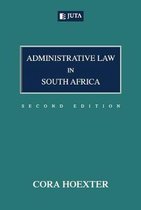
,ADL2601 Assignment 1 (COMPLETE ANSWERS)
Semester 1 2025 - DUE March 2025; 100% TRUSTED
Complete, trusted solutions and explanations….WE WISH
YOU A GOOD LUCK
Questions 1. Discuss the meaning and nature of judicial review
and appeal in the context of administrative law. [10]
Judicial Review and Appeal in Administrative Law
In the context of administrative law, judicial review and
appeal are two distinct mechanisms through which decisions
made by public authorities (such as government agencies or
administrative bodies) can be challenged. Both processes
provide means of checking the legality, fairness, and
appropriateness of administrative actions. However, they serve
different purposes and have different legal implications.
In this discussion, we will explore the meaning and nature of
judicial review and appeal, comparing and contrasting their
functions and roles in administrative law.
1. Judicial Review
Meaning of Judicial Review
Judicial review refers to the power of a court to review the
actions or decisions of public authorities (such as government
departments, administrative agencies, or local authorities) to
ensure they comply with the law and constitutional principles.
The courts have the authority to review administrative decisions,
, but they do not typically evaluate the merits (or substantive
correctness) of the decision itself. Rather, judicial review
focuses on the lawfulness of the administrative process.
Judicial review is grounded in the rule of law and serves as a
mechanism for upholding the principles of legality, procedural
fairness, reasonableness, and proportionality in administrative
action.
Nature of Judicial Review
1. Scope of Review:
o Judicial review is primarily concerned with ensuring
that administrative bodies have not acted beyond
their powers (ultra vires), have followed the proper
legal procedures, and have not violated any
constitutional principles or statutory provisions.
o The court will examine whether the administrative
body’s decision was reasonable, whether it followed
the correct legal process, and whether it abused its
discretion.
2. Grounds for Judicial Review: There are several grounds
on which judicial review can be sought:
o Illegality (Ultra Vires): A decision is illegal if the
decision-maker acts outside their legal powers or
breaches statutory requirements.
o Procedural Unfairness (Natural Justice): The
decision-making process must adhere to the principles
of procedural fairness or natural justice. This
typically involves providing a fair hearing and
ensuring that the person affected by the decision has
an opportunity to be heard.
Semester 1 2025 - DUE March 2025; 100% TRUSTED
Complete, trusted solutions and explanations….WE WISH
YOU A GOOD LUCK
Questions 1. Discuss the meaning and nature of judicial review
and appeal in the context of administrative law. [10]
Judicial Review and Appeal in Administrative Law
In the context of administrative law, judicial review and
appeal are two distinct mechanisms through which decisions
made by public authorities (such as government agencies or
administrative bodies) can be challenged. Both processes
provide means of checking the legality, fairness, and
appropriateness of administrative actions. However, they serve
different purposes and have different legal implications.
In this discussion, we will explore the meaning and nature of
judicial review and appeal, comparing and contrasting their
functions and roles in administrative law.
1. Judicial Review
Meaning of Judicial Review
Judicial review refers to the power of a court to review the
actions or decisions of public authorities (such as government
departments, administrative agencies, or local authorities) to
ensure they comply with the law and constitutional principles.
The courts have the authority to review administrative decisions,
, but they do not typically evaluate the merits (or substantive
correctness) of the decision itself. Rather, judicial review
focuses on the lawfulness of the administrative process.
Judicial review is grounded in the rule of law and serves as a
mechanism for upholding the principles of legality, procedural
fairness, reasonableness, and proportionality in administrative
action.
Nature of Judicial Review
1. Scope of Review:
o Judicial review is primarily concerned with ensuring
that administrative bodies have not acted beyond
their powers (ultra vires), have followed the proper
legal procedures, and have not violated any
constitutional principles or statutory provisions.
o The court will examine whether the administrative
body’s decision was reasonable, whether it followed
the correct legal process, and whether it abused its
discretion.
2. Grounds for Judicial Review: There are several grounds
on which judicial review can be sought:
o Illegality (Ultra Vires): A decision is illegal if the
decision-maker acts outside their legal powers or
breaches statutory requirements.
o Procedural Unfairness (Natural Justice): The
decision-making process must adhere to the principles
of procedural fairness or natural justice. This
typically involves providing a fair hearing and
ensuring that the person affected by the decision has
an opportunity to be heard.