

Name: Score:
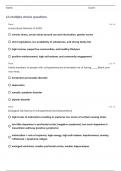
44 Multiple choice questions
Term 1 of 44
sociocultural theories of SUDS
chronic stress, social values around use and intoxication, gender norms
strict regulations, low availability of substances, and strong family ties
high income, supportive communities, and healthy lifestyles
positive reinforcement, high self-esteem, and community engagement
Term 2 of 44
Family members of people with schizophrenia are at elevated risk of having ________Blank, and
vice versa.
borderline personality disorder
depression
somatic symptom disorder
bipolar disorder
Term 3 of 44
biological risk factors of schizophrenia (neurotransmitters)
high levels of endorphins resulting in euphoria; low levels of cortisol causing stress
too little dopamine in prefrontal cortex (negative symptoms); too much dopamine in
mesolimbic pathway (positive symptoms)
intoxication = rush of euphoria, high energy, high self-esteem, impulsiveness, anxiety;
withdrawal = dysphoria, fatigue
enlarged ventricles, smaller prefrontal cortex, smaller hippocampus
,Term 4 of 44
Which of the following statements is true of treatment programs for schizophrenia?
Much of the financial burden of caring for people with schizophrenia falls to state and
local governments, which lack the necessary resources, or to families, who often cannot
afford the high cost of care.
The gains that people in skills-based interventions make tend to stabilize once the
interventions end, suggesting that these interventions hold more promise than
traditional treatment.
Only about 10 to 20 percent of people with schizophrenia receive little or no care in a
given year, and a majority of the patients remain in hospitals until their symptoms
stabilize or permanently disappear.
A large percentage of the national health care budget is spent in treating people with
schizophrenia and other psychotic disorders.
Term 5 of 44
diagnostic features of substance use disorders
cocaine, amphetamines, nicotine, caffeine
intoxication, withdrawal, functional impairment
alcohol, benzos, barbiturates, inhalants
intoxication = synesthesia, mood shifts, hallucinations
Term 6 of 44
________ are ideas that an individual believes are true but are highly unlikely and often simply
impossible.
hallucinations
deceptions
psychoses
delusions
,Term 7 of 44
People who use this drug for a long time risk several cardiac problems and liver failure, and
they show increased rates of anxiety, depression, psychotic symptoms, and paranoia. Another
effect is teeth-grinding; some people who use this drug even suck a baby's pacifier at parties
to relieve this.
gamma-hydroxybutyrate (GHB)
ecstasy
cannabis
nicotine
Term 8 of 44
biological theories of SUDs
Glutamate activation, stable neurochemistry, 50% heritable
Endorphin release, decreased neural sensitivity, 80% heritable
GABA inhibition, changes in neurochemistry and neural sensitivity, 60% heritable
Serotonin enhancement, increased dopamine levels, 30% heritable
Term 9 of 44
Sebastian believes that the FBI has put a wiretap on his phone and that they are trying to
entrap him. Most likely, Sebastian is experiencing a
somatic delusion
thought insertion
persecutory delusion
grandiose delusion
, Term 10 of 44
what are the types of hallucinations?
auditory, visual, olfactory, somatic, tactile
hallucinations, delusions, and disorganization of thoughts and speech
5 A's: affect flattening, alogia, asociality, apathy (avolition), anhedonia
grave disability, danger to self or others
Term 11 of 44
Which of the following is a cognitive strategy for treating clients with schizophrenia?
teaching patients ways of disputing their delusional beliefs or hallucinatory experiences
removing the client from the stressful settings where communication is difficult
teaching family members normal patterns of communication
training the client to attend to, and perceive, the subtleties of communication
Term 12 of 44
A severe reduction or complete absence of emotional responses to the environment in people
with schizophrenia is called:
restricted affect
derailment
word salad
neologism
44 Multiple choice questions
Term 1 of 44
sociocultural theories of SUDS
chronic stress, social values around use and intoxication, gender norms
strict regulations, low availability of substances, and strong family ties
high income, supportive communities, and healthy lifestyles
positive reinforcement, high self-esteem, and community engagement
Term 2 of 44
Family members of people with schizophrenia are at elevated risk of having ________Blank, and
vice versa.
borderline personality disorder
depression
somatic symptom disorder
bipolar disorder
Term 3 of 44
biological risk factors of schizophrenia (neurotransmitters)
high levels of endorphins resulting in euphoria; low levels of cortisol causing stress
too little dopamine in prefrontal cortex (negative symptoms); too much dopamine in
mesolimbic pathway (positive symptoms)
intoxication = rush of euphoria, high energy, high self-esteem, impulsiveness, anxiety;
withdrawal = dysphoria, fatigue
enlarged ventricles, smaller prefrontal cortex, smaller hippocampus
,Term 4 of 44
Which of the following statements is true of treatment programs for schizophrenia?
Much of the financial burden of caring for people with schizophrenia falls to state and
local governments, which lack the necessary resources, or to families, who often cannot
afford the high cost of care.
The gains that people in skills-based interventions make tend to stabilize once the
interventions end, suggesting that these interventions hold more promise than
traditional treatment.
Only about 10 to 20 percent of people with schizophrenia receive little or no care in a
given year, and a majority of the patients remain in hospitals until their symptoms
stabilize or permanently disappear.
A large percentage of the national health care budget is spent in treating people with
schizophrenia and other psychotic disorders.
Term 5 of 44
diagnostic features of substance use disorders
cocaine, amphetamines, nicotine, caffeine
intoxication, withdrawal, functional impairment
alcohol, benzos, barbiturates, inhalants
intoxication = synesthesia, mood shifts, hallucinations
Term 6 of 44
________ are ideas that an individual believes are true but are highly unlikely and often simply
impossible.
hallucinations
deceptions
psychoses
delusions
,Term 7 of 44
People who use this drug for a long time risk several cardiac problems and liver failure, and
they show increased rates of anxiety, depression, psychotic symptoms, and paranoia. Another
effect is teeth-grinding; some people who use this drug even suck a baby's pacifier at parties
to relieve this.
gamma-hydroxybutyrate (GHB)
ecstasy
cannabis
nicotine
Term 8 of 44
biological theories of SUDs
Glutamate activation, stable neurochemistry, 50% heritable
Endorphin release, decreased neural sensitivity, 80% heritable
GABA inhibition, changes in neurochemistry and neural sensitivity, 60% heritable
Serotonin enhancement, increased dopamine levels, 30% heritable
Term 9 of 44
Sebastian believes that the FBI has put a wiretap on his phone and that they are trying to
entrap him. Most likely, Sebastian is experiencing a
somatic delusion
thought insertion
persecutory delusion
grandiose delusion
, Term 10 of 44
what are the types of hallucinations?
auditory, visual, olfactory, somatic, tactile
hallucinations, delusions, and disorganization of thoughts and speech
5 A's: affect flattening, alogia, asociality, apathy (avolition), anhedonia
grave disability, danger to self or others
Term 11 of 44
Which of the following is a cognitive strategy for treating clients with schizophrenia?
teaching patients ways of disputing their delusional beliefs or hallucinatory experiences
removing the client from the stressful settings where communication is difficult
teaching family members normal patterns of communication
training the client to attend to, and perceive, the subtleties of communication
Term 12 of 44
A severe reduction or complete absence of emotional responses to the environment in people
with schizophrenia is called:
restricted affect
derailment
word salad
neologism


