
2/10/25, 11:55 AM EMT B MIDTERM EXAM 2025 ACTUAL EXAM QUESTIONS AND CORRECT ANSWERS (PROFESSOR VERIFIED) | ALREADY …
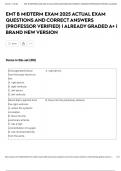
EMT B MIDTERM EXAM 2025 ACTUAL EXAM
QUESTIONS AND CORRECT ANSWERS
(PROFESSOR VERIFIED) | ALREADY GRADED A+ |
BRAND NEW VERSION
Save
Terms in this set (310)
Deoxygenated blood A. right atrium.
from the body returns to
the:
A. right atrium.
B. right ventricle.
C. left atrium.
D. left ventricle.
Blood that is ejected from B. flows into the pulmonary arteries.
the right ventricle:
A. enters the systemic
circulation.
B. flows into the
pulmonary arteries.
C. has a high
concentration of oxygen.
D. was received directly
from the aorta.
https://quizlet.com/1003832335/emt-b-midterm-exam-2025-actual-exam-questions-and-correct-answers-professor-verified-already-graded-a-brand-n… 1/54
,2/10/25, 11:55 AM EMT B MIDTERM EXAM 2025 ACTUAL EXAM QUESTIONS AND CORRECT ANSWERS (PROFESSOR VERIFIED) | ALREADY …
Which of the following D. pulmonary veins
blood vessels transports
oxygenated blood?
A. superior vena cava
B. pulmonary arteries
C. inferior vena cava
D. pulmonary veins
What is the function of the B. It receives oxygenated blood from the lungs.
left atrium?
A. It ejects oxygenated
blood into the aorta.
B. It receives oxygenated
blood from the lungs.
C. It receives blood from
the pulmonary arteries.
D. It receives oxygenated
blood from the vena cava.
The left ventricle has the C. pumps blood into the aorta and systemic
thickest walls because it: circulation.
A. pumps blood to the
lungs to be reoxygenated.
B. uses less oxygen than
other chambers of the
heart.
C. pumps blood into the
aorta and systemic
circulation.
D. receives blood directly
from the systemic
circulation.
https://quizlet.com/1003832335/emt-b-midterm-exam-2025-actual-exam-questions-and-correct-answers-professor-verified-already-graded-a-brand-n… 2/54
,2/10/25, 11:55 AM EMT B MIDTERM EXAM 2025 ACTUAL EXAM QUESTIONS AND CORRECT ANSWERS (PROFESSOR VERIFIED) | ALREADY …
The electrical impulse C. sinoatrial (SA) node.
generated by the heart
originates in the:
A. bundle of His.
B. coronary sinus.
C. sinoatrial (SA) node.
D. atrioventricular (AV)
node.
When an electrical A. blood can pass from the atria to the ventricles.
impulse reaches the AV
node, it is slowed for a
brief period of time so
that:
A. blood can pass from
the atria to the ventricles.
B. blood returning from
the body can fill the atria.
C. the impulse can spread
through the Purkinje
fibers.
D. the SA node can reset
and generate another
impulse.
The ability of cardiac D. automaticity.
muscle cells to contract
spontaneously without a
stimulus from a nerve
source is
called:
A. excitability.
B. contractility.
C. impulsivity.
D. automaticity.
https://quizlet.com/1003832335/emt-b-midterm-exam-2025-actual-exam-questions-and-correct-answers-professor-verified-already-graded-a-brand-n… 3/54
, 2/10/25, 11:55 AM EMT B MIDTERM EXAM 2025 ACTUAL EXAM QUESTIONS AND CORRECT ANSWERS (PROFESSOR VERIFIED) | ALREADY …
The electrical stimulus that D. autonomic nervous system.
originates in the heart's
primary pacemaker is
controlled by impulses
from the
brain that arrive by way of
the:
A. parietal lobe.
B. pons and medulla.
C. somatic nervous
system.
D. autonomic nervous
system.
Which of the following is B. constriction of blood vessels in the muscles
NOT a function of the
sympathetic nervous
system?
A. dilation of blood
vessels in the muscles
B. constriction of blood
vessels in the muscles
C. increases in the heart
and respiratory rates
D. constriction of blood
vessels in the digestive
system
https://quizlet.com/1003832335/emt-b-midterm-exam-2025-actual-exam-questions-and-correct-answers-professor-verified-already-graded-a-brand-n… 4/54
EMT B MIDTERM EXAM 2025 ACTUAL EXAM
QUESTIONS AND CORRECT ANSWERS
(PROFESSOR VERIFIED) | ALREADY GRADED A+ |
BRAND NEW VERSION
Save
Terms in this set (310)
Deoxygenated blood A. right atrium.
from the body returns to
the:
A. right atrium.
B. right ventricle.
C. left atrium.
D. left ventricle.
Blood that is ejected from B. flows into the pulmonary arteries.
the right ventricle:
A. enters the systemic
circulation.
B. flows into the
pulmonary arteries.
C. has a high
concentration of oxygen.
D. was received directly
from the aorta.
https://quizlet.com/1003832335/emt-b-midterm-exam-2025-actual-exam-questions-and-correct-answers-professor-verified-already-graded-a-brand-n… 1/54
,2/10/25, 11:55 AM EMT B MIDTERM EXAM 2025 ACTUAL EXAM QUESTIONS AND CORRECT ANSWERS (PROFESSOR VERIFIED) | ALREADY …
Which of the following D. pulmonary veins
blood vessels transports
oxygenated blood?
A. superior vena cava
B. pulmonary arteries
C. inferior vena cava
D. pulmonary veins
What is the function of the B. It receives oxygenated blood from the lungs.
left atrium?
A. It ejects oxygenated
blood into the aorta.
B. It receives oxygenated
blood from the lungs.
C. It receives blood from
the pulmonary arteries.
D. It receives oxygenated
blood from the vena cava.
The left ventricle has the C. pumps blood into the aorta and systemic
thickest walls because it: circulation.
A. pumps blood to the
lungs to be reoxygenated.
B. uses less oxygen than
other chambers of the
heart.
C. pumps blood into the
aorta and systemic
circulation.
D. receives blood directly
from the systemic
circulation.
https://quizlet.com/1003832335/emt-b-midterm-exam-2025-actual-exam-questions-and-correct-answers-professor-verified-already-graded-a-brand-n… 2/54
,2/10/25, 11:55 AM EMT B MIDTERM EXAM 2025 ACTUAL EXAM QUESTIONS AND CORRECT ANSWERS (PROFESSOR VERIFIED) | ALREADY …
The electrical impulse C. sinoatrial (SA) node.
generated by the heart
originates in the:
A. bundle of His.
B. coronary sinus.
C. sinoatrial (SA) node.
D. atrioventricular (AV)
node.
When an electrical A. blood can pass from the atria to the ventricles.
impulse reaches the AV
node, it is slowed for a
brief period of time so
that:
A. blood can pass from
the atria to the ventricles.
B. blood returning from
the body can fill the atria.
C. the impulse can spread
through the Purkinje
fibers.
D. the SA node can reset
and generate another
impulse.
The ability of cardiac D. automaticity.
muscle cells to contract
spontaneously without a
stimulus from a nerve
source is
called:
A. excitability.
B. contractility.
C. impulsivity.
D. automaticity.
https://quizlet.com/1003832335/emt-b-midterm-exam-2025-actual-exam-questions-and-correct-answers-professor-verified-already-graded-a-brand-n… 3/54
, 2/10/25, 11:55 AM EMT B MIDTERM EXAM 2025 ACTUAL EXAM QUESTIONS AND CORRECT ANSWERS (PROFESSOR VERIFIED) | ALREADY …
The electrical stimulus that D. autonomic nervous system.
originates in the heart's
primary pacemaker is
controlled by impulses
from the
brain that arrive by way of
the:
A. parietal lobe.
B. pons and medulla.
C. somatic nervous
system.
D. autonomic nervous
system.
Which of the following is B. constriction of blood vessels in the muscles
NOT a function of the
sympathetic nervous
system?
A. dilation of blood
vessels in the muscles
B. constriction of blood
vessels in the muscles
C. increases in the heart
and respiratory rates
D. constriction of blood
vessels in the digestive
system
https://quizlet.com/1003832335/emt-b-midterm-exam-2025-actual-exam-questions-and-correct-answers-professor-verified-already-graded-a-brand-n… 4/54


