

Name: Score:
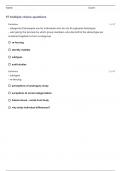
97 Multiple choice questions
Definition 1 of 97
- categories that people use for individuals who do not fit a general stereotype
- sub typing: the process by which group members who disconfirm the stereotype are
clustered together to form a subgroup
re-fencing
identity visibility
subtypes
audit studies
Definition 2 of 97
- subtypes
- re-fencing
perceptions of androgyny study
exceptions to social categorization
Salma Mousa - social trust study
why study individual differences?
,Definition 3 of 97
individual difference measure meant to capture variation in the extent to which someone
believes society should have group based hierarchies
→ identify hierarchy enforcers
- SDO scale is skewed to the left, people have very extreme opinions (not a normal
distribution)
- higher SDO predicted greater likelihood of working in a hierarchy-enforcing job
- working in a hierarchy-enforcing job was associated with long-term increases in SDO
audit studies
social cognition
re-fencing
SDO scale
Definition 4 of 97
- Jim Crow racism (//old-fashioned racism) after Reconstruction until the 1960s
1. white ppl's absolute belief in their (biological) superiority over other races
2. a firm belief in racial separation (and subjugation)
3. the use of the government to establish a system of segregation and other forms of
discrimination (e.g. curtailing voting rights)
Gordon Allport (1897 - 1967)
intergroup relations theories
historical context of prejudice
downside to intergroup contact
,Definition 5 of 97
- Frantz Fanon: societal structures force marginalized groups to internalize a sense of
inferiority (Brown vs. board of education)
- system justification theory: maintaining existing social structures is prioritized even at the
expense of personal or group interests
psychological realism
social identity theory
system justification theory
scientific racism
Definition 6 of 97
- 1945, director of the "Center for Group Dynamics" at MIT
- recognized as the first social psychologists to use an experimental approach to study group
dynamics and the impact of one's social environment on individual behavior
Kurt Lewin
Henri Tajfel
Johnson-Reed Act (1924)
William McDougall
Definition 7 of 97
- for members of advantaged groups, greater intergroup contact is associated with higher
support for social change
- for members of disadvantaged groups, greater intergroup contact is associated with lower
support for social change
→ only outcome positively associated w/intergroup contact for both disadvantaged and
advantaged group members was 'willingness to work in solidarity
downside to intergroup contact
political orientation & psychological processes
benefits of intergroup contact
Snyder, Tanke, & Berscheid, 1977
, Definition 8 of 97
- identities that are more visible are more likely to be socially categorized & stereotyped
against
- visible identities are not just about what we see with our eyes, but based on all our 5 senses
→ visibility is based on situation and context
identity visibility
social desirability
benefits of intergroup contact
response amplification
Definition 9 of 97
- game to create a mini economy, manipulate the resource scarcity: resources = guesses
- some people get more guesses than others, poor = 6 per round, rich = 20 per round
- can borrow guesses, but you lose 2 later, and this has a neg effective on the poor but not the
rich
- then given a dot-probe task: the 'rich' people did better no matter which button group
because the scarcity mindset isn't really affecting them, for the poor condition it's cognitively
taxing
evolutionary theories
theories of contemporary prejudice
scarcity study (in the lab)
3 forms of indirect contact
97 Multiple choice questions
Definition 1 of 97
- categories that people use for individuals who do not fit a general stereotype
- sub typing: the process by which group members who disconfirm the stereotype are
clustered together to form a subgroup
re-fencing
identity visibility
subtypes
audit studies
Definition 2 of 97
- subtypes
- re-fencing
perceptions of androgyny study
exceptions to social categorization
Salma Mousa - social trust study
why study individual differences?
,Definition 3 of 97
individual difference measure meant to capture variation in the extent to which someone
believes society should have group based hierarchies
→ identify hierarchy enforcers
- SDO scale is skewed to the left, people have very extreme opinions (not a normal
distribution)
- higher SDO predicted greater likelihood of working in a hierarchy-enforcing job
- working in a hierarchy-enforcing job was associated with long-term increases in SDO
audit studies
social cognition
re-fencing
SDO scale
Definition 4 of 97
- Jim Crow racism (//old-fashioned racism) after Reconstruction until the 1960s
1. white ppl's absolute belief in their (biological) superiority over other races
2. a firm belief in racial separation (and subjugation)
3. the use of the government to establish a system of segregation and other forms of
discrimination (e.g. curtailing voting rights)
Gordon Allport (1897 - 1967)
intergroup relations theories
historical context of prejudice
downside to intergroup contact
,Definition 5 of 97
- Frantz Fanon: societal structures force marginalized groups to internalize a sense of
inferiority (Brown vs. board of education)
- system justification theory: maintaining existing social structures is prioritized even at the
expense of personal or group interests
psychological realism
social identity theory
system justification theory
scientific racism
Definition 6 of 97
- 1945, director of the "Center for Group Dynamics" at MIT
- recognized as the first social psychologists to use an experimental approach to study group
dynamics and the impact of one's social environment on individual behavior
Kurt Lewin
Henri Tajfel
Johnson-Reed Act (1924)
William McDougall
Definition 7 of 97
- for members of advantaged groups, greater intergroup contact is associated with higher
support for social change
- for members of disadvantaged groups, greater intergroup contact is associated with lower
support for social change
→ only outcome positively associated w/intergroup contact for both disadvantaged and
advantaged group members was 'willingness to work in solidarity
downside to intergroup contact
political orientation & psychological processes
benefits of intergroup contact
Snyder, Tanke, & Berscheid, 1977
, Definition 8 of 97
- identities that are more visible are more likely to be socially categorized & stereotyped
against
- visible identities are not just about what we see with our eyes, but based on all our 5 senses
→ visibility is based on situation and context
identity visibility
social desirability
benefits of intergroup contact
response amplification
Definition 9 of 97
- game to create a mini economy, manipulate the resource scarcity: resources = guesses
- some people get more guesses than others, poor = 6 per round, rich = 20 per round
- can borrow guesses, but you lose 2 later, and this has a neg effective on the poor but not the
rich
- then given a dot-probe task: the 'rich' people did better no matter which button group
because the scarcity mindset isn't really affecting them, for the poor condition it's cognitively
taxing
evolutionary theories
theories of contemporary prejudice
scarcity study (in the lab)
3 forms of indirect contact


