

Name: Score:
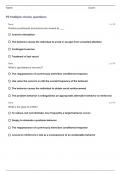
99 Multiple choice questions
Term 1 of 99
Positive punishment procedures are viewed as _____.
Aversive sitmulation
The behavior causes the individual to avoid or escape from unwanted attention
Contingent exercise
Treatment of last resort
Term 2 of 99
What is spontaneous recovery?
The reappearance of a previously extinction conditioned response
Use when the concern is with the overall frequency of the behavior
The behavior causes the individual to obtain social reinforcement
The problem behavior is extinguished; an appropriate alternative behavior is reinforced
Term 3 of 99
What is the goal of a DRA?
To reduce, but not eliminate, how frequently a target behavior occurs
Simply to eliminate a problem behavior
The reappearance of a previously extinction conditioned response
Access to reinforcers is lost as a consequence of an undesirable behavior
,Term 4 of 99
Which positive punishment procedure is described?
A child that hits the family cat is required to repeatedly pet the cat in an affectionate manner
Guided compliance
Positive practice
Positive practice and restitution
Aversive sitmulation
Term 5 of 99
Overcorrection procedures
Positive practice and restitution
Positive reinforcement
An aversive stimulus is presented when the inappropriate behavior occurs
Simply to eliminate a problem behavior
,Term 6 of 99
What are the steps in using a DRO
-Define the undesirable behavior and identify it's reinforcer
-Define the desirable behavior and identify it's reinforcer
-Reinforce the desirable behavior immediately and on a continuous basis at first, then
transition from continuous to intermittent reinforcement
-Along the way, program for generalization
-Punishment of inappropriate behavior does not strengthen appropriate behaviors
-The inappropriate behavior is suppressed only when the person that delivers
punishment is present
-Punishment may only teach the person to avoid being caught
-Punishment may elicit anger, sadness, and aggression
-Define the undesirable behavior and identify its reinforcer
-Identify the reinforcer for the absence of the undesirable behavior (use the reinforcer
maintaining the inappropriate behavior or conduct a preference assessment)
-Choose the initial DRO time interval (the interval should be shorter than the typical time
between occurrences of the problem behavior)
-Choose when to deliver reinforcement (whole-interval DRO or momentary DRO)
-Reset the interval when the problem occurs (transition to longer time intervals)
-Research into functional treatment approaches has provided non-aversive alternatives
to punishment
-Changing philosophies in the field of behavior modification
-Reserved for problem behaviors that are the most difficult to treat, the most severe,
and for which functional interventions have been demonstrated to be ineffective
-Negative punishment procedures are more acceptable and more commonly used than
positive punishment
, Term 7 of 99
Why are positive punishment procedures viewed as a treatment of last resort?
-What is the function of the problem behavior?
-Is timeout practical in the circumstances?
-Is timeout safe?
-Is the timeout period brief?
-Can escape from timeout be prevented?
-Can interactions be avoided during timeout?
-Is timeout acceptable in the circumstances?
-Research into functional treatment approaches has provided non-aversive alternatives
to punishment
-Changing philosophies in the field of behavior modification
-Reserved for problem behaviors that are the most difficult to treat, the most severe,
and for which functional interventions have been demonstrated to be ineffective
-Negative punishment procedures are more acceptable and more commonly used than
positive punishment
-Tricky things to do, ability is built into the behavior. If the ability is the reinforcing
sensation from occurring.
-Extinction is not often used for behavior maintained by automatic/sensory
reinforcement. However, extinction would work if there were some way to block the
reinforcing sensation from occurring
-Reinforcer is eliminated so behavior can occur, but sensory reinforcer is not delivered
Increasing response effort for undesirable behavior- if the competing behaviors take
more effort, they are less likely to interfere with the desirable behavior
Decreasing response effort for the desirable behavior- behaviors that take less
response effort are more likely to occur than are behaviors that take more response
effort, if both result in fairly equal reinforcers
99 Multiple choice questions
Term 1 of 99
Positive punishment procedures are viewed as _____.
Aversive sitmulation
The behavior causes the individual to avoid or escape from unwanted attention
Contingent exercise
Treatment of last resort
Term 2 of 99
What is spontaneous recovery?
The reappearance of a previously extinction conditioned response
Use when the concern is with the overall frequency of the behavior
The behavior causes the individual to obtain social reinforcement
The problem behavior is extinguished; an appropriate alternative behavior is reinforced
Term 3 of 99
What is the goal of a DRA?
To reduce, but not eliminate, how frequently a target behavior occurs
Simply to eliminate a problem behavior
The reappearance of a previously extinction conditioned response
Access to reinforcers is lost as a consequence of an undesirable behavior
,Term 4 of 99
Which positive punishment procedure is described?
A child that hits the family cat is required to repeatedly pet the cat in an affectionate manner
Guided compliance
Positive practice
Positive practice and restitution
Aversive sitmulation
Term 5 of 99
Overcorrection procedures
Positive practice and restitution
Positive reinforcement
An aversive stimulus is presented when the inappropriate behavior occurs
Simply to eliminate a problem behavior
,Term 6 of 99
What are the steps in using a DRO
-Define the undesirable behavior and identify it's reinforcer
-Define the desirable behavior and identify it's reinforcer
-Reinforce the desirable behavior immediately and on a continuous basis at first, then
transition from continuous to intermittent reinforcement
-Along the way, program for generalization
-Punishment of inappropriate behavior does not strengthen appropriate behaviors
-The inappropriate behavior is suppressed only when the person that delivers
punishment is present
-Punishment may only teach the person to avoid being caught
-Punishment may elicit anger, sadness, and aggression
-Define the undesirable behavior and identify its reinforcer
-Identify the reinforcer for the absence of the undesirable behavior (use the reinforcer
maintaining the inappropriate behavior or conduct a preference assessment)
-Choose the initial DRO time interval (the interval should be shorter than the typical time
between occurrences of the problem behavior)
-Choose when to deliver reinforcement (whole-interval DRO or momentary DRO)
-Reset the interval when the problem occurs (transition to longer time intervals)
-Research into functional treatment approaches has provided non-aversive alternatives
to punishment
-Changing philosophies in the field of behavior modification
-Reserved for problem behaviors that are the most difficult to treat, the most severe,
and for which functional interventions have been demonstrated to be ineffective
-Negative punishment procedures are more acceptable and more commonly used than
positive punishment
, Term 7 of 99
Why are positive punishment procedures viewed as a treatment of last resort?
-What is the function of the problem behavior?
-Is timeout practical in the circumstances?
-Is timeout safe?
-Is the timeout period brief?
-Can escape from timeout be prevented?
-Can interactions be avoided during timeout?
-Is timeout acceptable in the circumstances?
-Research into functional treatment approaches has provided non-aversive alternatives
to punishment
-Changing philosophies in the field of behavior modification
-Reserved for problem behaviors that are the most difficult to treat, the most severe,
and for which functional interventions have been demonstrated to be ineffective
-Negative punishment procedures are more acceptable and more commonly used than
positive punishment
-Tricky things to do, ability is built into the behavior. If the ability is the reinforcing
sensation from occurring.
-Extinction is not often used for behavior maintained by automatic/sensory
reinforcement. However, extinction would work if there were some way to block the
reinforcing sensation from occurring
-Reinforcer is eliminated so behavior can occur, but sensory reinforcer is not delivered
Increasing response effort for undesirable behavior- if the competing behaviors take
more effort, they are less likely to interfere with the desirable behavior
Decreasing response effort for the desirable behavior- behaviors that take less
response effort are more likely to occur than are behaviors that take more response
effort, if both result in fairly equal reinforcers


