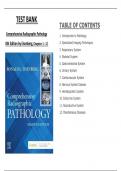
TEST BANK
TABLE OF CONTENTS
Comprehensive Radiographic Pathology 1. Introduction to Pathology
8th Edition by Eisenberg, Chapters 1 - 12 2. Specialized Imaging Techniques
3. Respiratory System
4. Skeletal System
5. Gastrointestinal System
6. Urinary System
7. Cardiovascular System
8. Nervous System Disease
9. Hematopoietic System
10. Endocrine System
11. Reproductive System
12. Miscellaneous Diseases
, 3. What term is used to denote a disease in which the underlying cause is unknown?
a. Idiopathic
b. Antietiologic
Chapter 1: Introduction to Pathology c. Iatrogenic
d. Nosocomial
Test Bank
ANSWER: A
MULTIPLE CHOICE Idiopathic diseases are those with an unknown, or as of yet unidentified, cause.
1. A disease process caused by physicians or their treatment is this type of process. REF: p. 3
a. Idiopathic
b. Iatrogenic 4. Alterations of cell growth, specifically an abnormal proliferation of cells is called:
c. Neoplasia a. Hyperplasia
d. Community acquired b. Dysplasia
c. Neoplasia
ANSWER: B d. Aplasia
The disease process caused by physicians and their treatment is iatrogenic.
ANSWER: C
REF: p. 3 Alterations in cell growth lead to the development of neoplasms (tumors).
2. Basic reactions of the body to some form of injury is a: REF: p. 7
a. Disease process
b. Pathology 5. The initial response of body tissues to local injury is:
c. Study of diseases a. Infection
d. Idiopathic process b. Ischemia
c. Edema
ANSWER: A d. Inflammation
A disease is the pattern of the body’s response to some form of injury.
ANSWER: D
REF: p. 1 Inflammation is the initial response of body tissues to local injury.
TABLE OF CONTENTS
Comprehensive Radiographic Pathology 1. Introduction to Pathology
8th Edition by Eisenberg, Chapters 1 - 12 2. Specialized Imaging Techniques
3. Respiratory System
4. Skeletal System
5. Gastrointestinal System
6. Urinary System
7. Cardiovascular System
8. Nervous System Disease
9. Hematopoietic System
10. Endocrine System
11. Reproductive System
12. Miscellaneous Diseases
, 3. What term is used to denote a disease in which the underlying cause is unknown?
a. Idiopathic
b. Antietiologic
Chapter 1: Introduction to Pathology c. Iatrogenic
d. Nosocomial
Test Bank
ANSWER: A
MULTIPLE CHOICE Idiopathic diseases are those with an unknown, or as of yet unidentified, cause.
1. A disease process caused by physicians or their treatment is this type of process. REF: p. 3
a. Idiopathic
b. Iatrogenic 4. Alterations of cell growth, specifically an abnormal proliferation of cells is called:
c. Neoplasia a. Hyperplasia
d. Community acquired b. Dysplasia
c. Neoplasia
ANSWER: B d. Aplasia
The disease process caused by physicians and their treatment is iatrogenic.
ANSWER: C
REF: p. 3 Alterations in cell growth lead to the development of neoplasms (tumors).
2. Basic reactions of the body to some form of injury is a: REF: p. 7
a. Disease process
b. Pathology 5. The initial response of body tissues to local injury is:
c. Study of diseases a. Infection
d. Idiopathic process b. Ischemia
c. Edema
ANSWER: A d. Inflammation
A disease is the pattern of the body’s response to some form of injury.
ANSWER: D
REF: p. 1 Inflammation is the initial response of body tissues to local injury.