Mobile Operating System
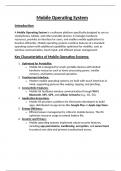
Introduction
A Mobile Operating System is a software platform specifically designed to run on
smartphones, tablets, and other portable devices. It manages hardware
resources, provides an interface for users, and enables mobile applications to
function efficiently. Mobile operating systems combine features of a standard
operating system with additional capabilities optimized for mobility, such as
wireless communication, touch input, and efficient power management.
Key Characteristics of Mobile Operating Systems:
1. Optimized for Portability:
o Mobile OS is designed for small, portable devices with limited
hardware resources such as lower processing power, smaller
memory, and battery-powered operation.
2. Touchscreen Interface:
o Modern mobile operating systems are built with touch interfaces in
mind, supporting gestures like swiping, tapping, and pinching.
3. Connectivity Features:
o Mobile OS facilitates wireless communication through Wi-Fi,
Bluetooth, NFC, GPS, and cellular networks (e.g., 4G, 5G).
4. Application Ecosystem:
o Mobile OS provides a platform for third-party developers to build
apps, distributed via app stores like Google Play or Apple App Store.
5. Energy Efficiency:
o Efficient power management is critical in mobile devices. The OS
optimizes resource usage to extend battery life.
6. Security and Privacy:
o Mobile operating systems implement robust security features,
including app permissions, sandboxing, encryption, and secure boot
to protect user data and prevent unauthorized access.
, Popular Mobile Operating Systems
1. Android (Google):
o Android is the most widely used mobile OS globally, powering billions
of devices.
o Key Features:
Open-source platform based on Linux.
Extensive customization options for users and manufacturers.
Supports a vast range of hardware from multiple
manufacturers.
Access to Google Play Store with millions of apps.
Multitasking capabilities for running multiple apps
simultaneously.
o Advantages:
Wide device compatibility.
Regular updates and improvements from the open-source
community.
Strong integration with Google services.
o Limitations:
Fragmentation due to varying hardware and software versions.
Some devices may lag behind in receiving updates.
2. iOS (Apple):
o iOS is a proprietary operating system used exclusively on Apple
devices such as iPhones and iPads.
o Key Features:
Known for its smooth user interface and consistent
performance.
High level of security and privacy controls.
Seamless integration with Apple's ecosystem (e.g., macOS,
watchOS).
App Store with a curated selection of high-quality apps.
o Advantages:
Regular and timely software updates for all supported devices.
User-friendly and polished interface.
Strong app optimization.
o Limitations:
Limited customization compared to Android.
Introduction
A Mobile Operating System is a software platform specifically designed to run on
smartphones, tablets, and other portable devices. It manages hardware
resources, provides an interface for users, and enables mobile applications to
function efficiently. Mobile operating systems combine features of a standard
operating system with additional capabilities optimized for mobility, such as
wireless communication, touch input, and efficient power management.
Key Characteristics of Mobile Operating Systems:
1. Optimized for Portability:
o Mobile OS is designed for small, portable devices with limited
hardware resources such as lower processing power, smaller
memory, and battery-powered operation.
2. Touchscreen Interface:
o Modern mobile operating systems are built with touch interfaces in
mind, supporting gestures like swiping, tapping, and pinching.
3. Connectivity Features:
o Mobile OS facilitates wireless communication through Wi-Fi,
Bluetooth, NFC, GPS, and cellular networks (e.g., 4G, 5G).
4. Application Ecosystem:
o Mobile OS provides a platform for third-party developers to build
apps, distributed via app stores like Google Play or Apple App Store.
5. Energy Efficiency:
o Efficient power management is critical in mobile devices. The OS
optimizes resource usage to extend battery life.
6. Security and Privacy:
o Mobile operating systems implement robust security features,
including app permissions, sandboxing, encryption, and secure boot
to protect user data and prevent unauthorized access.
, Popular Mobile Operating Systems
1. Android (Google):
o Android is the most widely used mobile OS globally, powering billions
of devices.
o Key Features:
Open-source platform based on Linux.
Extensive customization options for users and manufacturers.
Supports a vast range of hardware from multiple
manufacturers.
Access to Google Play Store with millions of apps.
Multitasking capabilities for running multiple apps
simultaneously.
o Advantages:
Wide device compatibility.
Regular updates and improvements from the open-source
community.
Strong integration with Google services.
o Limitations:
Fragmentation due to varying hardware and software versions.
Some devices may lag behind in receiving updates.
2. iOS (Apple):
o iOS is a proprietary operating system used exclusively on Apple
devices such as iPhones and iPads.
o Key Features:
Known for its smooth user interface and consistent
performance.
High level of security and privacy controls.
Seamless integration with Apple's ecosystem (e.g., macOS,
watchOS).
App Store with a curated selection of high-quality apps.
o Advantages:
Regular and timely software updates for all supported devices.
User-friendly and polished interface.
Strong app optimization.
o Limitations:
Limited customization compared to Android.