Walt Whitman himself declared that the Calamus cluster, dedicated to the exploration of
homosexual relationships, “expose [him] more than all [of his] other poems”. Indeed,
adhering to Romanticist trends, the poet evokes a deep reverence for nature, as well as
profound cogitation of the self, while delving into the multifaceted nature of male
connections, ranging from friendship and companionship to intimacy and solidarity. Whether
it is in the world-view shattering poem “Whoever You Are Holding Me Now In Hand”,
which follows the speaker’s road to seeking the truth in art and life, or the exceedingly
sentimental “I Saw In Louisiana A Live-Oak Growing”, that recounts a speaker who is
envious at a solitary tree’s ability to thrive without support, or even the unconventional work
“In Paths Untrodden” that illustrates a divergence from societal norms in a journey of
self-discovery, Whitman’s intimate voice shines through. Correspondingly, he exhibits male
connections as natural, deeply spiritual and free through his brilliant employment of imagery,
allusion and a plethora of structural devices.
To begin with, Whitman masterfully employs nature imagery in order to portray relationships
among men, grounding them in a broader, universal context. Thus, by aligning the
connections between individuals with the enduring cycles and rhythms of nature, the poet
suggests that these relationships are natural, timeless, and integral to the human experience.
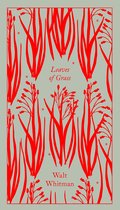
Moreover, it is of note that the Calamus cluster is presided over by the image of a tall and
hardy swamp grass with hallucinogenic rhizomatic roots and a phallic spadix, which could be
intended to resemble the male sex, setting the tone for an persisting connection between
homoeroticism and the natural world.
Likewise, in the first poem of the collection, “In Paths Untrodden”, Whitman employs the
“path untrodden” as an allegorical illustration of a departure from “the pleasures, profits,
conformities”, or the conservative character of societal expectations. Instead, the speaker
homosexual relationships, “expose [him] more than all [of his] other poems”. Indeed,
adhering to Romanticist trends, the poet evokes a deep reverence for nature, as well as
profound cogitation of the self, while delving into the multifaceted nature of male
connections, ranging from friendship and companionship to intimacy and solidarity. Whether
it is in the world-view shattering poem “Whoever You Are Holding Me Now In Hand”,
which follows the speaker’s road to seeking the truth in art and life, or the exceedingly
sentimental “I Saw In Louisiana A Live-Oak Growing”, that recounts a speaker who is
envious at a solitary tree’s ability to thrive without support, or even the unconventional work
“In Paths Untrodden” that illustrates a divergence from societal norms in a journey of
self-discovery, Whitman’s intimate voice shines through. Correspondingly, he exhibits male
connections as natural, deeply spiritual and free through his brilliant employment of imagery,
allusion and a plethora of structural devices.
To begin with, Whitman masterfully employs nature imagery in order to portray relationships
among men, grounding them in a broader, universal context. Thus, by aligning the
connections between individuals with the enduring cycles and rhythms of nature, the poet
suggests that these relationships are natural, timeless, and integral to the human experience.
Moreover, it is of note that the Calamus cluster is presided over by the image of a tall and
hardy swamp grass with hallucinogenic rhizomatic roots and a phallic spadix, which could be
intended to resemble the male sex, setting the tone for an persisting connection between
homoeroticism and the natural world.
Likewise, in the first poem of the collection, “In Paths Untrodden”, Whitman employs the
“path untrodden” as an allegorical illustration of a departure from “the pleasures, profits,
conformities”, or the conservative character of societal expectations. Instead, the speaker