CONSERVATION OF BIODIVERSITY
In the midst of a mass extinction:
Dinosaurs ruled the Earth for nearly 175 million years → they showed an
amazing diversity of forms and occupied different habitats
↪ 66 million years ago they became extinct in a short period of time +
60% of other species
Only two lineages surviving:
- dinosaur-derived birds
- crocodiles
Mass extinction → when at least 75% of Earth’s species go extinct within
a short period of geological time (less 2 million years) over a large
area
Scientist believe (still debated) that dinosaurs went extinct because of an asteroid crash on
the surface of the Earth that precipitated changes that provoked their extinction
Previous mass extinction are believed to have also been caused by catastrophic natural
events
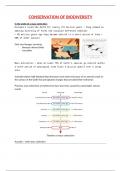
Timeline of mass extinctions
Actually = sixth mass extinction
,BIODIVERSITY
Biodiversity is the variety of living organisms, including plants, animals and microorganisms. It
exists at 3 levels:
● Genetic diversity: diversity seen in the genes (alleles) of a population of a species
● Species diversity: number and types of organisms that existed during a specific
amount of time
● Ecosystem diversity: Variety in ecosystems in a given area
Levels of biodiversity:
1) Genetic biodiversity
Individuals of a species are fundamentally similar, but with little differences between
individuals
EX: colour of skin, texture of hair, eye colour, height… Apples variation in colour, size of dog
breeds
Genes are the basic unit of inheritance. Mutations →
slightly different versions of the same gene. These
variations are called alleles
Genetic diversity → variation that exists in genes
of a population
Importance of genetic diversity: higher genetic variation increases the probability of alleles in
the gene pool that allow an organism to adapt to changing environmental conditions
EX: DDT-resistant mosquitoes
DDT is an insecticide use to kill mosquitoes. When it was first sprayed, there was a
decrease in the local mosquito population. A small fraction of the population though
, survived due to the presence of a DDT-resistant gene. These mosquitos could survive and
breed, passing on the gene.
If genetic diversity is low (as many endangered species) → chances of the
species surviving the environmental change are lower
↪ genetic pool is small in endangered species due to small populations
and inbreeding (breeding between closely related individuals) → leads to
genetic bottleneck
When a species population is low, so is the genetic pool. With a bigger genetic pool, when
stresses (changes to environments or disease) occur to the species, there is a higher chance
of individuals carrying beneficial genes to survive this change.
↪ small gene pool makes a species more vulnerable to change
bigger population = more members have the chance to have the genes to survive
Genetic drift
2) Species biodiversity
Variety of species seen in a particular habitat. It differs according to habitat.
It depends on two factors:
- Species richness: number of different species in an area.
EX: Great Barrier Reef, Amazon (big biodiversity) vs Antarctica or salt pans (low)
- Species evenness: relative abundance of different species in the given area. If the
numbers of individuals of each species (species abundance) are similar across different
species, the species evenness is high. Conversely, if the numbers of individuals of
each species vary, the species evenness is low.
EX:
In the midst of a mass extinction:
Dinosaurs ruled the Earth for nearly 175 million years → they showed an
amazing diversity of forms and occupied different habitats
↪ 66 million years ago they became extinct in a short period of time +
60% of other species
Only two lineages surviving:
- dinosaur-derived birds
- crocodiles
Mass extinction → when at least 75% of Earth’s species go extinct within
a short period of geological time (less 2 million years) over a large
area
Scientist believe (still debated) that dinosaurs went extinct because of an asteroid crash on
the surface of the Earth that precipitated changes that provoked their extinction
Previous mass extinction are believed to have also been caused by catastrophic natural
events
Timeline of mass extinctions
Actually = sixth mass extinction
,BIODIVERSITY
Biodiversity is the variety of living organisms, including plants, animals and microorganisms. It
exists at 3 levels:
● Genetic diversity: diversity seen in the genes (alleles) of a population of a species
● Species diversity: number and types of organisms that existed during a specific
amount of time
● Ecosystem diversity: Variety in ecosystems in a given area
Levels of biodiversity:
1) Genetic biodiversity
Individuals of a species are fundamentally similar, but with little differences between
individuals
EX: colour of skin, texture of hair, eye colour, height… Apples variation in colour, size of dog
breeds
Genes are the basic unit of inheritance. Mutations →
slightly different versions of the same gene. These
variations are called alleles
Genetic diversity → variation that exists in genes
of a population
Importance of genetic diversity: higher genetic variation increases the probability of alleles in
the gene pool that allow an organism to adapt to changing environmental conditions
EX: DDT-resistant mosquitoes
DDT is an insecticide use to kill mosquitoes. When it was first sprayed, there was a
decrease in the local mosquito population. A small fraction of the population though
, survived due to the presence of a DDT-resistant gene. These mosquitos could survive and
breed, passing on the gene.
If genetic diversity is low (as many endangered species) → chances of the
species surviving the environmental change are lower
↪ genetic pool is small in endangered species due to small populations
and inbreeding (breeding between closely related individuals) → leads to
genetic bottleneck
When a species population is low, so is the genetic pool. With a bigger genetic pool, when
stresses (changes to environments or disease) occur to the species, there is a higher chance
of individuals carrying beneficial genes to survive this change.
↪ small gene pool makes a species more vulnerable to change
bigger population = more members have the chance to have the genes to survive
Genetic drift
2) Species biodiversity
Variety of species seen in a particular habitat. It differs according to habitat.
It depends on two factors:
- Species richness: number of different species in an area.
EX: Great Barrier Reef, Amazon (big biodiversity) vs Antarctica or salt pans (low)
- Species evenness: relative abundance of different species in the given area. If the
numbers of individuals of each species (species abundance) are similar across different
species, the species evenness is high. Conversely, if the numbers of individuals of
each species vary, the species evenness is low.
EX: