
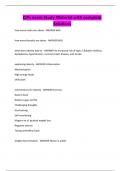
CIPs exam Study Material with complete
Solutions
how many males are obese - ANSWER 69%
how many females are obese - ANSWER 60%
what does obesity lead to - ANSWER An increased risk of type 2 diabetes mellitus,
dyslipdemia, hypertension, coronary heart disease, and stroke.
explaining obesity - ANSWER Urbanisation
Mechanisation
High energy foods
Shift work
interventions for obesity - ANSWER Exercise
Gastric band
Reduce sugar and fat
Challenging thoughts
Goal setting
Self monitoring
Mcguire et al- gradual weight loss
Regulate adverts
Taxing unhealthy foods
weight discrimination - ANSWER Abuse in public
,Size of seats
Refusing medical treatment
Hiring decisions- flint et al
Body size related to self esteem
suicide
What is stress? - ANSWER the reaction of the body and mind to everyday challenges and
demands
when is stress dangerous - ANSWER when it interfers with the ability to live a normal life
types of stress - ANSWER Acute- short term
Episodic acute stress- frequent bouts of acute stress
Chronic stress- unrelenting recurrent stress
causes of stress - ANSWER Technology
Social media
Terrorism
Political issues
Economy
New environment
New social groups
Exams
Independence
effects of stress - ANSWER Fight or flight
, Positive- motivation to do well
Negative- consequences on health
Hormones that elevate heart rate
Increased blood pressure
impact of stress - ANSWER Disease
Depression
Increased cardiovascular disease
Harder to recover from illness
myths of stress - ANSWER Same for everyone
Always bad for you
No symptoms, no stress
Only major symptoms require attention
Most popular techniques are the best
interventions for stress - ANSWER Identify what's causing stress
Develop strong relationships
Walk away when angry
Rest your mind
Get help
Yoga, sleep, reduce caffeine
how many people suffer with dementia - ANSWER 47 million
how many people in the UK suffer from dementia - ANSWER 850,000
Solutions
how many males are obese - ANSWER 69%
how many females are obese - ANSWER 60%
what does obesity lead to - ANSWER An increased risk of type 2 diabetes mellitus,
dyslipdemia, hypertension, coronary heart disease, and stroke.
explaining obesity - ANSWER Urbanisation
Mechanisation
High energy foods
Shift work
interventions for obesity - ANSWER Exercise
Gastric band
Reduce sugar and fat
Challenging thoughts
Goal setting
Self monitoring
Mcguire et al- gradual weight loss
Regulate adverts
Taxing unhealthy foods
weight discrimination - ANSWER Abuse in public
,Size of seats
Refusing medical treatment
Hiring decisions- flint et al
Body size related to self esteem
suicide
What is stress? - ANSWER the reaction of the body and mind to everyday challenges and
demands
when is stress dangerous - ANSWER when it interfers with the ability to live a normal life
types of stress - ANSWER Acute- short term
Episodic acute stress- frequent bouts of acute stress
Chronic stress- unrelenting recurrent stress
causes of stress - ANSWER Technology
Social media
Terrorism
Political issues
Economy
New environment
New social groups
Exams
Independence
effects of stress - ANSWER Fight or flight
, Positive- motivation to do well
Negative- consequences on health
Hormones that elevate heart rate
Increased blood pressure
impact of stress - ANSWER Disease
Depression
Increased cardiovascular disease
Harder to recover from illness
myths of stress - ANSWER Same for everyone
Always bad for you
No symptoms, no stress
Only major symptoms require attention
Most popular techniques are the best
interventions for stress - ANSWER Identify what's causing stress
Develop strong relationships
Walk away when angry
Rest your mind
Get help
Yoga, sleep, reduce caffeine
how many people suffer with dementia - ANSWER 47 million
how many people in the UK suffer from dementia - ANSWER 850,000


