
ANP Intro Study Guide
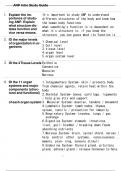
1. Explain the im- It's important to study ANP to understand
portance of study- different structures of the body and know how
ing ANP. Explain the human body functions.
what structure dic- what something's function is is dependent on
tates function and
what it's structure is; if you know the
vice versa means.
structure, you can guess what its function is
2. ID the major levels
of organization in or- 1. Chemical Level
ganisms 2. Cell level
3. tissue level
4. organ level
5. organ system level
3. ID the 4 Tissue Levels Epithelia
Connective
Muscular
Nervous
4. ID the 11 organ 1. Integumentary System- skin / protects body
systems and major from chemical agents, retain heat within the
components (struc- body
tural and functional)2. Skeletal System- bones, cartilage, ligaments
/ help give strx and support
of each organ system 3. Muscular System- muscles, tendons / movement
4. Lymphatic System- lymph nodes, thymus,
spleen, tonsils / protection for immunity
5. Respiratory System- trachea, lungs / gas
exchange
6. Digestive System- stomach, intestines,
liver, gall- bladder / breaking down foods
absorbing nutrients
7. Nervous System- brain, spinal chord, nerves /
help control other systems, consciousness ,
memory, plan- ning, sensory stimuli
8. Endocrine System- thyroid gland, pituitary
gland, adrenal gland / release hormones to help
1/5
, ANP Intro Study Guide
control blood levels, helps w/ growth and
development
9. Cardiovascular System- heart, blood vessels,
blood
/ helps to pump blood, transport nutrients and
waste to and from cells
10. Urinary System-kidneys, bladder, urethra /
filters blood, eliminate organic waste
product
2/5


