

Name: Score:
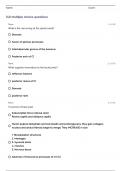
140 Multiple choice questions
Term 1 of 140
What is the narrowing of the spinal canal?
Stenosis
fusion of spinous processes
Intertubercular groove of the humerus
Posterior arch of C1
Term 2 of 140
What supplies innervation to the facet joints?
Jefferson fracture
posterior ramus of C1
Stenosis
posterior rami
Term 3 of 140
5 sources of back pain
Suboccipital Nerve (dorsal rami)
Rectus capitis and obliquus capitis
Nuclei pulposi dehydrate and lost elastin and proteoglycans, they gain collagen,
nucleus and anulus fibrosis begin to merge. They INCREASE in size
1. fibroskeleton structures
2. Meninges
3. Synovial Joints
4. Muscles
5. Nervous tissue
tubercles of transverse processes of C1-C3
,Term 4 of 140
Approximately ____% of lumbar disc protrusions happen at the L4-L5 or L5-S1 levels.
Lats
ALL
posterior rami (articular and muscle branches)
95%
Term 5 of 140
A fracture of the vertebral arch of C2 is called ____________ fracture. (BB pg 90)
Meningocele
Cystica
Lateral
Hangman's
Term 6 of 140
__________ vertebrae has the following: bifid spinous process, anterior tubercle
Dorsal Rami
Cervical
Primary curvatures
False
Term 7 of 140
What is the name of the artery that runs through the suboccipital triangle?
Vertebral Artery
Spinal Stenosis; at the level of the IV discs
Jefferson fracture
Intertubercular groove of the humerus
,Term 8 of 140
Where is the secondary ossification center located on the developing bone?
fusion of spinous processes
Meningocele
Pia mater
Epiphysis
Term 9 of 140
The pre-synaptic cell bodies in the sympathetic division are located in? (Pg 57)
The Nucleus AND IML Cell Column
Elevation, upward rotation, retraction
Rectus capitis posterior major
Posterior Atlanto-axial membrane; C2
Term 10 of 140
Post-synaptic fibers control ___(3)____. (Pg 59)
PNS and CNS, respectively
Vasomotion, sudomotion, pilomotion
Usually done at L4 (found next to the iliac crest)
Weakness and sensory loss to extrinsic back muscles
Term 11 of 140
The denticulate ligament is a modification of:
Stenosis
Pia mater
False
Afferent
, Term 12 of 140
Name and muscles innervated by C1 nerve root
O: C2 Spinous Process
I: lateral part of inferior nuchal line
A: extension, rotation, prooprioception
Suboccipital Nerve (dorsal rami)
Rectus capitis and obliquus capitis
1. Trapezius
2. Latissimus Dorsi
3. Levator Scapulae
4. Rhomboid Minor
5. Rhomboid Major
posterior ramus of C1
Term 13 of 140
What is the result of a unilaterally ruptured alar ligament?
Cervical and Lumbar (Bottom Line Box)
Usually done at L4 (found next to the iliac crest)
Excessive (about 30% increase) range of motion to the contralateral side
Expiration of the lungs, proprioceptive
Term 14 of 140
The blood from the spinous process will flow to which venous plexuses? (Pg 104)
Posterior external and posterior internal venous plexus
Recurrent meningeal branches of the spinal nerves (BB)
Anterior rami of the spinal nerves
Epidermis, dermis, subcutaneous, deep fascia, skeletal muscle
140 Multiple choice questions
Term 1 of 140
What is the narrowing of the spinal canal?
Stenosis
fusion of spinous processes
Intertubercular groove of the humerus
Posterior arch of C1
Term 2 of 140
What supplies innervation to the facet joints?
Jefferson fracture
posterior ramus of C1
Stenosis
posterior rami
Term 3 of 140
5 sources of back pain
Suboccipital Nerve (dorsal rami)
Rectus capitis and obliquus capitis
Nuclei pulposi dehydrate and lost elastin and proteoglycans, they gain collagen,
nucleus and anulus fibrosis begin to merge. They INCREASE in size
1. fibroskeleton structures
2. Meninges
3. Synovial Joints
4. Muscles
5. Nervous tissue
tubercles of transverse processes of C1-C3
,Term 4 of 140
Approximately ____% of lumbar disc protrusions happen at the L4-L5 or L5-S1 levels.
Lats
ALL
posterior rami (articular and muscle branches)
95%
Term 5 of 140
A fracture of the vertebral arch of C2 is called ____________ fracture. (BB pg 90)
Meningocele
Cystica
Lateral
Hangman's
Term 6 of 140
__________ vertebrae has the following: bifid spinous process, anterior tubercle
Dorsal Rami
Cervical
Primary curvatures
False
Term 7 of 140
What is the name of the artery that runs through the suboccipital triangle?
Vertebral Artery
Spinal Stenosis; at the level of the IV discs
Jefferson fracture
Intertubercular groove of the humerus
,Term 8 of 140
Where is the secondary ossification center located on the developing bone?
fusion of spinous processes
Meningocele
Pia mater
Epiphysis
Term 9 of 140
The pre-synaptic cell bodies in the sympathetic division are located in? (Pg 57)
The Nucleus AND IML Cell Column
Elevation, upward rotation, retraction
Rectus capitis posterior major
Posterior Atlanto-axial membrane; C2
Term 10 of 140
Post-synaptic fibers control ___(3)____. (Pg 59)
PNS and CNS, respectively
Vasomotion, sudomotion, pilomotion
Usually done at L4 (found next to the iliac crest)
Weakness and sensory loss to extrinsic back muscles
Term 11 of 140
The denticulate ligament is a modification of:
Stenosis
Pia mater
False
Afferent
, Term 12 of 140
Name and muscles innervated by C1 nerve root
O: C2 Spinous Process
I: lateral part of inferior nuchal line
A: extension, rotation, prooprioception
Suboccipital Nerve (dorsal rami)
Rectus capitis and obliquus capitis
1. Trapezius
2. Latissimus Dorsi
3. Levator Scapulae
4. Rhomboid Minor
5. Rhomboid Major
posterior ramus of C1
Term 13 of 140
What is the result of a unilaterally ruptured alar ligament?
Cervical and Lumbar (Bottom Line Box)
Usually done at L4 (found next to the iliac crest)
Excessive (about 30% increase) range of motion to the contralateral side
Expiration of the lungs, proprioceptive
Term 14 of 140
The blood from the spinous process will flow to which venous plexuses? (Pg 104)
Posterior external and posterior internal venous plexus
Recurrent meningeal branches of the spinal nerves (BB)
Anterior rami of the spinal nerves
Epidermis, dermis, subcutaneous, deep fascia, skeletal muscle


