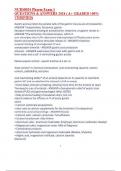
NURS8024 Pharm Exam 1 QUESTIONS & ANSWERS 2024 ( A+ GRADED 100% VERIFIED)
Gastric acid secretion by parietal cells of the gastric mucosa are stimulated by - ANSWER *acetycholine, histamine, gastrin Receptor-mediated binding of acetylcholine, histamine, or gastrin results in - ANSWER *the activation of protein kinases, which in turn stimulates the H+/K+-adenosine triphosphatase (ATPase) proton pump Gastrin and acetylcholine stimulate release of - ANSWER histamine receptor binding of prostaglandin E2 and somatostatin diminish - ANSWER gastric acid production Antacids - ANSWER weak bases that react with gastric acid to form water and a salt → diminishing gastric acidity Reduce pepsin activity - pepsin inactive at a pH 4 Wide variety* in chemical composition, acid-neutralizing capacity, sodium content, palatability, and price Acid neutralizing ability* of an antacid depends on its capacity to neutralize gastric HCl and on whether the stomach is full or empty • food delays stomach emptying, allowing more time for the antacid to react Therapeutic uses of antacids - ANSWER • Symptomatic relief of peptic ulcer disease (PUD) and gastroesophageal reflux (GERD) • May promote healing of duodenal ulcers, but not robust evidence for efficacy in Tx of acute gastric ulcers • Calcium carbonate preparations • also used as calcium supplements for the treatment of osteoporosis Commonly used antacid drugs - ANSWER Classes • Calcium salts: calcium carbonate: Tums/Rolaids • Sodium bicarbonate: Alka-Seltzer • Aluminum salts - Aluminum hydroxide: Amphojel; Aluminum carbonate: Basaljel • Magnesium salts/ magnesium oxide: Milk of Magnesia • Combination products • Aluminum hydroxide and magnesium hydroxide (Maalox, Mylanta) • Alginic acid, magnesium trisilicate, calcium stearate (Gaviscon)
Document information
- Uploaded on
- January 21, 2025
- Number of pages
- 66
- Written in
- 2024/2025
- Type
- Exam (elaborations)
- Contains
- Questions & answers