

Nursing 333 exam 1 questions correctly answered
to pass
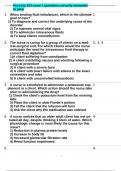
1. When treating fluid imbalances, which is the ultimate 1
goal of care?
1) To diagnose and correct the underlying cause of the
disorder
2) To maintain normal vital signs
3) To administer intravenous fluids
4) To keep clients normothermic
2. The nurse is caring for a group of clients on a med- 2, 3, 5
ical-surgical unit. For which clients would the nurse
anticipate the need for intravenous fluid therapy to
correct fluid depletion?
1)A client suffering from constipation
2) A client exhibiting nausea and vomiting following a
surgical procedure
3) A client with a severe burn
4) A client with heart failure with edema to the lower
extremities and rales
5) A client with uncontrolled ketoacidosis
3. A nurse is scheduled to administer a potassium sup- 1
plement to a client. Which action should the nurse take
prior to administering the drug?
1) Check the client's potassium level from the morning
labs
2) Place the client in alow Fowler's poition
3) Tell the client that the infusion will burn
4) Ask the client why the medication was ordered
4. A nurse notices that an older adult client has not uri- 4
nated all day, despite drinking 3 liters of water. Which
physiologic change is most likely the cause for this
issue?
1) Reduction in plasma protein levels
2) Increase in body fat
3) Increased glomerular filtration rate
4) Renal function impairment
5. 4
1/
9
, Nursing 333 exam 1 questions correctly answered
to pass
Why are older adults more prone to adverse drug
reactions and interactions than younger adults?
1) Presence of fewer chronic disease states
2) Use of fewer chronic medications
3) More predictable pharmacokinetics and
pharmaco- dynamics
4) Physiologic changes in body composition
6. When possible, drug therapy is postponed until 1, 3, 4, 5
after pregnancy and lactatation. Which acute and
chronic conditions must be managed during
pregnancy?
1) Epilepsy
2) Serious cystic acne
3) Sexually transmitted infections
4) Gestational diabetes
5) Hypertension
1, 2, 3, 4
7. A nurse is preparing care for a newly admitted
client with diabetes mellitus. Which information
would be critical for the nurse to assess?
1) Medical history
2) Current lab results
3) Medication allergies
4) Use of dietary supplements
5) Number of previous hospitalizations
1
8. The patient with a disorder causing metabolic
acido- sis is being treated with intravenous sdoium
bicar- bonate. The nurse monitors for therapeutic
effective- ness by noting which laboratory values?
1) Serum pH
2) Liver function test
3) Red blood cell count
4) Blood urea nitrogen
9. Changes in levels of which electrolyte can reduce 3
the body's response to cardiac drugs?
1) Sodium
2) Potassium
2/
9
to pass
1. When treating fluid imbalances, which is the ultimate 1
goal of care?
1) To diagnose and correct the underlying cause of the
disorder
2) To maintain normal vital signs
3) To administer intravenous fluids
4) To keep clients normothermic
2. The nurse is caring for a group of clients on a med- 2, 3, 5
ical-surgical unit. For which clients would the nurse
anticipate the need for intravenous fluid therapy to
correct fluid depletion?
1)A client suffering from constipation
2) A client exhibiting nausea and vomiting following a
surgical procedure
3) A client with a severe burn
4) A client with heart failure with edema to the lower
extremities and rales
5) A client with uncontrolled ketoacidosis
3. A nurse is scheduled to administer a potassium sup- 1
plement to a client. Which action should the nurse take
prior to administering the drug?
1) Check the client's potassium level from the morning
labs
2) Place the client in alow Fowler's poition
3) Tell the client that the infusion will burn
4) Ask the client why the medication was ordered
4. A nurse notices that an older adult client has not uri- 4
nated all day, despite drinking 3 liters of water. Which
physiologic change is most likely the cause for this
issue?
1) Reduction in plasma protein levels
2) Increase in body fat
3) Increased glomerular filtration rate
4) Renal function impairment
5. 4
1/
9
, Nursing 333 exam 1 questions correctly answered
to pass
Why are older adults more prone to adverse drug
reactions and interactions than younger adults?
1) Presence of fewer chronic disease states
2) Use of fewer chronic medications
3) More predictable pharmacokinetics and
pharmaco- dynamics
4) Physiologic changes in body composition
6. When possible, drug therapy is postponed until 1, 3, 4, 5
after pregnancy and lactatation. Which acute and
chronic conditions must be managed during
pregnancy?
1) Epilepsy
2) Serious cystic acne
3) Sexually transmitted infections
4) Gestational diabetes
5) Hypertension
1, 2, 3, 4
7. A nurse is preparing care for a newly admitted
client with diabetes mellitus. Which information
would be critical for the nurse to assess?
1) Medical history
2) Current lab results
3) Medication allergies
4) Use of dietary supplements
5) Number of previous hospitalizations
1
8. The patient with a disorder causing metabolic
acido- sis is being treated with intravenous sdoium
bicar- bonate. The nurse monitors for therapeutic
effective- ness by noting which laboratory values?
1) Serum pH
2) Liver function test
3) Red blood cell count
4) Blood urea nitrogen
9. Changes in levels of which electrolyte can reduce 3
the body's response to cardiac drugs?
1) Sodium
2) Potassium
2/
9


