1
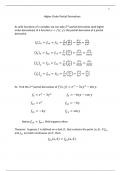
Higher Order Partial Derivatives
As with functions of 1 variable, we can take 2nd partial derivatives (and higher
order derivatives) of a function 𝑧 = 𝑓(𝑥, 𝑦): the partial derivative of a partial
derivative.
𝜕 𝜕𝑓 𝜕2 𝑓 𝜕2 𝑧
(𝑓𝑥 )𝑥 = 𝑓𝑥𝑥 = 𝑓11 = ( ) = 𝜕𝑥 2 = 𝜕𝑥 2
𝜕𝑥 𝜕𝑥
𝜕 𝜕𝑓 𝜕2 𝑓 𝜕2 𝑧
(𝑓𝑥 )𝑦 = 𝑓𝑥𝑦 = 𝑓12 = ( ) = 𝜕𝑦𝜕𝑥 = 𝜕𝑦𝜕𝑥
𝜕𝑦 𝜕𝑥
𝜕 𝜕𝑓 𝜕2 𝑓 𝜕2 𝑧
(𝑓𝑦 )𝑥 = 𝑓𝑦𝑥 = 𝑓21 = ( ) = 𝜕𝑥𝜕𝑦 = 𝜕𝑥𝜕𝑦
𝜕𝑥 𝜕𝑦
𝜕 𝜕𝑓 𝜕2 𝑓 𝜕2 𝑧
(𝑓𝑦 )𝑦 = 𝑓𝑦𝑦 = 𝑓22 = ( ) = 𝜕𝑦2 = 𝜕𝑦2
𝜕𝑦 𝜕𝑦
Ex. Find the 2nd partial derivatives of 𝑓 (𝑥, 𝑦) = 𝑒 𝑥 − 3𝑥𝑦 2 − sin 𝑦.
𝑓𝑥 = 𝑒 𝑥 − 3𝑦 2 𝑓𝑦 = −6𝑥𝑦 − cos 𝑦
𝑓𝑥𝑥 = 𝑒 𝑥 𝑓𝑦𝑥 = −6𝑦
𝑓𝑥𝑦 = −6𝑦 𝑓𝑦𝑦 = sin 𝑦
Notice 𝑓𝑥𝑦 = 𝑓𝑦𝑥 ; this happens often.
Theorem: Suppose 𝑓 is defined on a disk, 𝐷, that contains the point (𝑎, 𝑏). If 𝑓𝑥𝑦
and 𝑓𝑦𝑥 are both continuous on 𝐷, then:
𝑓𝑥𝑦 (𝑎, 𝑏) = 𝑓𝑦𝑥 (𝑎, 𝑏).
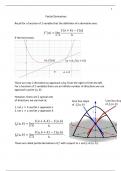
Higher Order Partial Derivatives
As with functions of 1 variable, we can take 2nd partial derivatives (and higher
order derivatives) of a function 𝑧 = 𝑓(𝑥, 𝑦): the partial derivative of a partial
derivative.
𝜕 𝜕𝑓 𝜕2 𝑓 𝜕2 𝑧
(𝑓𝑥 )𝑥 = 𝑓𝑥𝑥 = 𝑓11 = ( ) = 𝜕𝑥 2 = 𝜕𝑥 2
𝜕𝑥 𝜕𝑥
𝜕 𝜕𝑓 𝜕2 𝑓 𝜕2 𝑧
(𝑓𝑥 )𝑦 = 𝑓𝑥𝑦 = 𝑓12 = ( ) = 𝜕𝑦𝜕𝑥 = 𝜕𝑦𝜕𝑥
𝜕𝑦 𝜕𝑥
𝜕 𝜕𝑓 𝜕2 𝑓 𝜕2 𝑧
(𝑓𝑦 )𝑥 = 𝑓𝑦𝑥 = 𝑓21 = ( ) = 𝜕𝑥𝜕𝑦 = 𝜕𝑥𝜕𝑦
𝜕𝑥 𝜕𝑦
𝜕 𝜕𝑓 𝜕2 𝑓 𝜕2 𝑧
(𝑓𝑦 )𝑦 = 𝑓𝑦𝑦 = 𝑓22 = ( ) = 𝜕𝑦2 = 𝜕𝑦2
𝜕𝑦 𝜕𝑦
Ex. Find the 2nd partial derivatives of 𝑓 (𝑥, 𝑦) = 𝑒 𝑥 − 3𝑥𝑦 2 − sin 𝑦.
𝑓𝑥 = 𝑒 𝑥 − 3𝑦 2 𝑓𝑦 = −6𝑥𝑦 − cos 𝑦
𝑓𝑥𝑥 = 𝑒 𝑥 𝑓𝑦𝑥 = −6𝑦
𝑓𝑥𝑦 = −6𝑦 𝑓𝑦𝑦 = sin 𝑦
Notice 𝑓𝑥𝑦 = 𝑓𝑦𝑥 ; this happens often.
Theorem: Suppose 𝑓 is defined on a disk, 𝐷, that contains the point (𝑎, 𝑏). If 𝑓𝑥𝑦
and 𝑓𝑦𝑥 are both continuous on 𝐷, then:
𝑓𝑥𝑦 (𝑎, 𝑏) = 𝑓𝑦𝑥 (𝑎, 𝑏).