
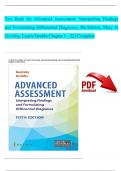
Test Bank for Advanced Assessment: Interpreting Findings
and Formulating Differential Diagnoses, 5th Edition, Mary Jo
Goolsby, Laurie Grubbs Chapter 1 - 22 | Complete
,Chapter 1. Assessment and Clinical Decision-Making: Overview
mj mj mj mj mj mj
Multiple Choice
mj
Identify the choice that best completes the statement or answers the question.
mj mj mj mj mj mj mj mj mj mj mj
mj 1. Which type of clinical decision-making is most reliable?
mj mj mj mj mj mj mj
A. Intuitive
B. Analytical
C. Experiential
D. Augenblick
mj 2. Which of the following is false? To obtain adequate history, health-care providers must be:
mj mj mj mj mj mj mj mj mj mj mj mj mj
A. Methodical and systematic mj mj
B. Attentive to the patient’s verbal and nonverbal language mj mj mj mj mj mj mj
C. Able to accurately interpret the patient’s responses
mj mj mj mj mj mj
D. Adept at reading into the patient’s statementsmj mj mj mj mj mj
mj 3. Essential parts of a health history include all of the following except:
mj mj mj mj mj mj mj mj mj mj mj
A. Chief complaint mj
B. History of the present illness mj mj mj mj
C. Current vital signs mj mj
D. All of the above are essential history components
mj mj mj mj mj mj mj
mj 4. Which of the following is false? While performing the physical examination, the examiner must beab
mj mj mj mj mj mj mj mj mj mj mj mj mj mj m
j
le to: mj
A. Differentiate between normal and abnormal findings mj mj mj mj mj
B. Recall knowledge of a range of conditions and their associated signs and symptoms
mj mj mj mj mj mj mj mj mj mj mj mj
C. Recognize how certain conditions affect the response to other conditions mj mj mj mj mj mj mj mj mj
D. Foresee unpredictable findings mj mj
mj 5. The following is the least reliable source of information for diagnostic statistics:
mj mj mj mj mj mj mj mj mj mj mj
A. Evidence-based investigations mj
B. Primary reports of research mj mj mj
C. Estimation based on a provider’s experience mj mj mj mj mj
D. Published meta-analyses mj
mj 6. The following can be used to assist in sound clinical decision-making:
mj mj mj mj mj mj mj mj mj mj
A. Algorithm published in a peer-reviewed journal article mj mj mj mj mj mj
B. Clinical practice guidelines mj mj
C. Evidence-based research mj
D. All of the above mj mj mj
mj 7. If a diagnostic study has high sensitivity, this indicates a:
mj mj mj mj mj mj mj mj mj
A. High percentage of persons with the given condition will have an abnormal result
mj mj mj mj mj mj mj mj mj mj mj mj
B. Low percentage of persons with the given condition will have an abnormal result
mj mj mj mj mj mj mj mj mj mj mj mj
C. Low likelihood of normal result in persons without a given condition
mj mj mj mj mj mj mj mj mj mj
D. None of the above mj mj mj
,mj 8. If a diagnostic study has high specificity, this indicates a:
mj mj mj mj mj mj mj mj mj
A. Low percentage of healthy individuals will show a normal result
mj mj mj mj mj mj mj mj mj
B. High percentage of healthy individuals will show a normal result
mj mj mj mj mj mj mj mj mj
C. High percentage of individuals with a disorder will show a normal result
mj mj mj mj mj mj mj mj mj mj mj
D. Low percentage of individuals with a disorder will show an abnormal result
mj mj mj mj mj mj mj mj mj mj mj
mj 9. A likelihood ratio above 1 indicates that a diagnostic test showing a:
mj mj mj mj mj mj mj mj mj mj mj
A. Positive result is strongly associated with the disease
mj mj mj mj mj mj mj
B. Negative result is strongly associated with absence of the disease
mj mj mj mj mj mj mj mj mj
C. Positive result is weakly associated with the disease
mj mj mj mj mj mj mj
D. Negative result is weakly associated with absence of the disease
mj mj mj mj mj mj mj mj mj
mj 10. Which of the following clinical reasoning tools is defined as evidence-
mj mj mj mj mj mj mj mj mj mj mj
based resource based on mathematical modeling to express the likelihood of a condition in select situ
mj mj mj mj mj mj mj mj mj mj mj mj mj mj mj
ations, settings, and/orpatients?
mj mj m
j
A. Clinical practice guideline mj mj
B. Clinical decision rule mj mj
C. Clinical algorithm mj
D. Clinical recommendation mj
, Chapter 1. Assessment and Clinical Decision-Making: Overview
mj mj mj mj mj mj
Answer Section
mj
MULTIPLE CHOICE mj
1. ANS: B m j
Croskerry (2009) describes two major types of clinical diagnostic decision- mj mj mj mj mj mj mj mj mj
making: intuitive and analytical. Intuitive decision-making (similar to Augenblink decision-
mj mj mj mj mj mj mj mj mj
making) is based on the experience and intuition of the clinician and is less reliable and paired with f
mj mj mj mj mj mj mj mj mj mj mj mj mj mj mj mj mj mj
airly common errors. In contrast, analytical decision-
mj mj mj mj mj mj
making is based on careful consideration and has greater reliabilitywith rare errors.
mj mj mj mj mj mj mj mj mj m
j mj mj
PTS: 1
2. ANS: D m j
To obtain adequate history, providers must be well organized, attentive to the patient’s verbal andnonv
mj mj mj mj mj mj mj mj mj mj mj mj mj mj m
j
erbal language, and able to accurately interpret the patient’s responses to questions. Rather than readi
mj mj mj mj mj mj mj mj mj mj mj mj mj mj
ng into the patient’s statements, they clarify any areas of uncertainty.
mj mj mj mj mj mj mj mj mj mj
PTS: 1
3. ANS: C m j
Vital signs are part of the physical examination portion of patient assessment, not part of the healthhisto
mj mj mj mj mj mj mj mj mj mj mj mj mj mj mj mj m
j
ry.
PTS: 1
4. ANS: D m j
While performing the physical examination, the examiner must be able to differentiate betweennorm
mj mj mj mj mj mj mj mj mj mj mj mj m
j
al and abnormal findings, recall knowledge of a range of conditions, including their associated signs
mj mj mj mj mj mj mj mj mj mj mj mj mj mj mj
and symptoms, recognize how certain conditions affect the response to other conditions, and distingu
mj mj mj mj mj mj mj mj mj mj mj mj mj
ish the relevance of varied abnormal findings.
mj mj mj mj mj mj
PTS: 1
5. ANS: C m j
Sources for diagnostic statistics include textbooks, primary reports of research, and published meta-
mj mj mj mj mj mj mj mj mj mj mj mj
analyses. Another source of statistics, the one that has been most widely used and available for appli
mj mj mj mj mj mj mj mj mj mj mj mj mj mj mj mj
cation to the reasoning process, is the estimation based on a provider’s experience, although these ar
mj mj mj mj mj mj mj mj mj mj mj mj mj mj mj
e rarely accurate. Over the past decade, the availability of evidence on which to base clinical reasoni
mj mj mj mj mj mj mj mj mj mj mj mj mj mj mj mj
ng is improving, and there is an increasing expectation that clinical reasoningbe based on scientific
mj mj mj mj mj mj mj mj mj mj mj m
j mj mj mj mj
evidence. Evidence- mj
based statistics are also increasingly being used to develop resources to facilitate clinical decision-
mj mj mj mj mj mj mj mj mj mj mj mj mj
making.
PTS: 1
6. ANS: D m j
To assist in clinical decision-making, a number of evidence-
mj mj mj mj mj mj mj mj
based resources have been developedto assist the clinician. Resources, such as algorithms and clinica
mj mj mj mj m
j mj mj mj mj mj mj mj mj mj
l practice guidelines, assist in clinical reasoning when properly applied.
mj mj mj mj mj mj mj mj mj
This study source was downloaded by 100000826342158 from CourseHero.com on 05-25-2021 21:32:19 GMT -05:00
mj mj mj mj mj mj mj mj mj mj mj mj mj
https://www.coursehero.com/file/21739484/c1/
Downloaded by: Stuviaaa | mj mj mj mj
Distribution of this document is illegal mj mj mj mj mj
and Formulating Differential Diagnoses, 5th Edition, Mary Jo
Goolsby, Laurie Grubbs Chapter 1 - 22 | Complete
,Chapter 1. Assessment and Clinical Decision-Making: Overview
mj mj mj mj mj mj
Multiple Choice
mj
Identify the choice that best completes the statement or answers the question.
mj mj mj mj mj mj mj mj mj mj mj
mj 1. Which type of clinical decision-making is most reliable?
mj mj mj mj mj mj mj
A. Intuitive
B. Analytical
C. Experiential
D. Augenblick
mj 2. Which of the following is false? To obtain adequate history, health-care providers must be:
mj mj mj mj mj mj mj mj mj mj mj mj mj
A. Methodical and systematic mj mj
B. Attentive to the patient’s verbal and nonverbal language mj mj mj mj mj mj mj
C. Able to accurately interpret the patient’s responses
mj mj mj mj mj mj
D. Adept at reading into the patient’s statementsmj mj mj mj mj mj
mj 3. Essential parts of a health history include all of the following except:
mj mj mj mj mj mj mj mj mj mj mj
A. Chief complaint mj
B. History of the present illness mj mj mj mj
C. Current vital signs mj mj
D. All of the above are essential history components
mj mj mj mj mj mj mj
mj 4. Which of the following is false? While performing the physical examination, the examiner must beab
mj mj mj mj mj mj mj mj mj mj mj mj mj mj m
j
le to: mj
A. Differentiate between normal and abnormal findings mj mj mj mj mj
B. Recall knowledge of a range of conditions and their associated signs and symptoms
mj mj mj mj mj mj mj mj mj mj mj mj
C. Recognize how certain conditions affect the response to other conditions mj mj mj mj mj mj mj mj mj
D. Foresee unpredictable findings mj mj
mj 5. The following is the least reliable source of information for diagnostic statistics:
mj mj mj mj mj mj mj mj mj mj mj
A. Evidence-based investigations mj
B. Primary reports of research mj mj mj
C. Estimation based on a provider’s experience mj mj mj mj mj
D. Published meta-analyses mj
mj 6. The following can be used to assist in sound clinical decision-making:
mj mj mj mj mj mj mj mj mj mj
A. Algorithm published in a peer-reviewed journal article mj mj mj mj mj mj
B. Clinical practice guidelines mj mj
C. Evidence-based research mj
D. All of the above mj mj mj
mj 7. If a diagnostic study has high sensitivity, this indicates a:
mj mj mj mj mj mj mj mj mj
A. High percentage of persons with the given condition will have an abnormal result
mj mj mj mj mj mj mj mj mj mj mj mj
B. Low percentage of persons with the given condition will have an abnormal result
mj mj mj mj mj mj mj mj mj mj mj mj
C. Low likelihood of normal result in persons without a given condition
mj mj mj mj mj mj mj mj mj mj
D. None of the above mj mj mj
,mj 8. If a diagnostic study has high specificity, this indicates a:
mj mj mj mj mj mj mj mj mj
A. Low percentage of healthy individuals will show a normal result
mj mj mj mj mj mj mj mj mj
B. High percentage of healthy individuals will show a normal result
mj mj mj mj mj mj mj mj mj
C. High percentage of individuals with a disorder will show a normal result
mj mj mj mj mj mj mj mj mj mj mj
D. Low percentage of individuals with a disorder will show an abnormal result
mj mj mj mj mj mj mj mj mj mj mj
mj 9. A likelihood ratio above 1 indicates that a diagnostic test showing a:
mj mj mj mj mj mj mj mj mj mj mj
A. Positive result is strongly associated with the disease
mj mj mj mj mj mj mj
B. Negative result is strongly associated with absence of the disease
mj mj mj mj mj mj mj mj mj
C. Positive result is weakly associated with the disease
mj mj mj mj mj mj mj
D. Negative result is weakly associated with absence of the disease
mj mj mj mj mj mj mj mj mj
mj 10. Which of the following clinical reasoning tools is defined as evidence-
mj mj mj mj mj mj mj mj mj mj mj
based resource based on mathematical modeling to express the likelihood of a condition in select situ
mj mj mj mj mj mj mj mj mj mj mj mj mj mj mj
ations, settings, and/orpatients?
mj mj m
j
A. Clinical practice guideline mj mj
B. Clinical decision rule mj mj
C. Clinical algorithm mj
D. Clinical recommendation mj
, Chapter 1. Assessment and Clinical Decision-Making: Overview
mj mj mj mj mj mj
Answer Section
mj
MULTIPLE CHOICE mj
1. ANS: B m j
Croskerry (2009) describes two major types of clinical diagnostic decision- mj mj mj mj mj mj mj mj mj
making: intuitive and analytical. Intuitive decision-making (similar to Augenblink decision-
mj mj mj mj mj mj mj mj mj
making) is based on the experience and intuition of the clinician and is less reliable and paired with f
mj mj mj mj mj mj mj mj mj mj mj mj mj mj mj mj mj mj
airly common errors. In contrast, analytical decision-
mj mj mj mj mj mj
making is based on careful consideration and has greater reliabilitywith rare errors.
mj mj mj mj mj mj mj mj mj m
j mj mj
PTS: 1
2. ANS: D m j
To obtain adequate history, providers must be well organized, attentive to the patient’s verbal andnonv
mj mj mj mj mj mj mj mj mj mj mj mj mj mj m
j
erbal language, and able to accurately interpret the patient’s responses to questions. Rather than readi
mj mj mj mj mj mj mj mj mj mj mj mj mj mj
ng into the patient’s statements, they clarify any areas of uncertainty.
mj mj mj mj mj mj mj mj mj mj
PTS: 1
3. ANS: C m j
Vital signs are part of the physical examination portion of patient assessment, not part of the healthhisto
mj mj mj mj mj mj mj mj mj mj mj mj mj mj mj mj m
j
ry.
PTS: 1
4. ANS: D m j
While performing the physical examination, the examiner must be able to differentiate betweennorm
mj mj mj mj mj mj mj mj mj mj mj mj m
j
al and abnormal findings, recall knowledge of a range of conditions, including their associated signs
mj mj mj mj mj mj mj mj mj mj mj mj mj mj mj
and symptoms, recognize how certain conditions affect the response to other conditions, and distingu
mj mj mj mj mj mj mj mj mj mj mj mj mj
ish the relevance of varied abnormal findings.
mj mj mj mj mj mj
PTS: 1
5. ANS: C m j
Sources for diagnostic statistics include textbooks, primary reports of research, and published meta-
mj mj mj mj mj mj mj mj mj mj mj mj
analyses. Another source of statistics, the one that has been most widely used and available for appli
mj mj mj mj mj mj mj mj mj mj mj mj mj mj mj mj
cation to the reasoning process, is the estimation based on a provider’s experience, although these ar
mj mj mj mj mj mj mj mj mj mj mj mj mj mj mj
e rarely accurate. Over the past decade, the availability of evidence on which to base clinical reasoni
mj mj mj mj mj mj mj mj mj mj mj mj mj mj mj mj
ng is improving, and there is an increasing expectation that clinical reasoningbe based on scientific
mj mj mj mj mj mj mj mj mj mj mj m
j mj mj mj mj
evidence. Evidence- mj
based statistics are also increasingly being used to develop resources to facilitate clinical decision-
mj mj mj mj mj mj mj mj mj mj mj mj mj
making.
PTS: 1
6. ANS: D m j
To assist in clinical decision-making, a number of evidence-
mj mj mj mj mj mj mj mj
based resources have been developedto assist the clinician. Resources, such as algorithms and clinica
mj mj mj mj m
j mj mj mj mj mj mj mj mj mj
l practice guidelines, assist in clinical reasoning when properly applied.
mj mj mj mj mj mj mj mj mj
This study source was downloaded by 100000826342158 from CourseHero.com on 05-25-2021 21:32:19 GMT -05:00
mj mj mj mj mj mj mj mj mj mj mj mj mj
https://www.coursehero.com/file/21739484/c1/
Downloaded by: Stuviaaa | mj mj mj mj
Distribution of this document is illegal mj mj mj mj mj


