Nur213 Exam 2
Study online at https://quizlet.com/_g7skjt
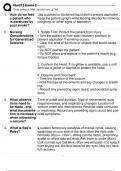
1. How do we feed Use a pureed or thickened liquid diet to prevent aspiration .
a patient who Keep the patient upright while feeding. Monitor for choking,
is paralyzed by coughing, or other signs of aspiration
post stroke?
2. Nursing 1. Safety First: Protect the patient from injury.
Considerations • Turn the patient to their side (recovery position) to
for Generalized prevent aspiration if vomiting occurs.
Seizures: • Clear the area of furniture or objects that could cause
harm.
• Do NOT restrain the patient.
• Do NOT place any objects in the patient's mouth (e.g.,
tongue blades).
2. Cushion the Head: If no pillow is available, use a soft
item like a jacket or blanket to protect the head.
3. Observe and Document:
• Time the duration of the seizure.
• Note the type of movements and any changes in breath-
ing.
• Record any preceding signs (aura) and postictal symp-
toms.
3. What observa- Time of onset and duration. Type of movements, aura,
tions need to responsiveness, and respiratory changes. Location of
be made , and seizure onset and incontinence Postictal state confusion
what documenta- or weakness. Record any preceding signs (aura) and pos-
tion is necessary tictal symptoms.
when witnessing
a seizure?
4. What is Bell's a sudden temporary paralysis of cranial nerve, causing
Palsy? weakness on one side of the face often the right side,
normally 30y/o+, HSV1, stress can be factor, pregnancy,
eyelid on effect side will drob. Ask them to smile (Won't
look normal) eye lost blink reflex (we will patch it to keep it
from drying out. Artificial tears for dry eye). May not have
full recovery.
1/9
, Nur213 Exam 2
Study online at https://quizlet.com/_g7skjt
5. What is the treat- Normally resolves on its on but if not Steroids prednisone,
ment for Bell's Protect the eye using artificial tears or an eye patch to
Palsy? prevent dryness .
6. What does an ab- Brief lapses in consciousness often mistaken for day-
sent seizure look dreaming. No aura or postictal confusion Subtle symp-
like , and how toms, such as eye fluttering or zoning out.
does it manifest?
7. What are the Headache that wakes the patient from sleep Vision
symptoms of a changes, nausea, and neurological deficits
brain tumor?
8. How is epilepsy Epilepsy: Recurrent, unprovoked seizures diagnosed via
diagnosed, and EEG.
how does it differ Seizures: may have identifiable triggers, fever, trauma.
from just having
seizures?
9. What are the a clot blocking a vessel in the brain, Something that is
causes for Is- blocking vessel in brain and restricting blood flow
chemic stroke? Hypertension, aneurysm, blood thinners.
10. What are the risk Atrial fibrillation, atherosclerosis.
factors for Is-
chemic stroke?
11. What are the bleeding in or around the brain, Too much blood
causes for Hem-
orrhagic stroke?
12. What are the risk Hypertension & aneurysm on the brain
factors for Hem-
orrhagic stroke?
13. What are the Smoking, diabetes, drug use.
Modifiable Risk
factors for the
stroke?
2/9
Study online at https://quizlet.com/_g7skjt
1. How do we feed Use a pureed or thickened liquid diet to prevent aspiration .
a patient who Keep the patient upright while feeding. Monitor for choking,
is paralyzed by coughing, or other signs of aspiration
post stroke?
2. Nursing 1. Safety First: Protect the patient from injury.
Considerations • Turn the patient to their side (recovery position) to
for Generalized prevent aspiration if vomiting occurs.
Seizures: • Clear the area of furniture or objects that could cause
harm.
• Do NOT restrain the patient.
• Do NOT place any objects in the patient's mouth (e.g.,
tongue blades).
2. Cushion the Head: If no pillow is available, use a soft
item like a jacket or blanket to protect the head.
3. Observe and Document:
• Time the duration of the seizure.
• Note the type of movements and any changes in breath-
ing.
• Record any preceding signs (aura) and postictal symp-
toms.
3. What observa- Time of onset and duration. Type of movements, aura,
tions need to responsiveness, and respiratory changes. Location of
be made , and seizure onset and incontinence Postictal state confusion
what documenta- or weakness. Record any preceding signs (aura) and pos-
tion is necessary tictal symptoms.
when witnessing
a seizure?
4. What is Bell's a sudden temporary paralysis of cranial nerve, causing
Palsy? weakness on one side of the face often the right side,
normally 30y/o+, HSV1, stress can be factor, pregnancy,
eyelid on effect side will drob. Ask them to smile (Won't
look normal) eye lost blink reflex (we will patch it to keep it
from drying out. Artificial tears for dry eye). May not have
full recovery.
1/9
, Nur213 Exam 2
Study online at https://quizlet.com/_g7skjt
5. What is the treat- Normally resolves on its on but if not Steroids prednisone,
ment for Bell's Protect the eye using artificial tears or an eye patch to
Palsy? prevent dryness .
6. What does an ab- Brief lapses in consciousness often mistaken for day-
sent seizure look dreaming. No aura or postictal confusion Subtle symp-
like , and how toms, such as eye fluttering or zoning out.
does it manifest?
7. What are the Headache that wakes the patient from sleep Vision
symptoms of a changes, nausea, and neurological deficits
brain tumor?
8. How is epilepsy Epilepsy: Recurrent, unprovoked seizures diagnosed via
diagnosed, and EEG.
how does it differ Seizures: may have identifiable triggers, fever, trauma.
from just having
seizures?
9. What are the a clot blocking a vessel in the brain, Something that is
causes for Is- blocking vessel in brain and restricting blood flow
chemic stroke? Hypertension, aneurysm, blood thinners.
10. What are the risk Atrial fibrillation, atherosclerosis.
factors for Is-
chemic stroke?
11. What are the bleeding in or around the brain, Too much blood
causes for Hem-
orrhagic stroke?
12. What are the risk Hypertension & aneurysm on the brain
factors for Hem-
orrhagic stroke?
13. What are the Smoking, diabetes, drug use.
Modifiable Risk
factors for the
stroke?
2/9