
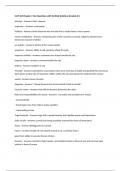
CLST 103 Chapter 3 Test Questions with Verified Solutions (Graded A+)
princeps - Answers chief, emperor
imperator - Answers commander
Polybius - Answers Greek historian who was the first to study Rome's rise to power
roman constitution - Answers contained parts of the monarchy (consuls), oligarchy (Senate) and
democracy (council of plebs)
res publica - Answers activity of the roman people
auspicium - Answers ability to ask questions about the gods
imperium militiae - Answers command over troops outside the city
imperium domi - Answers command within the city
bellona - Answers Goddess of war
Triumph - Answers extended to commanders who were victorious in battle and pacified their provincia.
Were given another day of imperium militiae within the city and allowed to celebrate their victory
ouatio - Answers lesser triumph
Augustus - Answers "I found Rome built in brick and left it built in marble"
Consul's names - Answers How did the Romans determine the date?
Roles and responsibilities of Consuls - Answers - consulted and presided over Senate
- presented bills
- heard legal cases from citizens (early republic)
- commanding armies
Toga Praetexta - Answers toga with a purple boarder that signifies power and importance
Sella curialis - Answers curved seat during assembly reserved for those of importance.
lictors - Answers Bodyguards for consuls
Fasces - Answers bundle of rods bound around an ax, carried by lictors
gave them ability to execute Roman citizens
Praetors - Answers elected to help consuls, commanded armies in times of war and oversaw legal
system in times of peace
, praetor peregrinus - Answers presided over cases involving foreigners
praetor urbanis - Answers heard cases within the city of Rome
Imperium of Praetors - Answers responsible development of laws
could command the army and govern provincia
right to auspicia
Imperium of dictator - Answers running the state
hold elections (when consuls were on campaign)
magister equitum - Answers junior colleague of Dictators
master of cavalry
End of Dictators and magister equitum - Answers end of the second punic war (unclear reasons)
until Sulla and Julius Caesar
Quaestors - Answers - no imperium
- "investigator"
- assisted consuls in managing state treasury
- financial officer to magistrates in other provincia
- assistants to those with Imperium
Tribunes of the Plebeians - Answers - no imperium
- originated as magistrates of plebeian states
- cannot be a patrician
- preside at the assembly of the plebs
- could veto senate decrees and prevent them from convening
- could prosecute someone
Sacrosanctitas - Answers protection given to plebeians from patricians; cannot be harmed lest they
offend the gods
Comitia Centuriata - Answers - The Roman voting assembly, based upon the division of the Roman
people into five classes and 193 centuries.
princeps - Answers chief, emperor
imperator - Answers commander
Polybius - Answers Greek historian who was the first to study Rome's rise to power
roman constitution - Answers contained parts of the monarchy (consuls), oligarchy (Senate) and
democracy (council of plebs)
res publica - Answers activity of the roman people
auspicium - Answers ability to ask questions about the gods
imperium militiae - Answers command over troops outside the city
imperium domi - Answers command within the city
bellona - Answers Goddess of war
Triumph - Answers extended to commanders who were victorious in battle and pacified their provincia.
Were given another day of imperium militiae within the city and allowed to celebrate their victory
ouatio - Answers lesser triumph
Augustus - Answers "I found Rome built in brick and left it built in marble"
Consul's names - Answers How did the Romans determine the date?
Roles and responsibilities of Consuls - Answers - consulted and presided over Senate
- presented bills
- heard legal cases from citizens (early republic)
- commanding armies
Toga Praetexta - Answers toga with a purple boarder that signifies power and importance
Sella curialis - Answers curved seat during assembly reserved for those of importance.
lictors - Answers Bodyguards for consuls
Fasces - Answers bundle of rods bound around an ax, carried by lictors
gave them ability to execute Roman citizens
Praetors - Answers elected to help consuls, commanded armies in times of war and oversaw legal
system in times of peace
, praetor peregrinus - Answers presided over cases involving foreigners
praetor urbanis - Answers heard cases within the city of Rome
Imperium of Praetors - Answers responsible development of laws
could command the army and govern provincia
right to auspicia
Imperium of dictator - Answers running the state
hold elections (when consuls were on campaign)
magister equitum - Answers junior colleague of Dictators
master of cavalry
End of Dictators and magister equitum - Answers end of the second punic war (unclear reasons)
until Sulla and Julius Caesar
Quaestors - Answers - no imperium
- "investigator"
- assisted consuls in managing state treasury
- financial officer to magistrates in other provincia
- assistants to those with Imperium
Tribunes of the Plebeians - Answers - no imperium
- originated as magistrates of plebeian states
- cannot be a patrician
- preside at the assembly of the plebs
- could veto senate decrees and prevent them from convening
- could prosecute someone
Sacrosanctitas - Answers protection given to plebeians from patricians; cannot be harmed lest they
offend the gods
Comitia Centuriata - Answers - The Roman voting assembly, based upon the division of the Roman
people into five classes and 193 centuries.


